In the telecom industry, customer expectations are constantly changing. Customers want quick responses, accurate billing, flexible services, easy payments, and reliable support. At the same time, telecom providers need to manage products, customers, billing, payments, usage, and service operations efficiently.
Managing all these areas through disconnected systems can create unnecessary complexity. Customer information may be spread across different platforms, billing teams may rely on manual processes, and service teams may not have access to the information they need.
This is where Telecom BSS Software can make a significant difference.
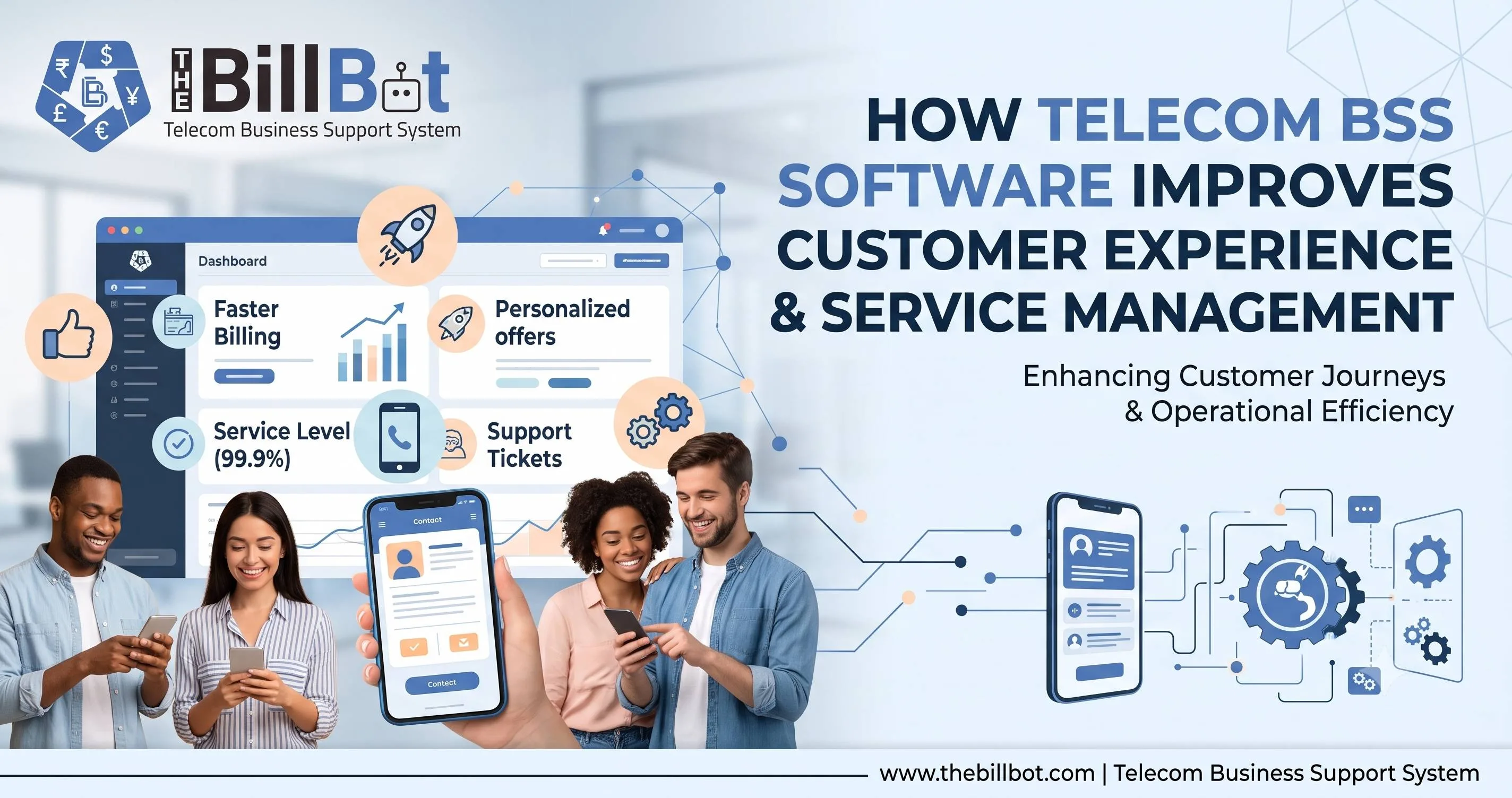
By bringing important business processes together, Telecom BSS Software helps telecom providers create more connected workflows, improve service management, and deliver a smoother customer experience. It can support everything from customer onboarding and product management to billing, payments, reporting, and customer communication.
What Is Telecom BSS Software?
Telecom BSS Software, or Telecom Business Support System Software, is designed to help telecom providers manage the business side of their operations.
A modern BSS platform can connect key functions such as:
- Customer management
- Product and service management
- Lead and sales management
- Billing and invoicing
- Payment processing
- Usage and CDR management
- Reporting and analytics
- Customer communication
- Account management
Instead of relying on multiple disconnected tools, providers can use an integrated system to manage important business activities from a central platform.
This connected approach can help teams work with more consistent information while reducing unnecessary manual processes.
Why Customer Experience Matters for Telecom Providers
Customer experience is influenced by much more than network performance. Billing accuracy, communication, onboarding, support, payments, and service changes all contribute to how customers perceive a telecom provider.
For example, imagine a customer who wants to upgrade a service. If the sales team, billing team, and service team use different systems, the request may require several manual steps. This can create delays or errors.
A connected business support system can make these processes easier to manage.
When customer information and service data are available in one place, teams can respond faster and provide more consistent support.
1. Centralised Customer Information
One of the biggest advantages of Telecom BSS Software is centralised customer management.
Instead of storing customer details across spreadsheets, emails, CRM tools, and billing platforms, providers can maintain important information within a connected system.
Teams can potentially access details such as:
- Customer account information
- Active services
- Products and packages
- Billing history
- Payment status
- Usage information
- Previous interactions
- Account activity
Having this information readily available helps employees understand the customer before taking action.
This can reduce the need to repeatedly ask customers for the same information and can make support interactions more efficient.
2. Faster and More Efficient Customer Onboarding
Customer onboarding is an important part of the customer journey. A complicated onboarding process can create unnecessary friction.
Telecom BSS Software can help providers structure and automate different onboarding activities.
For example, once a new customer is created, relevant account information can flow into the appropriate areas of the system. Services, products, billing details, and other account information can be managed through connected workflows.
This reduces repetitive data entry and helps teams move from customer registration to active service more efficiently.
A smoother onboarding experience can also help customers get started with less waiting and fewer administrative issues.
3. Better Service Management
Managing telecom services becomes increasingly complex as providers offer more products, packages, plans, and service options.
A BSS platform can help providers organise their products and services in a structured way.
Teams can manage information related to:
- Service plans
- Packages
- Pricing
- Recurring charges
- Usage-based services
- Customer subscriptions
- Service changes
With better visibility into service information, employees can manage customer requests more effectively.
For example, when a customer changes a package or adds a service, the relevant information can be reflected in connected billing and account processes.
4. More Accurate and Transparent Billing
Billing is one of the most important touchpoints in the telecom customer experience.
Customers expect invoices to be accurate, understandable, and delivered on time.
Manual billing processes can make this difficult, particularly when providers manage recurring charges, usage-based billing, discounts, packages, and additional services.
Telecom BSS Software can automate important parts of the billing process.
Depending on the system and configuration, providers can manage:
- Recurring billing
- Usage-based charges
- Invoice generation
- Payment tracking
- Billing adjustments
- Payment reminders
- Customer statements
- Revenue reporting
Automation can reduce repetitive work and help minimise the risk of manual data-entry errors.
More consistent billing also gives customers greater clarity about what they are being charged for.
5. Easier Payment and Collection Management
A good customer experience does not end when an invoice is generated. Customers also expect convenient payment options and clear payment communication.
Telecom BSS Software can connect billing and payment workflows so providers can track invoices and payment activity more efficiently.
Automated payment reminders can help customers stay informed about upcoming or overdue payments without requiring staff to contact every customer manually.
For finance teams, centralised payment information can make it easier to monitor outstanding balances and follow up on receivables.
This creates a more organised payment experience for both customers and internal teams.
6. Improved Customer Support
Customer support teams need accurate information to resolve issues effectively.
If a support representative cannot easily see a customer's services, billing status, account information, or recent activity, resolving even a simple query can take longer.
With a connected BSS platform, support teams can access relevant customer information from a central system.
This can help them:
- Understand customer accounts faster
- Respond to billing questions
- Check service information
- Review payment status
- Handle account changes
- Reduce unnecessary internal communication
The result can be a more consistent and efficient support process.
7. Automation Reduces Manual Work
Manual processes can slow down telecom operations and increase the possibility of errors.
For example, an employee may have to enter customer information into multiple systems, manually generate invoices, send payment reminders, update service information, and prepare reports.
Telecom BSS Software can automate many repetitive workflows.
Automation can support activities such as:
- Customer creation
- Invoice generation
- Invoice delivery
- Payment reminders
- Usage processing
- Reporting
- Account updates
- Customer notifications
Reducing repetitive administrative tasks allows employees to spend more time on customer service and business-critical activities.
8. Real-Time Visibility for Better Decisions
Service management also depends on visibility.
Telecom providers need to understand what is happening across their customer base, services, billing operations, and revenue.
Reporting and analytics within a BSS platform can provide useful business information such as:
- Active customers
- Revenue
- Collections
- Outstanding invoices
- Service usage
- Product performance
- Customer activity
With better access to information, management teams can identify operational issues and make more informed decisions.
9. Personalised Customer Management
Customers do not all have the same requirements. Different businesses may use different services, plans, packages, or billing models.
A centralised BSS platform can give providers a clearer understanding of individual customer accounts.
This information can help teams manage customers based on their actual services and account activity rather than treating every customer in the same way.
Personalised service management can contribute to stronger customer relationships and a more relevant customer experience.
10. Scalability for Growing Telecom Businesses
As a telecom provider grows, customer accounts, services, invoices, payments, and usage data also increase.
Processes that work for a small customer base may become difficult to manage at scale.
Telecom BSS Software provides a structured foundation for handling growing operational requirements.
Instead of continuously adding disconnected tools and manual processes, providers can build more connected workflows around a central business support platform.
This can help businesses manage growth while maintaining operational consistency.
What Should Telecom Providers Look for in BSS Software?
When evaluating Telecom BSS Software, providers should consider more than individual features. The software should support the way the business actually operates.
Important areas to evaluate include:
- Customer management capabilities
- Billing and invoicing automation
- Product and service management
- Usage and CDR processing
- Payment integration
- Reporting and analytics
- Workflow automation
- CRM integration
- Scalability
- Data security
- Customisation options
- Ease of use
Integration is particularly important. A BSS platform should be able to work effectively with the other systems a telecom provider already uses.
The Future of Customer Experience and Service Management
Telecom businesses are moving toward more automated and connected operations. Customers expect faster service, simpler interactions, and greater transparency.
At the same time, providers need to control operational costs and manage increasingly complex services.
This makes connected business support systems increasingly valuable.
The role of Telecom BSS Software is not simply to automate billing. A well-integrated
BSS platform can connect customer management, service management, billing, payments, and reporting into a more unified operational environment.
As automation and digital customer experiences continue to develop, this connected approach can help telecom providers adapt to changing expectations.
Conclusion
Customer experience and service management are closely connected. When internal systems are fragmented, customers can experience delays, inconsistent information, billing issues, and slower support.
Telecom BSS Software helps address these challenges by connecting important business processes through a central platform.
From customer onboarding and service management to billing, payments, support, and reporting, BSS software can reduce manual work while improving visibility across the organisation.
For telecom providers looking to build more efficient operations and deliver a smoother customer journey, a connected BSS approach can provide a strong foundation for managing both current requirements and future growth.
Frequently Asked Questions
1. What is Telecom BSS Software?
Telecom BSS Software is a business support platform designed to help telecom providers manage customer accounts, products, services, billing, payments, usage, reporting, and other business operations.
2. How does Telecom BSS Software improve customer experience?
It can improve customer experience by centralising customer information, automating billing and communication, simplifying service management, and helping support teams access relevant account information more quickly.
3. Can Telecom BSS Software automate billing?
Yes. Depending on the platform, it can automate processes such as recurring billing, usage-based billing, invoice generation, payment reminders, and payment tracking.
4. How does BSS software help customer support teams?
A connected BSS platform can give support teams access to customer accounts, services, billing information, payment status, and other relevant data from a central system, helping them handle queries more efficiently.
5. Is Telecom BSS Software suitable for growing providers?
Yes. BSS software can help growing telecom providers manage increasing numbers of customers, services, invoices, payments, and operational workflows in a more structured way.
6. What is the difference between BSS and CRM?
CRM primarily focuses on customer relationships, sales, and interactions. BSS covers a broader range of business operations, including customer management, product and service management, billing, payments, usage, and reporting. In many telecom environments, CRM and BSS capabilities work together.
7. Why is automation important in telecom service management?
Automation reduces repetitive manual tasks, improves process consistency, and allows teams to spend more time on customer-facing and strategic activities. It can also help reduce errors caused by repeated data entry.