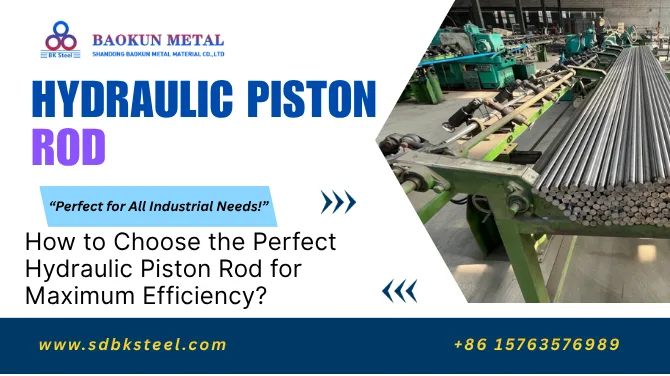
In today’s fast-paced industrial sectors, hydraulic systems are integral to achieving precise control, powerful motion, and reliable performance in machinery. At the heart of these systems lies an essential component: the hydraulic piston rod. This component not only transmits force from the hydraulic cylinder but also withstands immense pressure and environmental challenges to maintain system efficiency and longevity.
Choosing the right hydraulic piston rod is therefore a critical decision that directly influences the overall performance and durability of hydraulic systems. At Shandong Baokun Metal Material Co. Ltd, we provide top-quality hydraulic piston rods designed with advanced manufacturing processes and premium material selections to meet diverse industrial applications. Nevertheless, selecting the perfect piston rod requires a thorough understanding of material properties, surface treatments, dimensional accuracy, and compatibility with hydraulic fluids.
In this comprehensive guide, we will explore the key factors that should guide your choice of hydraulic piston rods to maximize system efficiency. From material composition and protective coatings to mechanical properties and design considerations, this article will equip engineers, procurement specialists, and maintenance managers with the knowledge to make informed choices.
Why Choosing the Right Hydraulic Piston Rod Matters?
To appreciate the importance of selecting the correct hydraulic piston rod, it is important to recognize its roles within hydraulic machinery. These rods must endure repeated cycles of tension and compression, resist corrosion in challenging environments, and maintain precise dimensional tolerances to prevent leakage and premature wear.
Improper piston rod selection can result in:
- Reduced operation efficiency due to increased friction and wear
- Unexpected system failures leading to costly downtime
- Corrosion damage shortening the rod’s service life
- Compatibility issues with seals and fluids causing leaks or pressure loss
Therefore, optimizing piston rod characteristics tailored to your specific hydraulic applications not only enhances performance but also lowers maintenance costs and extends component life.
Key Factors to Consider When Selecting a Hydraulic Piston Rod:
There are several crucial aspects to evaluate when choosing a hydraulic piston rod to ensure it meets your application’s demands:
1. Material and Mechanical Properties
Most hydraulic piston rods are manufactured from high-strength steels such as 1045 carbon steel or alloy steels like 42CrMo. The choice depends on required tensile strength, toughness, and fatigue resistance. Material quality directly affects the rod’s ability to withstand heavy loads and repeated stress without deforming or fracturing.
2. Surface Treatments and Coatings
Surface protection is critical because the piston rod operates in conditions susceptible to corrosion and wear. Common surface treatments include hard chrome plating, nitriding, and induction hardening, which increase surface hardness, reduce friction, and impart corrosion resistance. Selecting the appropriate coating extends rod life and preserves seal integrity.
3. Diameter and Dimensional Precision
Correct rod diameter correlates with the force requirements and the hydraulic cylinder’s size. Additionally, dimensional accuracy — including straightness and surface finish — ensures smooth piston movement and seal performance, affecting leakage prevention and operational stability.
4. Compatibility with Hydraulic Fluids and Seals
The material and coating must be chemically compatible with the hydraulic fluid used to avoid degradation or swelling of seals and rod surfaces. Ensuring chemical compatibility reduces the risk of premature failures and leakage.
5. Operating Environment Considerations
Environmental factors such as temperature extremes, exposure to chemicals, humidity, or abrasive conditions determine additional protection needs for the rod. For example, rods used in marine or outdoor applications require specialized corrosion-resistant treatments.
Transitioning to Excellence with Shandong Baokun Metal Material Co. Ltd
At Shandong Baokun Metal Material Co. Ltd., we combine advanced metallurgy, precision machining, and strict quality controls to deliver hydraulic piston rods that meet global standards and specific client requirements. Our commitment includes offering guidance on selecting the right rod products and optimizing maintenance practices to maximize system uptime and efficiency.
Conclusion
Selecting the perfect hydraulic piston rod is fundamental to achieving maximum efficiency and reliability in hydraulic systems. By carefully considering material properties, surface treatments, dimensional precision, and environmental conditions, you ensure both immediate performance and long-term durability.
At Shandong Baokun Metal Material Co. Ltd, we aim to support your success with top-grade piston rods coupled with expert advisory services. We invite you to explore our full product range and discover how optimized piston rod selection can drive operational excellence.
Frequently Asked Questions (FAQ)
Q1: What materials are commonly used for hydraulic piston rods?
A1: Common materials include medium and high carbon steels such as 1045, alloy steels like 42CrMo, and stainless steels for corrosion resistance.
Q2: Why is chrome plating often used on hydraulic piston rods?
A2: Chrome plating provides a hard, wear-resistant, and corrosion-resistant surface that extends the life of the rod and protects seals.
Q3: How important is dimensional accuracy for piston rods?
A3: Very important. Accurate dimensions and straightness ensure proper seal function and smooth cylinder operation, reducing leakage and wear.
Q4: Can hydraulic piston rods be customized?
A4: Yes, rods can be produced in different diameters, lengths, and coatings depending on the specific hydraulic system requirements.
Q5: How should I maintain hydraulic piston rods?
A5: Regular inspections for wear or corrosion, proper cleaning, and using compatible hydraulic fluids help maintain piston rod performance.