
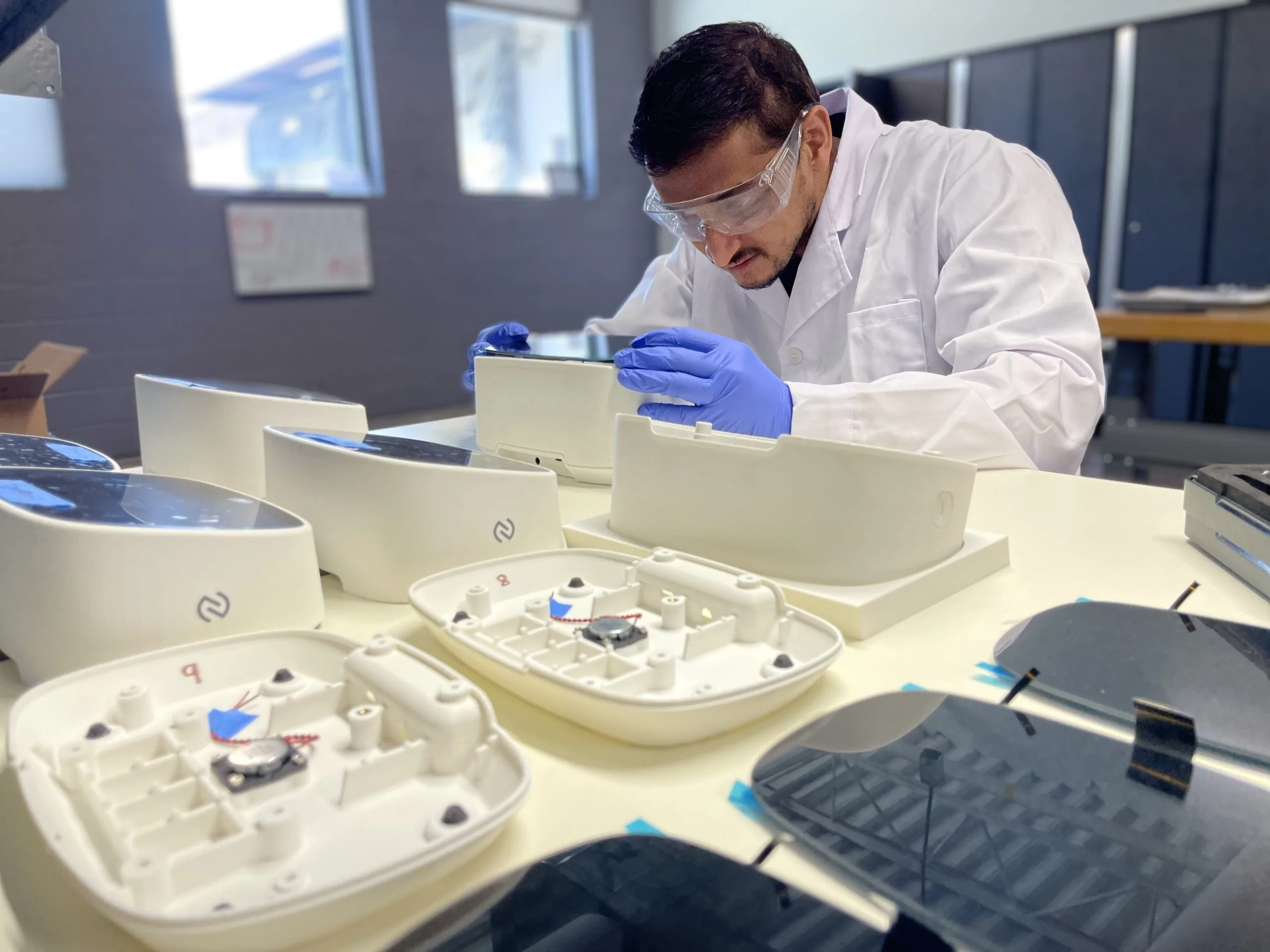
In medical device development, quality and safety cannot be added at the end of the process. They must be built into every decision, from the initial concept and design to manufacturing, market launch, and post-market monitoring. A single overlooked risk or undocumented design change can result in regulatory delays, costly product recalls, or patient harm. To ensure quality and safety throughout the medical device development lifecycle, manufacturers need a certified quality management system, structured design controls, continuous risk management, thorough verification and validation, and effective post-market surveillance. Each of these elements plays an important role in ensuring that medical devices meet regulatory requirements, perform reliably, and remain safe for patients.
Quality and Safety at Each Lifecycle Stage
Quality and safety must be considered at every stage of medical device development. During the concept and planning stage, manufacturers should define user needs, intended use, and the appropriate regulatory pathway. During design and development, they should implement design controls, conduct risk analysis, and consider human factors. The verification and validation stage focuses on testing design outputs and confirming that the device meets clinical and user requirements. During design transfer, manufacturers must validate production processes and qualify suppliers to ensure consistent product quality. Once production begins, ongoing quality monitoring, change management, and nonconformance control become essential. After market release, manufacturers must continue tracking customer complaints, adverse events, product performance, and corrective actions to maintain safety and compliance.
1. Start With a Strong Quality Management System
A quality management system (QMS) provides the foundation for maintaining quality and safety throughout medical device development. Most manufacturers align their QMS with ISO 13485, the international standard for medical device quality management systems. Regulatory authorities in major markets, including the FDA and Health Canada, expect manufacturers to demonstrate that their processes are properly documented, controlled, and consistently followed. An effective QMS establishes procedures for document management, employee training, supplier qualification, design changes, production controls, and problem resolution. Implementing a QMS early in the development process helps manufacturers maintain consistency, meet regulatory expectations, and avoid the challenges of establishing quality procedures at a later stage.
2. Define Clear User Needs and Intended Use
Every safe and effective medical device begins with a clear understanding of its intended purpose and users. Manufacturers should define the device's intended use, target user groups, operating environments, and clinical requirements during the initial planning stage. These factors influence design specifications, risk management activities, usability requirements, and regulatory decisions. Clearly documented user needs also help development teams establish measurable design requirements and avoid misunderstandings during development. Incomplete or unclear requirements can lead to design changes, additional testing, increased development costs, and regulatory delays. Therefore, establishing clear user needs and intended use from the beginning is essential for developing a medical device that meets both patient and healthcare professional expectations.
3. Apply Design Controls Throughout Development
Design controls provide a structured approach to ensuring that a medical device meets its intended requirements and user needs. They cover the entire design and development process, starting with the identification of design inputs and continuing through design outputs, reviews, verification, validation, and design changes. Design inputs include measurable requirements based on user needs, safety considerations, and regulatory expectations. Design outputs include technical drawings, product specifications, software documentation, and other information required for manufacturing. Regular design reviews allow cross-functional teams to evaluate progress, identify potential issues, and confirm that requirements are being addressed. Manufacturers must also document and assess design changes before implementation to ensure they do not introduce new risks. Maintaining traceability between user needs, design requirements, outputs, and test results provides clear evidence that the device has been developed through a controlled process. These records form part of the design and development documentation, including the Design History File (DHF), where applicable.
4. Make Risk Management Continuous
Risk management is an ongoing activity that must continue throughout the medical device lifecycle rather than being treated as a one-time exercise. ISO 14971 provides a framework for identifying potential hazards, estimating and evaluating associated risks, implementing risk control measures, and verifying their effectiveness. Manufacturers should begin risk analysis during the concept stage and update it whenever there are design changes, new test results, manufacturing issues, or post-market findings. Techniques such as Failure Mode and Effects Analysis (FMEA) and Fault Tree Analysis help development teams systematically identify potential failure points and understand their possible consequences. By integrating risk management into everyday development activities, manufacturers can address safety concerns early, reduce the likelihood of device failures, and improve overall product reliability.
5. Design for Safe and Intuitive Use
Human factors engineering is another important part of medical device safety because even a technically reliable device can create risks if users find it difficult to operate. Poor interface design, confusing instructions, or complicated operating procedures can contribute to use errors and patient safety incidents. IEC 62366-1 provides guidance on applying usability engineering to medical devices. Manufacturers should evaluate how healthcare professionals, patients, and other intended users interact with the device in real-world environments. Formative usability evaluations during the design stage help identify usability problems early, allowing teams to make improvements before final product development. Summative usability evaluations are then conducted to assess whether intended users can complete critical tasks safely and effectively. Designing devices around actual user needs improves usability, reduces the likelihood of use-related errors, and supports safer clinical outcomes.
6. Address Software and Cybersecurity Early
Software and cybersecurity considerations are increasingly important in modern medical device development, particularly for connected devices, wearable technologies, and software-enabled medical systems. IEC 62304 defines lifecycle requirements for medical device software, including software development planning, implementation, verification, maintenance, and risk management, with processes scaled according to software safety classification. Manufacturers should also address cybersecurity risks from the beginning of development by incorporating threat modelling, secure system architecture, access controls, data protection, and vulnerability management. Connected medical devices may face cybersecurity threats that could affect device functionality, patient information, or clinical operations. Establishing a clear cybersecurity strategy, including software updates and ongoing vulnerability monitoring, helps manufacturers protect devices throughout their operational life and address regulatory expectations.
7. Verify and Validate Rigorously
Verification and validation are essential activities for confirming that a medical device meets its design requirements and performs as intended. Although these terms are closely related, they serve different purposes. Verification confirms that design outputs meet specified design inputs, essentially checking whether the device has been built correctly. Validation confirms that the finished device meets user needs and its intended use, ensuring that the right product has been developed. Depending on the device type and associated risks, testing may include electrical safety evaluations under the IEC 60601 series, biocompatibility assessments under the ISO 10993 series, sterilization validation, packaging integrity, shelf-life testing, software verification, and clinical evaluation where required. Manufacturers should establish documented test protocols, acceptance criteria, and results for each activity. Maintaining traceability between requirements and test evidence helps demonstrate that the device meets applicable quality, safety, and regulatory requirements.
8. Control Design Transfer and Manufacturing
A well-designed medical device must also be manufactured consistently to maintain its quality and safety. Design transfer is the process of translating approved design specifications into manufacturing requirements and ensuring that production teams can reproduce the device reliably. During this stage, manufacturers should validate critical manufacturing processes, qualify suppliers, establish inspection criteria, and ensure that production documentation accurately reflects the approved design. Once manufacturing begins, ongoing quality monitoring is necessary to identify defects, process variations, and nonconformances. Manufacturers should also implement formal change control procedures to evaluate and approve modifications to product designs, materials, suppliers, equipment, and production processes. Proper design transfer and manufacturing controls help prevent unintended changes, maintain product consistency, and ensure that every manufactured device meets established specifications.
9. Monitor Performance After Launch
Medical device quality and safety responsibilities do not end when a product enters the market. Post-market surveillance plays an important role in monitoring real-world device performance and identifying potential safety concerns that may not have been detected during development and pre-market testing. Manufacturers should collect and evaluate information from customer complaints, service records, adverse event reports, clinical feedback, and user experiences. This information should be incorporated into the risk management process to determine whether existing risk assessments and control measures need to be updated. A structured Corrective and Preventive Action (CAPA) process helps manufacturers investigate the root causes of quality issues, implement corrective measures, and prevent similar problems from occurring again. Continuous post-market monitoring allows manufacturers to respond to emerging risks, improve product performance, maintain regulatory compliance, and protect patients throughout the device's lifecycle.
Frequently Asked Questions
What is the medical device development lifecycle?
The medical device development lifecycle refers to the complete process of bringing a medical device from its initial concept through design, development, testing, manufacturing, and market release. It also includes post-market monitoring, performance evaluation, and ongoing improvements to ensure the device remains safe and effective throughout its operational life.
Why are design controls important in medical device development?
Design controls help ensure that medical devices meet defined user needs, design specifications, and applicable regulatory requirements. They establish a structured development process through documented design inputs, outputs, reviews, verification, validation, and change management. They also provide the necessary evidence to demonstrate that the device has been developed systematically and meets its intended requirements.
When should risk management begin in medical device development?
Risk management should begin during the initial concept and planning stage and continue throughout the entire medical device lifecycle. Manufacturers must regularly review and update risk assessments based on design changes, testing outcomes, manufacturing processes, customer complaints, and post-market performance data.
Conclusion
Ensuring quality and safety throughout the medical device development lifecycle requires a consistent and systematic approach at every stage. A strong quality management system, structured design controls, continuous risk management, human factors engineering, rigorous verification and validation, and effective post-market surveillance work together to protect patients and support regulatory compliance. By integrating these practices from the beginning, manufacturers can identify potential issues early, reduce development risks, avoid costly delays, and bring safer, more reliable medical devices to market with confidence.