Decorative plaster walls can make any interior look stylish, warm, and attractive. They add texture, depth, and a unique finish that is different from ordinary painted walls. Whether you choose a smooth, polished surface or a natural stone-like texture, decorative plaster can give your home a beautiful appearance.
However, keeping these walls clean and looking fresh requires regular care. Dust, stains, moisture, and everyday contact can affect their finish over time. Using the wrong cleaning products or rough tools may also damage the surface.
The good news is that maintaining decorative plaster walls is not difficult when you follow the right steps. Simple cleaning habits and proper care can help protect the finish and keep it looking good for years.
In this guide, we will explain how to clean decorative plaster walls, prevent common problems, and maintain their appearance without damaging the surface.
1. Understand Your Decorative Plaster Finish
Before cleaning your walls, understand the type of decorative plaster used in your space. Different finishes have different textures and cleaning needs. Some surfaces are smooth and polished, while others have a rough or natural appearance.
For example, Venetian plaster has a smooth and polished look, while concrete-effect plaster creates a modern industrial style. Lime-based finishes offer a softer and more natural appearance.
Each finish may react differently to water and cleaning products. Therefore, always check the care instructions before cleaning.
If you are considering Decorative plaster Hollywood for your home or business, ask about the material, protective coating, and cleaning requirements before choosing a finish.
2. Remove Dust Regularly
Dust can slowly collect on decorative plaster walls and make them look dull. Regular dusting is one of the easiest ways to keep the surface clean.
Use a soft microfiber cloth or a clean feather duster to remove loose dust. For textured walls, clean gently around small grooves and uneven areas where dust can settle.
You can also use a vacuum cleaner with a soft brush attachment for hard-to-reach areas. Avoid rough brushes and hard cleaning tools because they may scratch the surface.
Dusting once every one or two weeks is usually enough for most rooms. However, walls in busy areas may need more frequent cleaning.
3. Clean Walls with a Soft Cloth
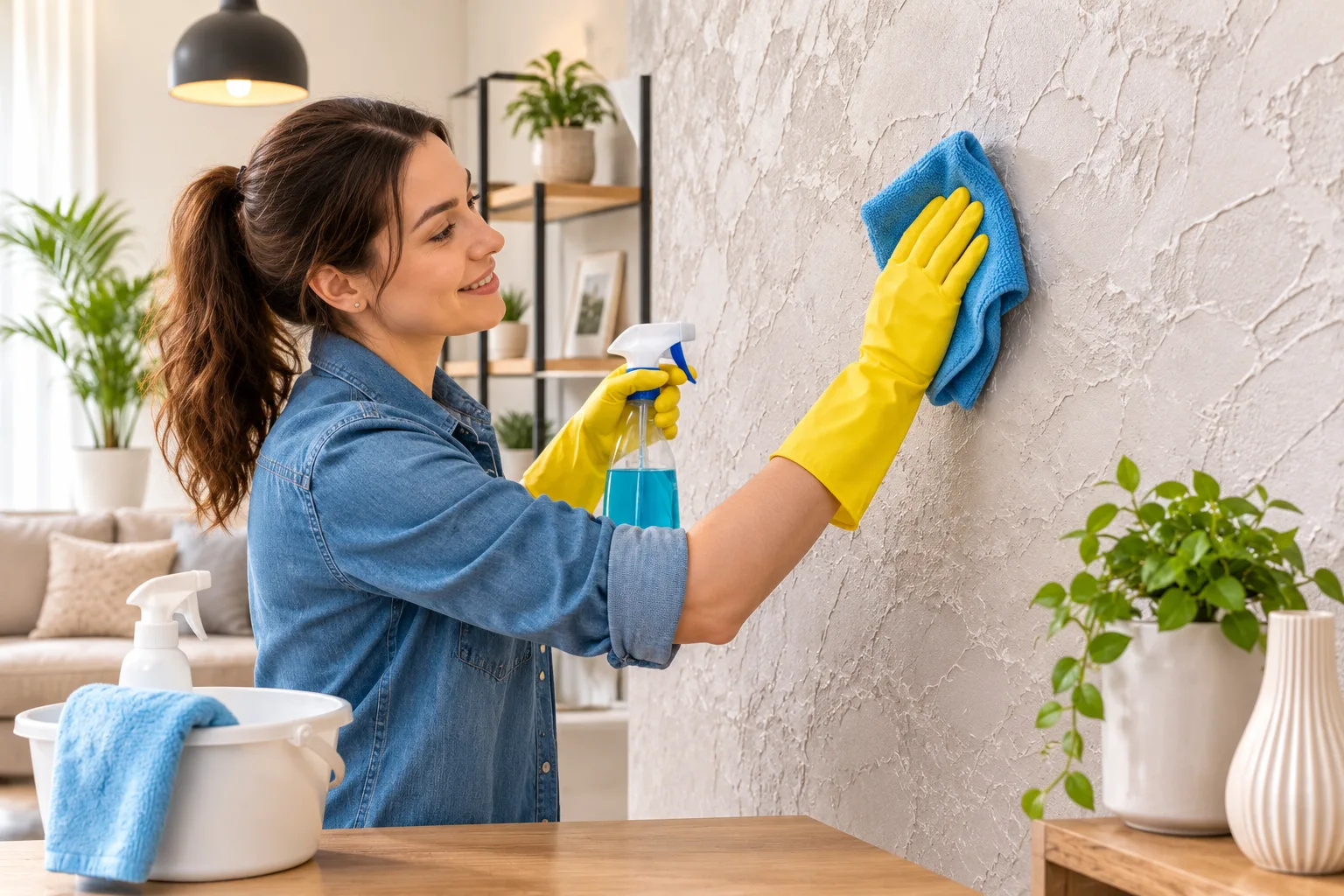
Decorative plaster walls do not always need strong cleaning products. A soft cloth is often enough to remove light dirt and everyday marks.
Start with a dry microfiber cloth. If the wall needs extra cleaning, slightly dampen the cloth with clean water and remove the extra moisture before wiping.
Always test the cleaning method on a small hidden area first. This helps you check whether water affects the finish.
Remember to use gentle movements instead of scrubbing. This is especially important for delicate or unsealed plaster surfaces.
4. Remove Stains Carefully
Food splashes, fingerprints, oil marks, and other stains can affect the appearance of decorative plaster walls. Cleaning these marks quickly can prevent them from becoming harder to remove.
When something spills on the wall, gently blot the area with a clean, dry cloth. Avoid rubbing because it may spread the stain or push it deeper into the surface.
For marks that remain, use a slightly damp cloth only if the plaster finish allows water-based cleaning. Avoid applying household cleaners without checking whether they are suitable.
Some plaster surfaces absorb stains more easily than others. If a stain has entered the material, professional cleaning or repair may be necessary.
5. Avoid Harsh Cleaning Products
Using the wrong cleaning products can damage decorative plaster walls. Strong chemicals may change the colour, remove protective coatings, or affect the natural texture.
Avoid using the following products unless they are approved for your plaster finish:
- Bleach and ammonia-based cleaners.
- Strong acids and heavy-duty cleaning sprays.
- Abrasive powders and rough cleaning pads.
- Products that contain harsh chemicals.
Instead, use gentle cleaning methods and products recommended for your particular wall finish. Clean water and a soft cloth are often suitable for basic maintenance.
If you choose Decorative plaster Hollywood for your property, ask about suitable cleaning products to avoid damage in the future.
6. Protect Walls from Moisture
Moisture can cause problems for decorative plaster, especially when the surface is not properly sealed. Too much water may lead to stains, peeling, or damage, depending on the material.
Pay extra attention to walls in kitchens, bathrooms, and areas near windows. These spaces may experience higher humidity or regular water splashes.
Make sure the rooms have proper ventilation to reduce moisture. If water accidentally reaches the wall, dry it gently with a soft cloth.
Also, repair leaking pipes, damaged roofs, and water seepage as soon as possible. If you want Decorative plaster Hollywood in a moisture-prone area, choose a suitable finish with professional guidance.
7. Check for Cracks and Surface Damage
Decorative plaster walls can develop small cracks or marks over time. Temperature changes, building movement, moisture, and accidental impacts may cause these problems.
Inspect your walls every few months to check for unusual changes. Look for cracks, peeling areas, loose plaster, and colour differences.
Small surface problems may be repaired without changing the entire wall. However, using the wrong filler or repair material can create patches that look different from the original finish.
For large cracks or repeated damage, contact a professional. It is important to identify the cause before repairing the surface.
8. Maintain the Protective Coating
Some decorative plaster finishes have a protective sealer or wax coating. This layer helps reduce water absorption and protects the surface from everyday marks.
However, not every plaster finish requires the same type of protection. Some are designed to maintain a natural appearance, while others need an additional coating.
Follow the recommended care instructions and avoid strong cleaners that may weaken the protective layer.
If the surface starts absorbing water more easily or looks uneven, it may need professional attention. Always check that a new sealer is suitable for the existing plaster before applying it.
9. Prevent Scratches and Accidental Damage
Daily activities can sometimes leave scratches or marks on decorative plaster walls. Furniture, sharp objects, and heavy items can damage the surface if they come into contact with it.
A few simple precautions can help prevent this damage. Keep furniture slightly away from the walls and use protective pads behind tables, chairs, and cabinets.
Be careful when moving heavy items around the room. Avoid dragging furniture against the wall because even a small impact can leave visible marks.
These precautions are especially useful for feature walls made with Decorative plaster Hollywood, where maintaining the original texture and appearance is important.
10. Follow a Simple Maintenance Schedule
Regular maintenance helps keep decorative plaster walls in good condition. A simple schedule can prevent dust buildup, stains, and damage.
| Maintenance Task | Suggested Frequency | Main Benefit |
| Remove surface dust | Every 1–2 weeks | Keeps walls fresh |
| Check for stains | As needed | Prevents marks from settling |
| Gentle cleaning | Monthly or as needed | Removes everyday dirt |
| Inspect for cracks | Every 3–6 months | Identifies early damage |
| Check moisture levels | Monthly | Helps prevent water damage |
| Check protective coating | As recommended | Maintains surface protection |
The cleaning schedule may change depending on the room, plaster material, and daily use.
Overview
Decorative plaster walls can maintain their beauty for many years when cleaned and cared for properly. Regular dusting, gentle wiping, quick stain removal, and moisture control are simple ways to protect their appearance. Avoiding harsh chemicals and checking for surface damage can also help prevent costly repairs.
Since every plaster finish has different care requirements, always follow the recommended cleaning methods for your surface. With the right maintenance habits, you can enjoy beautiful and long-lasting walls.
For those planning to improve their interiors with stylish wall finishes, Benjamin Moore Luminous Paint Center offers decorative plaster options that can help bring character and a unique look to your space.
5 Frequently Asked Questions
1. How often should decorative plaster walls be cleaned?
Decorative plaster walls should be dusted every one or two weeks. Light cleaning can be done when needed. Regular care helps prevent dirt buildup and keeps the wall looking fresh without exposing the surface to too much moisture.
2. Can I use water to clean decorative plaster walls?
Yes, but it depends on the plaster finish and protective coating. Some surfaces can handle gentle wiping with a damp cloth, while others may absorb water. Always check the care instructions and test a hidden area first.
3. What is the best cloth for cleaning decorative plaster?
A soft microfiber cloth is a good choice for cleaning decorative plaster walls. It removes dust and light dirt without scratching the surface. Avoid rough fabrics, hard brushes, and abrasive cleaning tools that may damage the finish.
4. How can I prevent stains on decorative plaster walls?
Clean spills as soon as possible and avoid rubbing the affected area. Use suitable protective coatings where recommended. Regular inspections and gentle cleaning can also help prevent stains from becoming permanent or affecting the wall's appearance.
5. Do decorative plaster walls need professional maintenance?
Not always. Regular dusting and gentle cleaning are usually enough for everyday care. However, large cracks, deep stains, peeling areas, and moisture damage may require professional attention to restore the original finish properly.