Quick Answer: Invicta pricing tracks movement type, crystal material, water resistance, and complications rather than finishing, which stays consistent across the range. Automatic references cost more than quartz equivalents despite identical water resistance, while dial colour is largely a preference variable rather than a cost driver.
Invicta prices vary widely across the catalogue. Understanding the drivers clarifies which end delivers what you actually need.
What Drives the Differences
Movement type, crystal material, water resistance, and complications. These account for most of the range, and knowing which matter to you narrows the choice quickly.
Movement Is the Largest Factor
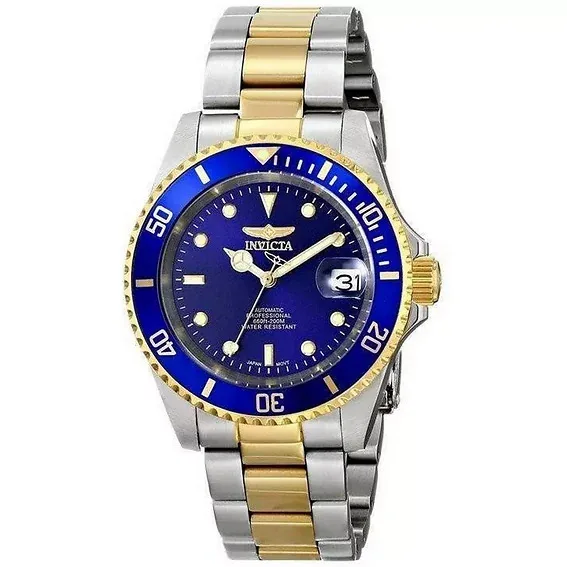
The Invicta Pro Diver Automatic 8928OB and the Invicta Pro Diver 200M Quartz 8932 show the same platform in both movement types at different prices.
What Quartz Gains
Tighter accuracy within seconds per month, a thinner case, lower cost, and no servicing schedule. Both carry the same 200m water resistance, so the difference is character rather than capability.
Complications and Dial Work Add Cost
The Invicta Objet D Art Skeleton Dial Automatic 32300 exposes the movement, which requires a mechanical calibre and more finishing attention than a solid dial.
Colour Does Not Drive Price Much
The Invicta Pro Diver Green Dial Automatic 35719 and the Invicta Pro Diver Green Dial Quartz 45980 show that dial colour is largely a preference variable rather than a cost driver.
The Chronograph Direction
The Invicta S1 Rally Chronograph Green Dial 44951 adds timing function at 100m, which costs more than three-hand equivalents.
What Does Not Change With Price
Finishing. Case polishing, bracelet construction, and dial detailing remain below pricier alternatives across the range. Higher prices within Invicta do not resolve this.
Where Value Concentrates
The Pro Diver line, combining movement choice with genuine 200m water resistance at a price no other brand matches for that combination.
Case Size Is Price-Independent
Invicta references run substantially large at every price point, which causes more dissatisfaction than any other factor.
Budget for the Strap Regardless
Stock bracelets commonly use folded rather than solid links, which rattle. Replacing the bracelet transforms how the watch feels.
Verify Water Resistance by Reference
Ratings vary widely and dive styling does not guarantee dive capability. Verify the specific figure rather than inferring from appearance or price.
Measuring Your Wrist Properly
Measure the flat width across the top of your wrist rather than the circumference, since that flat span is what the lug-to-lug measurement must sit within. A watch whose lug-to-lug exceeds your wrist width will overhang the edges and feel wrong regardless of how good its specification is. This takes under a minute and resolves the most common source of purchase regret.
Total Ownership Cost
Purchase price is only part of the picture. Mechanical watches need periodic professional servicing, conventional quartz needs battery replacement every few years, and light-powered references need eventual cell replacement after a decade or more. Factoring these in gives a far truer comparison than purchase price alone.
Buying From Reputable Sellers
Authentic product with proper warranty coverage and a workable returns position matters more than the channel itself. Clear returns terms effectively replace the reassurance that handling a watch in person would provide, which is what makes confident online buying possible at every price point.
Common Mistakes to Avoid
Expecting higher prices to resolve the finishing trade is the most frequent. Paying for automatic without valuing mechanical character is the most questionable. Not checking lug-to-lug is the most uncomfortable. Assuming dive styling implies capability is the most expensive.
Judging Value Honestly
The most reliable way to assess any watch is separating three things: build quality, movement specification, and brand value. All three are legitimate reasons to pay, but conflating them produces confused comparisons. A watch leading on one and trailing on another is not worse than one scoring moderately across all three, provided it leads on the attribute you actually care about for how you will wear it.
Setting Expectations Before You Buy
The most reliable predictor of satisfaction is whether expectations matched what the watch was built to deliver. A watch optimised for durability will not feel refined, one optimised for finishing will not survive rough treatment, and one optimised for accuracy will not carry mechanical character. None of those is a flaw; each is a deliberate design priority. Identifying which priority a watch was built around, and whether it matches yours, prevents nearly every form of buyer disappointment.
Why Returns Matter More Than Expected
Fit and comfort only become fully apparent after wearing a watch for several days, which is longer than any shop visit allows. A returns window of meaningful length is therefore not a fallback but the main mechanism by which you establish whether a watch suits you. Confirming the window, the conditions attached to it, and who bears return shipping before ordering means the decision stays reversible long enough to be made properly.
Strap and Bracelet Considerations
A second strap is the cheapest way to extend one watch across more contexts, shifting it between formal and casual without buying anything else. Confirm lug width before ordering, measured between the inner edges of the lugs in millimetres, since it must match exactly. Note also that integrated-bracelet designs flow directly into the case and cannot accept standard straps at all.
Checking the Specification Sheet Properly
Four figures settle most purchase decisions: movement type, water resistance stated in metres, crystal material, and case dimensions including lug-to-lug. A listing that publishes all four is being transparent about what it sells. One that offers only marketing language is withholding exactly what you need to judge whether a watch suits you.
The Bottom Line
Invicta pricing tracks movement, crystal, water resistance, and complications rather than finishing, which stays consistent. Browse the Invicta collection.
Frequently Asked Questions
What drives Invicta price differences?
Movement type, crystal material, water resistance, and complications account for most of the range.
Which factor matters most?
Movement type. Automatic costs more than quartz on the same platform despite identical water resistance.
What does quartz gain?
Tighter accuracy, a thinner case, lower cost, and no servicing schedule, with the same water resistance.
Does dial colour drive price?
Largely no. Colour is a preference variable rather than a significant cost driver across the range.
Does a higher price improve finishing?
No. Case polishing, bracelet construction, and dial detailing remain below pricier alternatives across the range.
Where does value concentrate?
The Pro Diver line, combining movement choice with genuine 200m water resistance at a price no other brand matches.
Does case size vary with price?
No. Invicta references run substantially large at every price point, making the dimensional check essential.
Verdict
Invicta pricing tracks movement, crystal, water resistance, and complications rather than finishing, which stays consistent at every level. Value concentrates in the Pro Diver line. Check lug-to-lug regardless of price since these run large. Browse the Invicta collection.