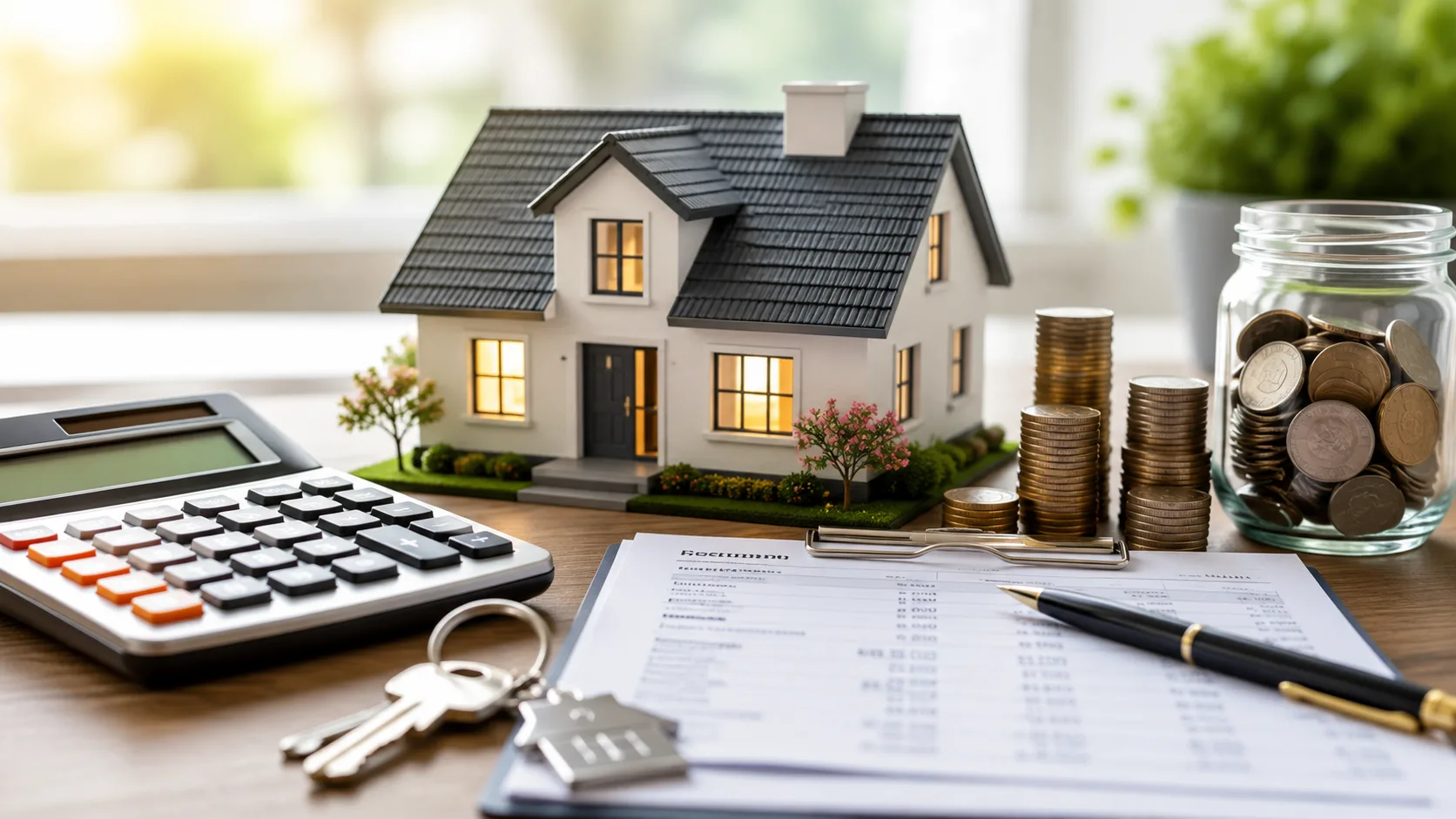
The real cost of buying a home is not just the purchase price. It includes the money you need upfront, the monthly payment you will carry, and the long-term costs that come with owning and maintaining the property.
This is where many buyers get surprised.
A home may look affordable on the listing page, but the full cost can change once you add closing costs, property taxes, homeowners insurance, PMI, HOA fees, repairs, maintenance, moving expenses, and utility setup.
Before you make an offer, it is smart to calculate the full cost instead of only looking at the mortgage payment. You can start with MultiCalculators’ mortgage calculator to estimate your payment and see how taxes, insurance, HOA, and PMI affect the final number.
What the Real Cost of Buying a Home Includes
The real cost of buying a home includes every major expense required to buy, close, move into, and maintain the home.
Most buyers focus on the down payment. That is important, but it is only one part of the total budget.
A complete home buying cost estimate should include:
- Down payment
- Closing costs
- Mortgage principal
- Mortgage interest
- Property taxes
- Homeowners insurance
- Private mortgage insurance
- HOA fees
- Inspection fees
- Appraisal fees
- Moving costs
- Utility setup
- Immediate repairs
- Furniture or appliances
- Ongoing maintenance
- Emergency savings
A buyer who ignores these costs may get approved for a mortgage but still feel financially tight after moving in.
Why the Home Price Is Only the Starting Point
The sale price tells you what the seller wants for the property. It does not tell you what the home will actually cost every month or every year.
For example, two homes may both cost $400,000, but they may not have the same true cost.
One home may have:
- Lower property taxes
- No HOA fees
- Newer appliances
- A recently replaced roof
- Lower insurance cost
Another home may have:
- Higher property taxes
- Monthly HOA dues
- Older HVAC system
- Needed repairs
- Higher insurance cost
The second home may cost more over time, even if the listing price is the same.
That is why buyers should compare homes by total monthly and long-term cost, not just purchase price.
How to Estimate Your Down Payment
The down payment is the amount you pay upfront toward the purchase price.
For example, if the home price is $400,000 and your down payment is 10%, the down payment is:
$400,000 × 10% = $40,000
That leaves a loan amount of:
$400,000 - $40,000 = $360,000
A larger down payment can lower your monthly mortgage payment. It may also reduce interest costs and help you avoid PMI on many conventional loans.
Common down payment ranges include:
- 3% to 5% for some first-time homebuyer programs
- 10% for buyers who want a moderate upfront cost
- 20% to avoid PMI on many conventional loans
- More than 20% for buyers who want a smaller loan balance
You do not always need 20% down, but you do need to understand what a smaller down payment does to your monthly cost.
How Closing Costs Affect Cash to Close
Closing costs are fees paid when the home purchase is finalized.
They may include:
- Loan origination fees
- Appraisal fee
- Credit report fee
- Title search
- Title insurance
- Attorney or settlement fees
- Recording fees
- Prepaid property taxes
- Prepaid homeowners insurance
- Escrow deposits
A common estimate for closing costs is 2% to 5% of the purchase price.
For a $400,000 home, that means closing costs may range from:
- 2% = $8,000
- 5% = $20,000
This is why your cash to close is usually more than the down payment.
Cash to close may include:
- Down payment
- Closing costs
- Prepaid taxes
- Prepaid insurance
- Escrow deposits
- Required lender fees
A buyer may have enough money for the down payment but still be short on total cash to close.
How to Calculate the Monthly Mortgage Payment
Your monthly mortgage payment usually starts with principal and interest.
Principal is the amount borrowed. Interest is the cost of borrowing that money.
Your payment depends on:
- Home price
- Down payment
- Loan amount
- Interest rate
- Loan term
- Mortgage type
A 30-year mortgage usually has a lower monthly payment than a 15-year mortgage, but it may cost more in total interest over time.
A 15-year mortgage usually has a higher monthly payment, but it can reduce the total interest paid.
To compare different loan amounts, rates, and terms, use this free calculator before deciding what price range is realistic.
Why Property Taxes Matter
Property taxes are one of the biggest ongoing home buying costs.
They depend on:
- Home value
- Local tax rate
- County or city rules
- School district
- Property assessment
- Special assessments
The current owner’s tax bill may not be the same amount you pay after buying. In some areas, the property can be reassessed after the sale. That can increase the tax bill.
Before buying, check:
- Current annual property tax
- Local reassessment rules
- Past tax increases
- Special assessments
- Whether taxes are included in escrow
If annual property taxes are $6,000, that adds about $500 per month to your housing cost.
Why Homeowners Insurance Should Be Estimated Early
Homeowners insurance protects the property against covered losses. Most lenders require it when you use a mortgage.
The cost depends on:
- Home location
- Rebuilding cost
- Age of the home
- Roof condition
- Coverage amount
- Deductible
- Local weather risk
- Claims history
Do not wait until closing week to check insurance pricing.
Insurance can be much higher in areas with storm, flood, wildfire, or severe weather risk. A home that looks affordable may become less affordable once insurance is added.
Get an insurance quote before finalizing your budget.
How PMI Changes the Monthly Payment
Private mortgage insurance, or PMI, is often required on conventional loans when the down payment is less than 20%.
PMI protects the lender, not the buyer. Still, it can allow buyers to purchase a home sooner with less cash upfront.
Here is a simple example:
If your loan amount is $360,000 and PMI is estimated at 0.5% per year:
$360,000 × 0.5% = $1,800 per year
$1,800 ÷ 12 = $150 per month
That adds $150 to the monthly housing cost.
When calculating the real cost of buying a home, PMI should be included from the beginning.
How HOA Fees Can Change Affordability
HOA fees apply when the home is part of a homeowners association.
They are common with:
- Condos
- Townhomes
- Gated communities
- Planned neighborhoods
- Some single-family home communities
HOA fees may cover:
- Landscaping
- Shared amenities
- Security
- Building maintenance
- Trash collection
- Community insurance
But HOA fees can increase over time. Some communities may also charge special assessments for major repairs or improvements.
Before buying, review:
- Monthly dues
- What the fee includes
- What the fee does not include
- Recent increases
- Reserve fund health
- Special assessments
- HOA rules
- Rental, pet, parking, and exterior restrictions
A low HOA fee is not always better. It may mean the association is not saving enough for future repairs.
One-Time Costs Buyers Often Forget
The cost of buying a home does not stop at closing.
After moving in, buyers may need money for:
- Movers
- Truck rental
- Packing supplies
- Storage
- Utility setup
- Internet setup
- Cleaning
- New locks
- Curtains or blinds
- Appliances
- Furniture
- Paint
- Lawn equipment
- Basic tools
- Small repairs
These costs can add up quickly in the first few weeks.
This is why it is risky to spend all available cash on the down payment and closing costs. Keep extra money available after closing.
Maintenance and Repairs Are Part of the Real Cost
Maintenance is one of the biggest differences between renting and owning.
When you own the home, you are responsible for repairs.
That may include:
- Roof repairs
- HVAC service
- Plumbing
- Electrical repairs
- Water heater replacement
- Appliance repairs
- Window repairs
- Drainage work
- Landscaping
- Flooring
- Pest control
A practical planning range is 1% to 4% of the home’s value per year for maintenance and repairs.
For a $400,000 home, that means:
- 1% = $4,000 per year
- 2% = $8,000 per year
- 4% = $16,000 per year
Newer homes may need less at first. Older homes may need more.
The key is to save before something breaks. Maintenance costs are not always monthly, but they are real.
Real-World Example of Home Buying Costs
Let’s use a $400,000 home as an example.
Assumptions:
- Home price: $400,000
- Down payment: 10%
- Loan amount: $360,000
- Closing costs: 3%
- Property taxes: $6,000 per year
- Homeowners insurance: $1,800 per year
- HOA fees: $100 per month
- PMI: $150 per month
- Maintenance reserve: 1.5% per year
Upfront cost estimate:
CostEstimateDown payment$40,000Closing costs$12,000Moving and setup$3,000Total upfront estimate$55,000Monthly costs outside principal and interest:
CostMonthly EstimateProperty taxes$500Homeowners insurance$150PMI$150HOA fees$100Maintenance reserve$500Total$1,400This $1,400 is in addition to mortgage principal and interest.
That is why buyers should not judge affordability from the loan payment alone.
Simple Formula for the Real Cost of Buying a Home
Use this simple formula:
Real cost of buying a home = upfront cash + monthly housing costs + yearly maintenance and repairs
Upfront cash includes:
- Down payment
- Closing costs
- Inspection
- Appraisal
- Moving
- Utility setup
- Immediate repairs
Monthly housing costs include:
- Mortgage principal
- Mortgage interest
- Property taxes
- Homeowners insurance
- PMI
- HOA fees
- Utilities
- Maintenance savings
Yearly costs include:
- Repairs
- Maintenance
- Insurance increases
- Property tax increases
- HOA increases
- Major replacement costs
This gives you a more accurate view than using the mortgage payment alone.
Benefits of Calculating the Full Cost First
Calculating the full cost before buying helps you:
- Avoid becoming house poor
- Compare homes more accurately
- Know how much cash you need
- Prepare for repairs
- Understand monthly affordability
- Avoid surprise expenses
- Make a stronger offer with confidence
- Decide whether to buy now or wait
It also helps you choose the right home price range.
A lender may approve you for a higher amount than you are comfortable spending. Your real budget should be based on your full monthly cost, not only your approval amount.
Pros and Cons of Buying a Home
Pros of buying a home:
- You can build equity over time
- A fixed-rate mortgage may offer stable principal and interest
- You have more control over the property
- You can customize the home
- Homeownership may support long-term planning
Cons of buying a home:
- High upfront cost
- Repairs are your responsibility
- Taxes and insurance may increase
- Selling can take time
- Maintenance costs can be unpredictable
- You may have less flexibility than renting
Buying can be a smart move, but only when the full cost fits your budget.
Practical Tips Before You Make an Offer
Before making an offer, follow these steps:
- Estimate the full monthly payment
Add principal, interest, taxes, insurance, PMI, HOA, utilities, and maintenance. - Get a closing cost estimate early
Ask your lender for a realistic estimate of cash needed to close. - Check homeowners insurance before closing
Some homes are much more expensive to insure. - Review property taxes carefully
Do not assume the seller’s current tax bill will stay the same. - Read the inspection report closely
Big repairs can change the value of the deal. - Keep cash after closing
Do not drain your savings completely. - Compare total cost, not just home price
A lower-priced home is not always cheaper to own.
For a quick estimate, a simple calculator from MultiCalculators can help you test different home prices, loan terms, interest rates, taxes, insurance, HOA, and PMI.
You can also explore more tools on MultiCalculators for quick financial and planning calculations.
Conclusion
The real cost of buying a home includes much more than the purchase price. You need to calculate the down payment, closing costs, mortgage payment, property taxes, homeowners insurance, PMI, HOA fees, moving costs, repairs, and maintenance.
A home is affordable only when the full upfront and monthly cost fits your budget.
Before making an offer, run the numbers carefully. Compare homes based on total cost, not just the listing price. That one step can help you avoid costly surprises and make a better home buying decision.
FAQ
What is the real cost of buying a home?
The real cost of buying a home includes the purchase price, down payment, closing costs, mortgage payment, property taxes, homeowners insurance, PMI, HOA fees, moving costs, repairs, and maintenance.
How much are closing costs when buying a home?
Closing costs are commonly estimated at 2% to 5% of the purchase price. The exact amount depends on lender fees, title fees, taxes, insurance, escrow deposits, and local charges.
What monthly costs should I include when buying a house?
You should include mortgage principal, interest, property taxes, homeowners insurance, PMI, HOA fees, utilities, and maintenance savings.
Is the mortgage payment the same as the total monthly housing cost?
No. The mortgage payment often refers to principal and interest, but the full monthly housing cost may also include taxes, insurance, PMI, HOA fees, utilities, and maintenance.
How much should I save for home repairs?
A practical planning range is 1% to 4% of the home’s value per year. Older homes, larger homes, and homes in harsh climates may need a higher repair budget.