
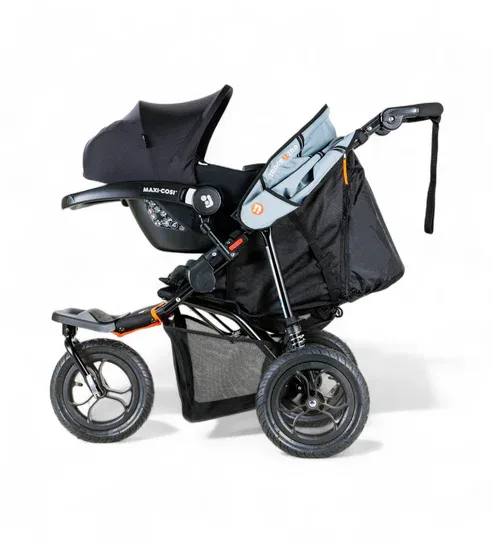
Staying active after having a baby doesn't have to mean giving up your running routine. A well-built running pram lets you combine your workouts with childcare, so you never have to choose between fitness and family time. But not every pushchair is built for jogging, and picking the wrong one can be uncomfortable, unsafe, or simply impractical on the road or trail. This guide covers the essential features to look for before you buy.
Why a Standard Pushchair Isn't Enough for Running
Everyday pushchairs are designed for walking pace, shopping trips, and short strolls. They typically have smaller wheels, limited suspension, and front wheels that swivel freely great for tight turns around a supermarket but unstable and potentially dangerous at running speed. A dedicated running pushchair is engineered specifically to handle the impact, momentum, and steering demands of jogging, making it a safer and more comfortable choice for active parents.
Key Features to Look For
Fixed vs Swivel Front Wheels
This is one of the most important decisions when choosing a running pram.
- Fixed front wheel: Locked in place, this keeps the pram travelling in a straight line even at speed, reducing wobble and improving control during a run.
- Swivel front wheel: Rotates freely, making the pram easier to steer at walking pace and manoeuvre through doorways or tight spaces.
Many quality jogging buggies offer both options, allowing the front wheel to lock for running and unlock for everyday manoeuvring. This versatility is worth prioritising if you plan to use the same pram for both fitness and daily errands.
Suspension
Running on pavements, trails, or uneven ground sends constant small shocks through a pushchair's frame. Good suspension absorbs these impacts, giving your baby a smoother ride and protecting their developing spine and neck from unnecessary jolting. Look for prams with air-filled tyres and a suspension system built into the frame or wheel mounts, rather than basic foam wheels with no cushioning.
Handbrakes
A handbrake might not seem essential at first glance, but it's a critical safety feature for a running pram. When jogging downhill or stopping quickly, a handbrake gives you far greater control than a foot-operated brake alone. It allows you to slow down gradually and safely, rather than relying solely on your own pace to manage the pram's momentum.
Safety Tethers
A wrist strap or safety tether connects you directly to the pram's frame while running. This is a non-negotiable safety feature; if you were to lose your grip or trip, the tether prevents the pram from continuing forward unattended. Always check that any running pram you consider includes a secure, adjustable tether as standard.
Additional Considerations for Active Families
Weight and Frame Build
A lightweight yet sturdy frame makes a noticeable difference over longer runs. Aluminium frames tend to offer a good balance between durability and manageable weight, so you're not fighting against the pram's own mass in addition to pushing your child.
Storage and Practicality
Look for a pram with a decent under-seat basket or storage pouch so you can carry water bottles, keys, or a phone without needing a separate bag. Reflective detailing is also worth considering if you often run early morning or evening.
What About Families With More Than One Child?
Parents with twins or two young children shouldn't assume running is off the table. Many brands now offer a double stroller version of their running models, featuring the same fixed-wheel locking mechanism, suspension, and handbrake systems, simply scaled up to carry two seats side by side or in tandem. If you're planning to run with more than one child, check that the double version retains all the same safety features as the single model, rather than being a stripped-down alternative.
FAQs
What's the difference between a running pram and a regular pushchair?
A running pram has a lockable front wheel, better suspension, larger air-filled tyres, and safety features like handbrakes and tethers, all designed to handle the speed and impact of jogging.
At what age can a baby go in a running pram?
Most manufacturers recommend waiting until a baby has good head and neck control, typically around six to eight months, though this varies by model always check the specific guidance provided with your pram.
Can I use a running pram for everyday walking too?
Yes, especially models with a swivel-lock front wheel, which lets you switch between a fixed wheel for running and a free-swivelling wheel for everyday manoeuvrability.