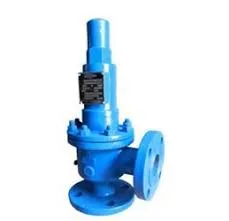
Pressure control is an essential requirement in industrial piping systems, boilers, pressure vessels, storage tanks, and processing equipment. Safety valve manufacturers in USA produce valves designed to release excess pressure automatically before equipment reaches unsafe operating limits. These valves help maintain system integrity by preventing pressure buildup that could damage pipelines, vessels, compressors, or process equipment.
Safety valves are widely installed in oil and gas, chemical processing, power generation, water treatment, marine, mining, pulp and paper, and industrial manufacturing facilities. Their performance depends on accurate pressure settings, material selection, and compliance with international engineering standards.
How a Safety Valve Works
A safety valve remains closed while the system operates below its preset pressure. When internal pressure reaches the calibrated set point, the spring-loaded disc lifts from the seat, allowing fluid or steam to discharge through the outlet. As system pressure decreases to the designated reseating pressure, the spring forces the disc back onto the seat, restoring normal operation.
The opening pressure is determined during factory calibration using precision spring adjustments. Proper valve sizing ensures adequate discharge capacity without excessive pressure accumulation.
Types of Safety Valves
Manufacturers supply different safety valve designs based on operating conditions and process requirements.
- Spring-loaded safety valves
- Full lift safety valves
- Low lift safety valves
- Pilot-operated safety valves
- Steam safety valves
- Gas safety valves
- Liquid service safety valves
- Balanced bellows safety valves
- Open bonnet safety valves
- Closed bonnet safety valves
Each design is selected according to pressure range, fluid characteristics, discharge capacity, and installation environment.
Materials Used
Material selection depends on operating temperature, pressure rating, corrosion resistance, and process media.
ComponentCommon MaterialsBodyCarbon Steel, Stainless Steel, Duplex Stainless Steel, Alloy SteelDiscSS304, SS316, Monel, InconelSeatStainless Steel, Stellite Hard FacingSpringStainless Steel, Inconel X-750BonnetCarbon Steel, Stainless SteelGasketGraphite, PTFE, Spiral WoundHard-faced seating surfaces improve wear resistance and provide consistent sealing during repeated opening and closing cycles.
Technical Specifications
Typical specifications offered by safety valve manufacturers include:
- Size: ½ inch to 12 inch
- Pressure Class: ANSI 150 to ANSI 2500
- End Connections: Flanged, Threaded, Socket Weld, Butt Weld
- Pressure Setting: Customized according to application
- Temperature Range: -196°C to 650°C
- Leakage Standard: API 527
- Design Standards: ASME Section VIII, API 520, API 526
- Testing: Hydrostatic, Seat Tightness, Air Leakage, Set Pressure Calibration
Manufacturers also provide customized pressure settings before shipment according to project requirements.
Applications
Safety valves are installed wherever overpressure protection is required. Typical installations include:
- Steam boilers
- Heat exchangers
- Pressure vessels
- Air compressors
- Pump discharge lines
- Storage tanks
- Chemical processing plants
- Refineries
- LNG terminals
- Power generation stations
- Water distribution systems
- Marine engine rooms
Correct valve sizing ensures sufficient discharge capacity during abnormal pressure conditions.
Manufacturing and Quality Testing
Safety valve manufacturers in USA follow controlled production procedures involving casting or forging, CNC machining, seat lapping, assembly, calibration, and performance verification. Every valve undergoes dimensional inspection before pressure testing.
Testing generally includes hydrostatic shell tests, pneumatic seat leakage tests, opening pressure verification, blowdown measurement, and functional performance checks. Many manufacturers also offer third-party inspection, positive material identification (PMI), radiographic examination, ultrasonic testing, and documentation packages for project approvals.
Selecting the Right Safety Valve
Choosing a safety valve requires evaluating operating pressure, set pressure, service media, flow capacity, inlet and outlet connections, operating temperature, material compatibility, and applicable industry standards. Environmental conditions such as corrosion, vibration, and outdoor installation should also be considered during valve selection.
Safety valve manufacturers in USA offer engineered solutions for industrial pressure protection with products designed to meet demanding operating conditions. Proper sizing, material selection, accurate calibration, and compliance with recognized standards help maintain stable operation while protecting valuable processing equipment throughout its service life.
Visit us: https://www.svrglobal.net/product-category/safety-valve/