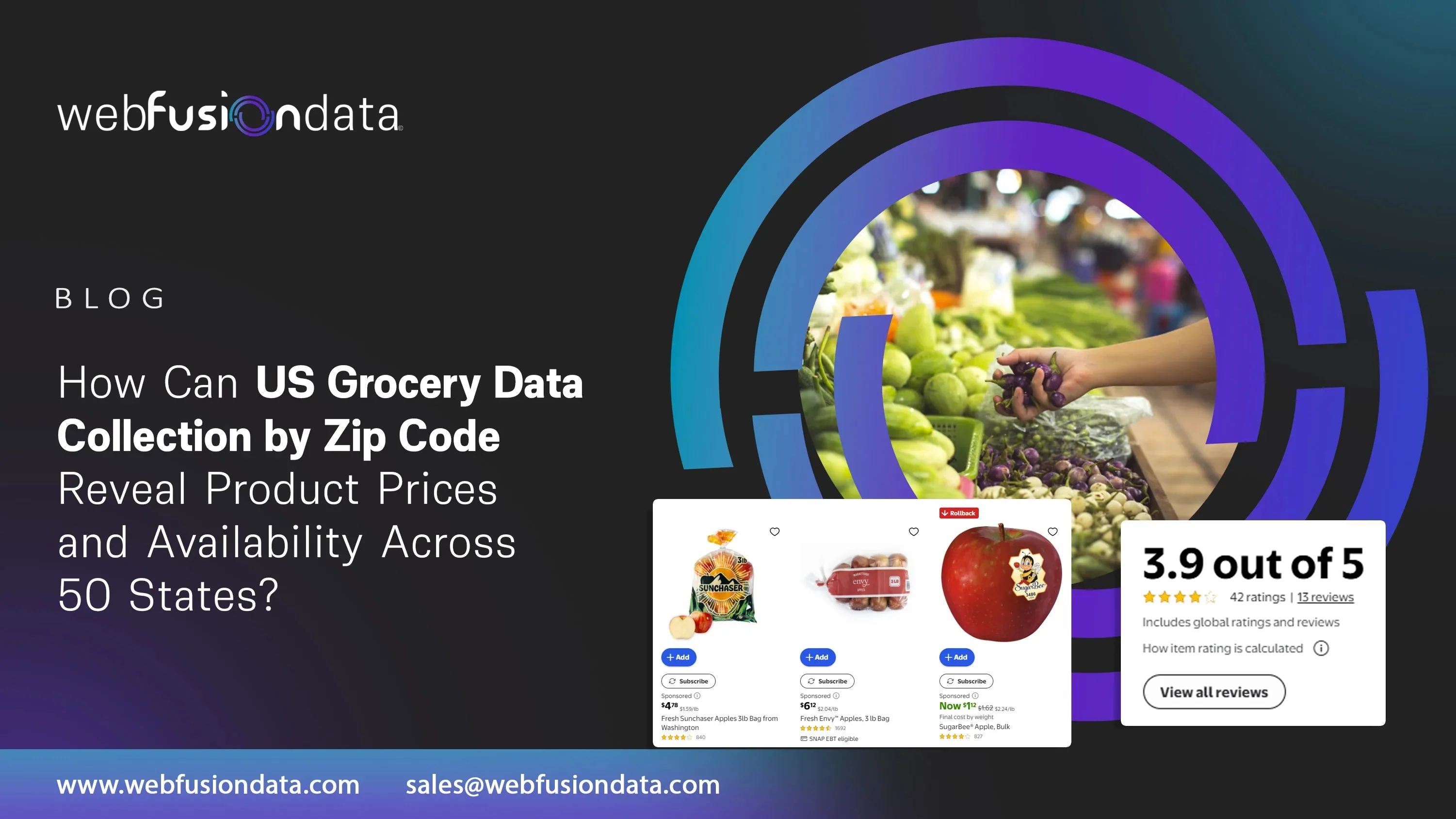
Grocery Data Scraping by Zip Code: Track Local Prices, Promotions and Stock Across the US
Grocery prices in America rarely look the same in two neighborhoods. National averages hide regional price gaps and sudden inventory shortages, which is why brands and retailers rely on US Grocery Data Collection by Zip Code to see real shelf conditions in all 50 states.
Supermarkets set prices using local demographics, supply chain costs, and nearby competitors. Zip Code-Based Grocery Price Monitoring helps category managers catch these shifts early, while Grocery Data Scraping by Zip Code replaces manual storefront checks with automated, real-time capture of product assortments, discounts, and stock statuses.
Why Grocery Prices Vary From Zip Code to Zip Code
Pricing changes across state lines and even between neighboring postal codes. Minimum wage rules, state grocery taxes, freight distances, and commercial rent push national chains toward localized pricing tiers. Studies show identical household staples can differ by 15% to 28% between coastal cities and suburban Midwest areas.
Local Grocery Pricing and Availability Tracking maps these price zones across thousands of delivery territories. Store-Level Grocery Pricing Data also helps CPG manufacturers negotiate wholesale terms and enforce Minimum Advertised Price compliance among distributors.
- Freight and logistics: rural zip codes far from distribution hubs often carry higher markups
- Competitive density: areas with three or more banners within five miles see aggressive discounts on dairy, bakery, and produce
- Local taxes: sugar taxes, bottle deposits, and packaging fees change final checkout totals
Spotting Stockouts Before They Hurt Sales
Price data loses value when the item is unavailable. Supply disruptions, weather, and demand spikes cause local stockouts that national reports miss, and online grocery out-of-stock rates average between 6% and 9%.
Grocery Product Data Scraping captures in-stock, low-stock, and out-of-stock labels at the branch level, so supply chain teams can reroute pallets before shelves empty. Knowing how to Scrape Grocery Prices by Zip Code alongside stock status reveals fulfillment bottlenecks across competing banners.
- Weather spikes: storm warnings can empty water, canned goods, and bread within hours
- Dark store limits: urban micro-fulfillment stores run out of refrigerated SKUs faster
- Substitution tracking: rival stockouts show where to win displaced shoppers
Teams that Collect Grocery Product Prices Across Multiple Zip Codes on a schedule gain an early-warning view of regional replenishment needs.
Scaling Extraction Without Getting Blocked
Entering thousands of postal codes triggers anti-bot defenses, CAPTCHA challenges, and IP blocks. Covering more than 41,000 US postal territories takes cloud infrastructure that can mimic genuine local shopper sessions.
A dedicated Grocery Scraping API handles residential proxy rotation, session cookies, and headless browser rendering, so developers avoid constant script repairs when retailers change layouts. Location-Based Grocery Product Data Extraction delivers clean JSON or CSV feeds into your data warehouse, and a Multi-Retailer Grocery Product Data Collection API lets data teams focus on demand modeling instead of fragile scrapers.
- Location selector handling to unlock local catalogs and flyers
- Schema normalization for pack sizes, weights, and brand names
- Quality validation that flags missing prices and duplicate listings
How Web Fusion Data Can Help You
Web Fusion Data delivers clean, structured datasets tailored to your geographic targets, with:
- Daily or hourly scheduling across all 50 states
- Granular zip code targeting for urban, suburban, and rural zones
- Anti-blocking architecture for complex location selectors
- Unified schemas for titles, pack sizes, unit prices, and promo tags
- Delivery through cloud storage, webhooks, or flat files
- Quality checks for completeness, accuracy, and duplicates
Conclusion
Modern food retail needs more than national averages or delayed reports. US Grocery Data Collection by Zip Code reveals hidden price tiers, promotional shifts, and localized stockouts, and Store-Level Grocery Pricing Data helps brands protect margins and prevent out-of-stock losses. Contact Web Fusion Data today to schedule a free consultation and request a custom sample dataset.
Source: https://www.webfusiondata.com/us-grocery-data-collection-by-zip-code.php