
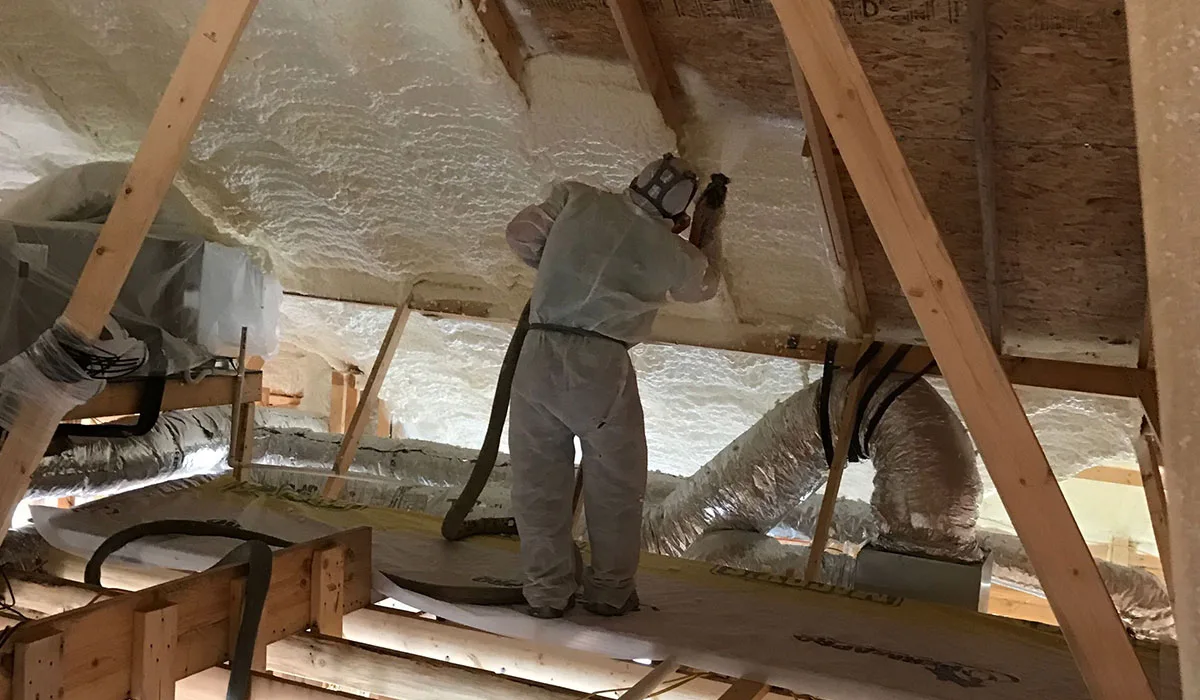
Using a spray-foam insulation moisture barrier effectively prevents water vapor from moving through your building envelope while providing superior thermal resistance. In most climates, especially those with high humidity or extreme temperature swings, managing moisture is just as vital as managing heat. This material works by creating a custom-fit seal that fills every gap, preventing humid air from reaching cold surfaces where it would otherwise condense.
This guide explains how different types of foam handle water and why choosing the right one protects your structure from long-term rot. With decades of collective field experience in the insulation industry, experts have found that air sealing and moisture control are inseparable for a healthy home. You will learn the technical differences among foam types and the specific scenarios in which a barrier is required rather than optional.

Understanding How Spray Foam Manages Water and Vapor
Not all foam is the same when it comes to water. While spray foam insulation is generally known for its sealing properties, its cell structure determines whether it acts as a filter or a shield. Closed-cell versions have high density and packed cells that do not allow water to pass through easily.
The Role of Cell Structure in Liquid Protection
- Closed-cell foam is categorized as a Class II vapor retarder at certain thicknesses.
- It prevents "solar driving," where sun-heated moisture is pushed into your walls.
- It creates a physical block that stops bulk water, such as minor leaks or wind-driven rain.
- This material does not settle or sag over time when exposed to humidity.
Does Spray Foam Prevent Mold and Mildew Growth
One of the biggest concerns for any property owner is organic growth. People often ask, does spray foam insulation prevent mold in damp areas? The answer lies in how the foam removes the food source and the environment that the mold needs to thrive. Mold requires moisture, air, and organic material like paper or wood.
Creating an Inhospitable Environment for Spores
- By sealing air leaks, you stop the transport of moisture-laden air.
- The foam itself is inorganic and does not serve as a food source for spores.
- Keeping surfaces above the dew point prevents condensation from forming.
- It protects the wooden framing from staying damp for long periods.
Bonus Tip: Even with a great barrier, you must ensure your building has proper mechanical ventilation to exhaust the moisture generated inside by showering or cooking.
Evaluating Spray Foam Vapor Permeability Ratings
Vapor permeability measures how much water vapor can pass through a material over time. Low permeability is what makes a material a "vapor retarder." In the insulation world, spray foam vapor permeability varies significantly between open-cell and closed-cell products.
Perm Ratings for Different Foam Types
- Open-cell foam has a high perm rating, typically around 10-15 perms.
- Closed-cell foam typically has a perm rating of less than 1.0.
- Lower perm ratings are better for preventing internal wall condensation.
- Permeability needs change based on whether you live in a cold or hot climate.
Is Closed-Cell Foam Waterproof in Practical Applications
When people ask if closed-cell foam is waterproof, they are usually looking for a solution for flood-prone areas or basements. While no insulation is a substitute for proper exterior drainage, closed-cell foam is "flood-resistant." It does not absorb water and maintains its shape even if submerged.
Performance During Flooding Events
- It can be washed and sanitized if it comes into contact with floodwater.
- It provides structural reinforcement to the walls it is sprayed onto.
- It is the only insulation approved by FEMA for use in flood zones.
- It stops water from wicking up through the studs via capillary action.

4 Common Situations That Require a Moisture Barrier
Not every project needs the highest level of moisture protection, but certain conditions make it a necessity. If your building falls into these categories, a standard insulation job might not be enough.
- High-Humidity Interiors: Buildings such as indoor pools, greenhouses, or large commercial kitchens.
- Vented Crawl Spaces: Areas where damp earth constantly releases moisture into the floor joists.
- Below-Grade Walls: Basement walls that are in direct contact with cool soil.
- Metal Buildings: Structures where closed-cell spray foam condensation control is needed to stop "sweating" on steel panels.
Comparing Moisture Performance Across Common Materials

Technical Benefits of Closed-Cell Spray Foam Condensation Control
Condensation occurs when warm, moist air comes into contact with a cold surface. In a typical home, this occurs on the back of the exterior sheathing during winter. Using closed-cell spray foam condensation control techniques moves the dew point into the insulation itself, where there is no air to condense.
Stopping the Sweating Effect
- It creates a continuous thermal break across the studs.
- It eliminates the "chimney effect" that pulls damp air from the bottom to the top of a building.
- It stays adhered to the substrate, preventing gaps where frost could form.
- It works effectively in "flash and batt" systems when applied at the correct thickness.
Bonus Tip: In cold climates, apply at least 2 inches of closed-cell foam to ensure the foam's interior surface stays warm enough to prevent condensation.
5 Things to Consider Before Starting Your Insulation Project
Before you commit to a specific type of spray foam insulation moisture barrier, you must evaluate the unique needs of your structure. Planning ahead prevents expensive retrofits later.
- Local Climate Zone: Cold northern climates need different vapor management than hot, humid southern areas.
- Building Usage: Determine if the space will be used for storage, living, or high-moisture activities.
- Existing Drainage: Ensure your gutters and grading are functional before insulating from the inside.
- Ventilation Strategy: Decide if you are creating a "conditioned" space (unvented) or a traditional vented space.
- Structural Integrity: Check if the walls need the added strength that high-density foam provides.

Get a Free Quote and Expert Guidance for Your Building Envelope
Deciding on the right moisture strategy involves more than just picking a product. It requires an understanding of building science and local weather patterns. Professionals like those at Selkirk Energy Solutions can help you determine whether a spray-foam insulation moisture barrier is the best fit for your specific goals. You can reach their team at (208) 295-9780 or via email at office@selkirkenergy.com to discuss your project. Whether you are dealing with a damp crawl space or a new metal building, they offer services ranging from Crawl Space Encapsulation to Residential Insulation. If you are in the area, you can also find their location on this Map to see their service range. Getting a professional assessment ensures your spray foam insulation is installed at the right thickness to provide a permanent solution for both temperature and moisture control.
Summary of Moisture Protection Strategies
Managing moisture is about controlling both liquid water and water vapor. Using spray foam insulation as a moisture barrier is a modern way to address both issues with a single application. By choosing the right density and thickness, you protect the structural components of your building and improve the air quality for everyone inside. Always evaluate your specific climate and building type before choosing between open and closed-cell options.
How Does Spray Foam Interact With Daily Moisture
Can spray foam be applied to wet wood?
No, the surface must be dry. Applying foam to wet wood can trap moisture inside the studs, leading to rot, and will prevent the foam from adhering properly.
Does the foam hide leaks in the roof?
Closed-cell foam is so dense it can sometimes mask a leak by holding water against the roof deck. Many experts recommend using a leak detection system or specific application patterns in high-risk areas.
Is a separate plastic vapor barrier needed with spray foam?
If you use closed-cell foam at a thickness of two inches or more, it usually acts as its own vapor retarder, making additional plastic sheeting unnecessary in most jurisdictions.
Will the foam break down if it gets wet?
Quality spray foam is chemically stable. While open-cell foam acts like a sponge and needs to be dried out, closed-cell foam is not damaged by occasional water contact.
How does spray foam affect indoor air quality?
By stopping the entry of humid air, the foam reduces the presence of outdoor allergens and prevents the growth of mold, which significantly improves the air you breathe.