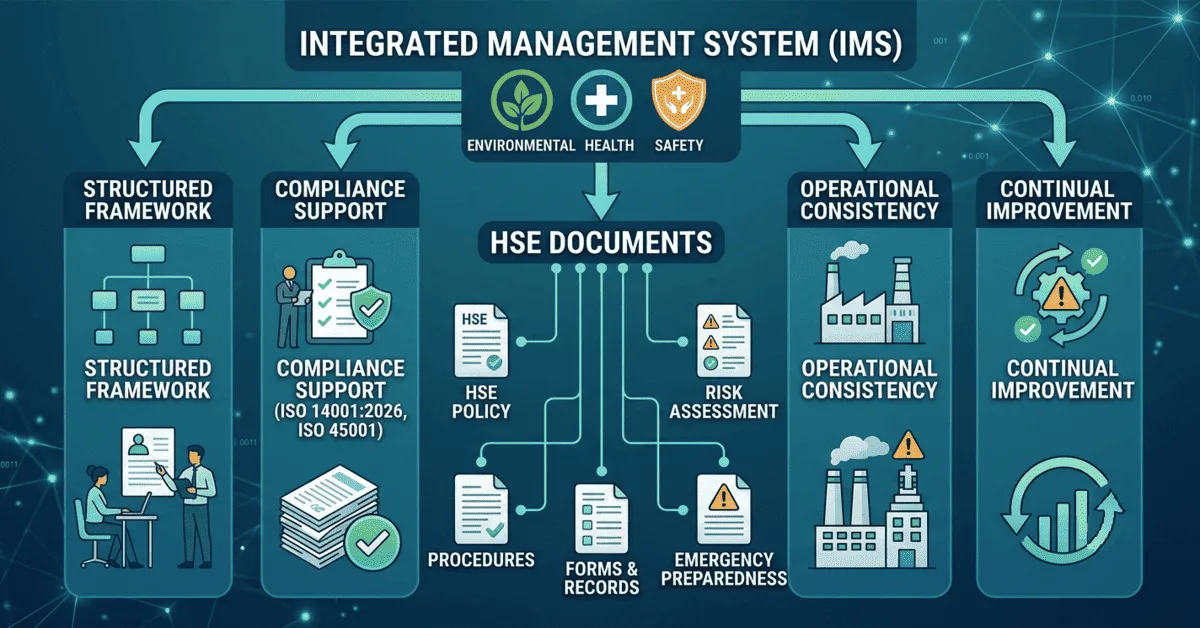
Organizations implementing an Integrated Management System (IMS) must ensure that their environmental, health, and safety processes work together efficiently. One of the most important elements supporting this integration is HSE documents. These documents provide a structured framework for planning, implementing, monitoring, and improving Health, Safety, and Environmental (HSE) activities while helping organizations meet the requirements of ISO 14001:2026 and ISO 45001.
Rather than being a collection of paperwork, HSE documentation serves as the foundation of a consistent management system. It helps organizations define responsibilities, standardize processes, maintain compliance, and demonstrate effective system implementation during internal and external audits.
Why HSE Documents Are Important in an Integrated Management System
An Integrated Management System combines multiple management standards into a single framework, reducing duplication and improving operational efficiency. Well-structured documentation makes this integration possible by ensuring that environmental and occupational health and safety processes follow a unified approach.
Well-developed documentation helps organizations:
- Define standardized work processes across departments
- Establish clear responsibilities and authorities
- Support legal and regulatory compliance
- Improve communication throughout the organization
- Maintain consistency in operational activities
- Simplify internal and certification audits
- Drive continual improvement initiatives
Without documented processes, organizations may struggle to maintain consistency, especially when operations involve multiple departments, locations, or teams.
Key HSE Documents That Support Integration
A complete HSE documentation system includes various documents that work together to support effective management.
Some of the essential documents include:
- HSE Policy
- HSE Objectives
- Risk Assessment Procedures
- Environmental Aspect and Impact Assessment
- Emergency Preparedness and Response Procedures
- Operational Control Procedures
- Training and Competence Records
- Incident Reporting Procedures
- Internal Audit Procedures
- Corrective Action Procedures
- Inspection Checklists
- Monitoring Forms and Records
- Management Review Records
Each document plays a specific role while supporting the organization's overall environmental and occupational health & safety objectives.
Organizations looking for a ready-to-use HSE manual can use professionally developed documentation as a foundation for implementing an integrated management system more efficiently.
How HSE Documents Improve Organizational Performance
A well-managed documentation system does more than support certification requirements. It contributes directly to operational performance by ensuring that every employee follows the same approved procedures.
Proper HSE documents help organizations:
- Reduce workplace incidents through standardized safety practices
- Improve environmental performance by controlling significant aspects
- Minimize operational risks through documented controls
- Enhance employee awareness and accountability
- Support evidence-based decision-making
- Improve document traceability during audits
- Reduce time spent developing procedures from scratch
When documentation is regularly reviewed and updated, organizations can respond more effectively to changing business operations, legal requirements, and emerging risks.
Supporting Compliance with ISO 14001:2026 and ISO 45001
Both ISO 14001:2026 and ISO 45001 require organizations to maintain documented information necessary for the effective implementation of their management systems. While the standards allow flexibility in documentation, organizations still need structured documents that support planning, operation, performance evaluation, and continual improvement.
An integrated HSE documentation system helps organizations demonstrate:
- Consistent implementation of management system processes
- Effective control of environmental and safety risks
- Compliance with applicable legal requirements
- Evidence of employee competence and awareness
- Reliable records for audits and management reviews
Organizations that establish comprehensive documentation are generally better prepared for certification assessments and ongoing system maintenance.
For additional information about documentation requirements, readers can also refer to this HSE documents guide, which provides complementary insights into HSE documentation.
Conclusion
HSE documents are a fundamental part of an effective Integrated Management System, helping organizations maintain consistency, support compliance, and improve environmental and occupational health & safety performance. By implementing well-structured documentation aligned with ISO 14001:2026 and ISO 45001, organizations can streamline operations, strengthen risk management, and support continual improvement across all business activities.