Reimagining Education Amid a Technological Tipping Point
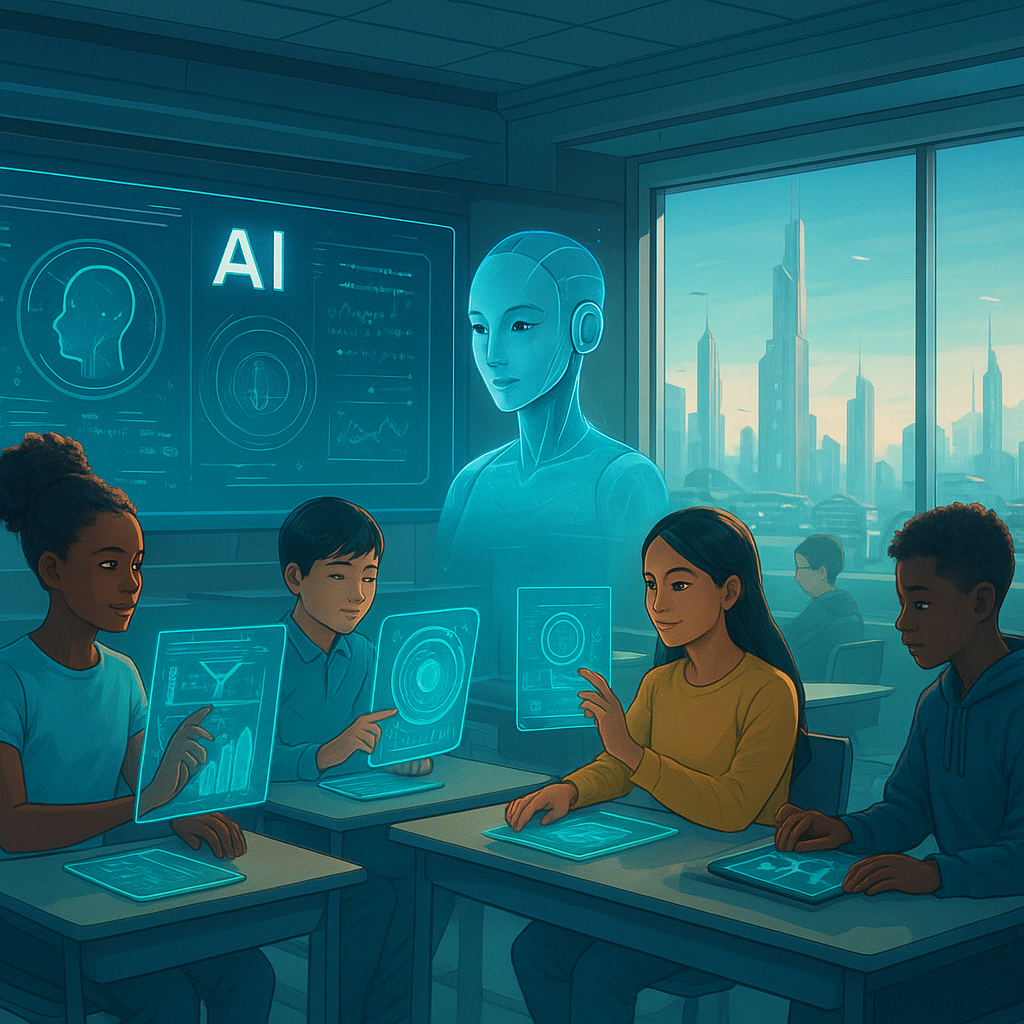
In a bustling classroom at a public school in Chicago, a 10-year-old student named Maya dons a lightweight headset that streams personalized lessons directly to her field of vision. Behind the scenes, an AI-powered platform analyzes her engagement and adapts content in real time, offering richer challenges on math concepts she masters quickly while providing more scaffolded support on reading comprehension. This scene, once the stuff of science fiction, is increasingly typical in 2026 classrooms worldwide.
The year 2026 marks a pivotal moment in education, where artificial intelligence (AI), equity initiatives, and innovative pedagogies intersect to redefine how knowledge is delivered and absorbed. From rural villages in Africa to high-tech campuses in Asia, education systems are undergoing profound transformations, driven by both technology and a growing insistence on inclusivity.
"Education in 2026 is less about standardization and more about customization and accessibility," observes Dr. Helena Martens, an education futurist at the Global Learning Institute. "The tools we now have empower educators and learners in unprecedented ways, but the real challenge is ensuring this revolution benefits everyone, not just a privileged few."
This article explores the major trends shaping education in 2026, supported by current data and expert insight, while connecting to broader conversations explored in Education in 2026: Transformations, Challenges, and the Road Ahead and Why Personalized Learning Is Redefining Education in 2026.
From Pandemic Pivot to Permanent Change: How We Arrived Here
The seeds of today’s educational landscape were sown during the COVID-19 pandemic of the early 2020s. Forced closures of schools worldwide exposed glaring inequities in access to technology and digital literacy, sparking urgent investments in infrastructure and edtech innovation. Governments and private sectors accelerated digital transformation efforts, while educators experimented with hybrid and fully online formats.
By 2024, hybrid learning models had become the norm in many countries. This period also saw the rise of AI-driven adaptive learning platforms, which tailored instruction to individual student needs based on continuous data analysis. These systems began to address long-standing challenges such as high dropout rates and achievement gaps.
Simultaneously, a renewed focus on equity emerged. Movements advocating for racial, socioeconomic, and disability inclusion gained traction in education policy circles. The UNESCO Global Education Monitoring Report 2025 emphasized that without deliberate measures, technological advances risked exacerbating existing disparities.
The interplay of technology and equity ushered in a new paradigm: education as an ecosystem rather than a one-size-fits-all model. This shift paved the way for the diverse trends evident in 2026.
Core Trends Transforming Education Today
Several key forces drive the evolution of education systems in 2026. These are not isolated; they interplay dynamically to reshape learning environments worldwide.
- AI-Driven Personalized Learning: Adaptive platforms now use advanced natural language processing and real-time emotion recognition to tailor lessons, pacing, and feedback. According to the International EdTech Association, 72% of K–12 schools in OECD countries employ AI tools to enhance learning outcomes.
- Equity and Inclusion as Central Pillars: Curricula and pedagogy increasingly reflect diverse cultural perspectives and cognitive styles. Accessibility technologies for students with disabilities have improved dramatically, with over 60% of schools integrating multimodal learning approaches.
- Hybrid and Flexible Learning Models: The rigid 9-to-3 school day is fading. Students engage in synchronous and asynchronous learning across physical and digital spaces, supported by universal broadband access initiatives.
- Teacher Roles Evolving Into Facilitators and Analysts: Educators now focus more on mentoring, social-emotional support, and interpreting AI-generated insights rather than traditional lecturing.
- Data Privacy and Ethics in Education Technology: As learning data proliferates, new frameworks for ethical AI use and student privacy have become vital policy topics.
These trends are substantiated by data from the 2026 Global Education Innovation Index, which shows a 45% increase in student engagement metrics where AI-personalized methods are deployed compared to traditional classrooms.
"The potential of AI in education lies not only in efficiency, but in its ability to recognize and nurture unique learner profiles," says Dr. Rajiv Khanna, Chief Innovation Officer at EdTech pioneer LearnSphere. "However, vigilance is required to prevent data misuse and ensure equitable access."
Current Developments in 2026: Case Studies and Impact
Across continents, innovative projects illustrate how 2026’s trends translate into real-world impact.
In Finland, the Helsinki Digital Learning Initiative launched a nationwide program integrating AI tutors that engage students in personalized STEM challenges. Early results indicate a 30% improvement in problem-solving skills among middle school students after one year.
Meanwhile, in Ghana, the NGO EduBridge has implemented solar-powered learning pods equipped with AI-driven content tailored to local languages and cultures. This approach addresses infrastructural and linguistic barriers simultaneously, reaching over 50,000 rural children.
Back in the United States, the Chicago Public Schools’ Equity in EdTech program mandates that all AI tools meet strict inclusivity and transparency standards before deployment. This policy has influenced nationwide adoption of ethical guidelines.
- Helsinki’s AI tutors improve STEM outcomes by 30%
- Ghana’s solar-powered learning pods serve 50,000 rural students
- Chicago’s policy drives ethical AI adoption in public schools
These examples underscore how technology, when paired with thoughtful policy and cultural sensitivity, can elevate educational access and quality.
Expert Perspectives on the Evolving Education Ecosystem
Leading voices in education technology and policy stress that the momentum of 2026 brings both promise and complexity.
Professor Lila Moreno, an expert in cognitive development at the University of São Paulo, highlights the importance of balancing AI autonomy with human oversight: "AI can identify learning gaps invisible to human teachers, but emotional intelligence and ethical judgment remain deeply human qualities indispensable to education."
Similarly, education activist and author Jamal Edwards warns against complacency: "We must guard against a digital divide that mirrors old inequalities. Equity is not a byproduct of technology—it must be its foundation."
The policy community echoes these concerns. The 2026 International Education Policy Forum emphasized multi-stakeholder collaboration to create frameworks ensuring that AI and personalization serve all learners equally. The forum’s final report aligns with the principles found in Rethinking Education: Five Forces Shaping Learning in 2026.
"The future of education hinges on designing systems that are human-centered, ethically sound, and inclusive," the forum concluded.
What to Watch: Future Outlook and Strategic Takeaways
As education systems evolve through 2026 and beyond, several trajectories demand close attention.
- Scaling Personalized Learning Globally: Efforts will focus on making AI-driven customization affordable and adaptable to diverse contexts, especially in low-income regions.
- Strengthening Data Governance: Transparent, participatory frameworks for student data use will become standard, with implications for privacy laws worldwide.
- Teacher Training and Support: Preparing educators to partner with AI tools and manage hybrid classrooms remains a priority.
- Embedding Social-Emotional and Ethical Learning: As cognitive skills evolve, emphasis on empathy, critical thinking, and digital citizenship will grow.
- Technological Infrastructure Investments: Continued expansion of broadband and device accessibility will underpin equitable access to new learning models.
For stakeholders—from policymakers to parents—the imperative is to engage proactively with these trends while advocating for inclusive designs and policies. Leveraging insights from Rethinking Learning: How 2026 Is Transforming Online Education Forever can provide additional guidance on managing this transition.
Education’s future is not predetermined by technology alone; it is shaped by collective choices and commitments to equity and excellence.