
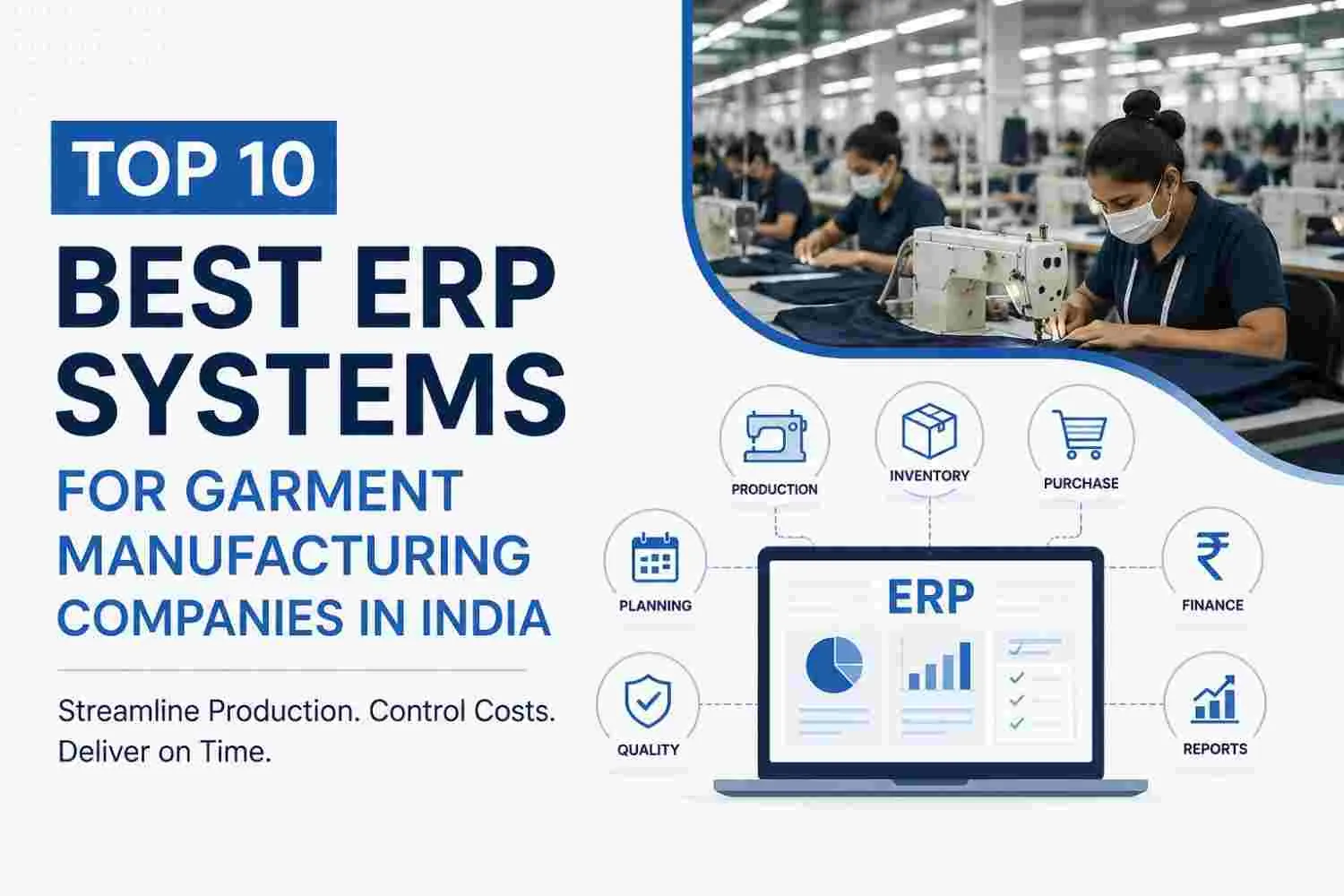
India’s garment manufacturing industry is growing rapidly, but managing a garment factory remains complex. Manufacturers need to handle fabric and trims, buyer orders, costing, production planning, quality checks, inventory, suppliers, shipments, and finance, often across multiple locations.
This is where an ERP system for garment manufacturing can help. An ERP brings key business processes into one connected platform, reducing dependence on Excel sheets, emails, and separate software.
However, not every ERP is built for apparel manufacturing. Garment companies need features such as style and size management, BOMs, fabric consumption, costing, production tracking, subcontracting, quality control, and order-wise inventory.
1. WFX (World Fashion Exchange)
WFX (World Fashion Exchange) is the best ERP Systems for Garment Manufacturing Companies in India because it is built specifically for the fashion and apparel industry. It connects important processes such as costing, orders, material planning, procurement, inventory, quality, production, shipping, accounting, and reporting.
For garment manufacturers, WFX supports production planning, work orders, material requests, subcontracting, WIP tracking, production progress, and finished-goods visibility. Its production tracking can also provide visibility at line and process level.
As a cloud-based platform, WFX allows teams to access business information across factories, offices, suppliers, and locations. It also connects ERP with PLM and MES capabilities, helping businesses link product development, planning, and shop-floor operations.
2. BlueKaktus
BlueKaktus provides ERP and MES solutions designed for fashion manufacturers. Its platform covers merchandising, procurement, production, finance, shipping, and vendor collaboration.
It also provides visibility into production performance, WIP, quality, and efficiency. For garment manufacturers looking to replace spreadsheets and manual reporting, BlueKaktus is an option worth considering.
3. Aptean Apparel ERP
Aptean offers ERP software designed for fashion and apparel companies. It supports production, inventory, sourcing, financials, material planning, warehouse management, and vendor management.
Its apparel-focused approach makes it suitable for businesses dealing with seasonal products, complex SKUs, and large product ranges. Larger organizations can also consider its integrations with PLM, shop-floor systems, EDI, and business intelligence tools.
4. SAP S/4HANA for Fashion
SAP is one of the world’s leading ERP providers, and its fashion solutions support requirements such as style, color, size, seasonal planning, purchasing, sales, inventory, manufacturing, and subcontracting.
SAP can be a strong choice for large garment manufacturers with complex supply chains and financial operations. However, implementation can be extensive, making it more suitable for organizations with larger budgets, IT teams, and implementation partners.
5. Oracle NetSuite
Oracle NetSuite is a cloud ERP covering financial management, inventory, order management, procurement, and manufacturing.
It can work well for garment businesses that want to connect finance and operations, particularly companies operating across multiple entities or countries. However, apparel-specific processes such as detailed garment costing, style development, and fashion product management may require additional configuration or integrations.
6. Microsoft Dynamics 365
Microsoft Dynamics 365 supports supply chain management, inventory, procurement, production planning, finance, and business intelligence.
Its integration with the wider Microsoft ecosystem can be useful for businesses already using Microsoft 365 or Power BI. Garment manufacturers should, however, evaluate whether industry-specific customization is needed for style-color-size structures, costing, and detailed production workflows.
7. ERPNext
ERPNext is an open-source ERP with modules for manufacturing, inventory, purchasing, sales, accounting, and other business functions.
It can be a practical option for smaller garment manufacturers looking for flexibility without immediately adopting a large enterprise platform. However, apparel-specific processes may require customization and technical support.
8. Odoo
Odoo offers applications for manufacturing, inventory, purchasing, sales, accounting, and warehouse management.
Its modular approach allows businesses to start with selected functions and expand over time. Garment manufacturers should assess how well Odoo handles requirements such as BOMs, size and color combinations, production routing, costing, and subcontracting without extensive customization.
9. Infor CloudSuite
Infor CloudSuite provides enterprise software for manufacturing, supply chain, inventory, planning, and business management.
It can be considered by garment and fashion companies with complex manufacturing and supply chain requirements. Because of its enterprise focus, it may be more suitable for larger organizations than small factories looking for a simple ERP.
10. VasyERP
VasyERP is an India-focused ERP platform covering inventory, accounting, sales, purchasing, and business management.
For smaller manufacturing businesses, an India-focused ERP can be useful because local accounting and taxation requirements matter when selecting software. Garment companies should still evaluate whether it offers sufficient depth for apparel costing, style management, production planning, and factory-floor tracking.
How to Choose the Best ERP for Garment Manufacturing
Choosing an ERP should go beyond comparing prices and feature lists. Manufacturers should evaluate how well the software fits their actual factory workflow.
Key features to look for include:
- Style, color, and size management
- Fabric and trim inventory
- Bill of Materials (BOM)
- Garment costing and budget management
- Material Requirement Planning (MRP)
- Purchase and supplier management
- Production planning and scheduling
- Work orders and WIP tracking
- Job work and subcontracting
- Quality control and defect tracking
- Finished-goods inventory
- Shipment management
- Accounting and financial reporting
- Real-time dashboards
- Multi-factory and multi-location support
A good apparel ERP should also reduce duplicate data entry. Information from product development and order processing should flow into costing, material planning, purchasing, production, inventory, and shipping.
Final Thoughts
The best ERP for a garment manufacturing company depends on its size, production complexity, budget, and growth plans.
Ultimately, the right ERP should make factory operations simpler, not more complicated. It should bring data into one place, reduce manual follow-ups, improve production visibility, control costs, and help garment manufacturers deliver orders on time.