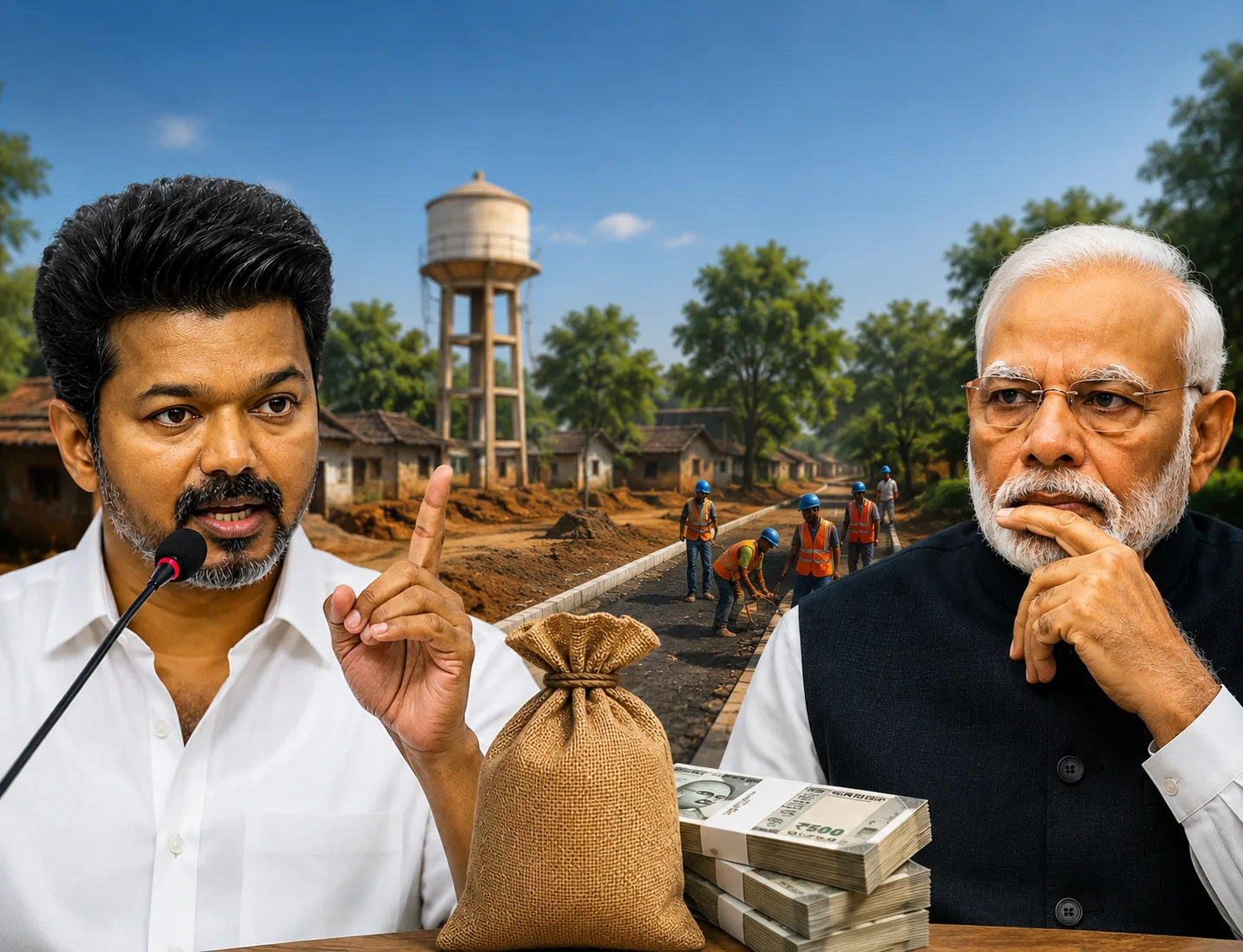
The VB-GRAMG Scheme has become the center of a growing political and policy debate after Tamil Nadu Chief Minister Thalapathy Vijay urged Prime Minister Narendra Modi to reconsider its current funding structure. The Tamil Nadu government has expressed concerns that implementing the scheme in its existing form could place an additional ₹5,000 crore financial burden on the state, potentially affecting its fiscal planning and ongoing welfare initiatives.
According to the state government, while the objectives of the VB-GRAMG Scheme may contribute to rural development and public welfare, the financial responsibilities assigned to states need to be more balanced. CM Vijay has appealed to the Centre to revise the funding model, arguing that states should not be required to bear a disproportionate share of the implementation costs. He believes a more equitable funding arrangement would enable states to participate effectively without compromising their existing development priorities.
The issue has also renewed discussions on Centre-State financial relations and the design of centrally sponsored schemes in India. Many policy experts emphasize that such initiatives are most effective when the financial burden is shared fairly between the Union and state governments. A collaborative approach, they argue, not only strengthens implementation but also ensures that states with varying financial capacities can achieve the intended outcomes without excessive budgetary pressure.
Supporters of the Tamil Nadu government's position contend that an additional expenditure of this scale could reduce the state's ability to invest in key sectors such as healthcare, education, infrastructure, and social welfare. They argue that states should have greater flexibility in implementing national schemes while maintaining financial stability. At the same time, the Central Government has consistently maintained that centrally sponsored schemes are designed to promote balanced regional development and require shared participation from both levels of government.
As discussions continue, political observers are closely monitoring whether the Centre will respond positively to Tamil Nadu's request or retain the existing framework of the VB-GRAMG Scheme. The outcome could have broader implications for future Centre-State cooperation and the funding structure of similar national programs.
The controversy surrounding the VB-GRAMG Scheme reflects a larger conversation about fiscal federalism, cooperative governance, and the balance between national development goals and state-level financial realities. Finding a mutually acceptable solution could strengthen the implementation of public welfare schemes while preserving the financial autonomy of states. With both governments expected to continue dialogue, the coming weeks may prove significant in shaping the future of the scheme and its role in India's development agenda.