A website is one of the most valuable assets a business can own but only when it's built with a clear purpose.
Many businesses invest thousands in attractive designs, modern animations, and advanced features, yet still struggle to generate leads or sales. The problem usually isn't the quality of the design. It's the lack of a well-defined website strategy.Before choosing colors, writing content, or selecting a CMS, you need a plan that connects your website with your business objectives.
In this guide, you'll learn what a website strategy is, why it matters, and how to create one that helps your business grow for years to come.
Define Website Strategy?
A website strategy is the process of planning how your website will achieve specific business goals while delivering an excellent experience for your visitors.
A strong website strategy defines:
- Why your website exists
- Who your ideal visitors are
- What actions you want users to take
- How your website supports your overall business goals
- How success will be measured
Without these answers, even a beautifully designed website can fail to deliver meaningful results.
Why Website Strategy Matters
Your website isn't just a digital brochure anymore.
It's your salesperson, marketing platform, customer support hub, and often the first impression potential customers have of your business.
Without a clear strategy, businesses often experience problems like:
- Low conversion rates
- Confusing navigation
- High bounce rates
- Poor search engine rankings
- Inconsistent messaging
- Expensive redesigns shortly after launch
Planning first eliminates much of this uncertainty.
When every page has a purpose and every decision supports a business objective, the entire website becomes more effective.
Start With Your Business Goals
Every successful website begins with business goals not design inspiration.
Ask yourself:
- Do you want more qualified leads?
- Are you trying to increase online sales?
- Do you want to build authority in your industry?
- Are you educating customers?
- Do you want to reduce support requests?
Different goals require different strategies.
For example, an ecommerce store should focus on simplifying purchases, while a professional services company should prioritize trust-building and lead generation.
Understand Your Target Audience
A website should be built around the people using it, not around internal assumptions.
Take time to understand your ideal visitors.
Consider:
- Who they are
- What challenges they face
- What information they're looking for
- What questions they ask before making a decision
- What prevents them from contacting or buying from you
The better you understand your audience, the easier it becomes to create pages that answer their questions and build confidence.
Visitors stay longer when they feel a website speaks directly to their needs.
Create a Website Design Strategy That Supports User Experience
Your website design strategy should always support usability before aesthetics.It's about making it easy for visitors to achieve their goals.
An effective design strategy focuses on:
- Clear navigation
- Logical page hierarchy
- Fast loading pages
- Mobile responsiveness
- Readable typography
- Consistent branding
- Accessible layouts
When users can quickly find what they need, they're far more likely to convert.
Build a Website Content Strategy Before Writing
A thoughtful website content strategy ensures every page serves a purpose instead of simply filling space.
Start by identifying:
- Core service pages
- Landing pages
- Educational blog articles
- FAQs
- Case studies
- Testimonials
- Resource pages
Each page should answer a specific user question while guiding visitors toward the next step.
Search engines increasingly reward websites that demonstrate expertise and provide valuable information.
Plan Your Website Structure
Website structure influences both user experience and SEO.Visitors should be able to move naturally from one page to another without getting lost.
A simple structure usually includes:
- Home
- About
- Services
- Industry Solutions
- Case Studies
- Blog
- Contact
A clear structure helps search engines understand your website while making navigation easier for users.
Develop a Website Conversion Strategy
Your website conversion strategy should encourage visitors to take meaningful actions throughout the website.
Examples include:
- Requesting a consultation
- Booking a demo
- Downloading a guide
- Signing up for a newsletter
- Making a purchase
- Contacting your team
Every important page should contain a clear call to action.Avoid overwhelming visitors with multiple competing choices.
Small improvements in conversion rates can produce significant business growth over time.
Don't Ignore SEO During Planning
SEO works best when it's integrated into your website strategy from the beginning.
Trying to optimise a completed website often requires unnecessary revisions.
During planning, consider:
- Keyword research
- Search intent
- URL structure
- Internal linking
- Heading hierarchy
- Metadata
- Technical performance
Creating pages around what people are actually searching for increases your chances of attracting qualified traffic.
SEO should influence website architecture not simply be added after launch.
Create a Website Redesign Strategy Before Rebuilding
Many companies redesign their websites because they dislike the current design.
A successful website redesign strategy begins with analysis.
Review:
- Current traffic
- Conversion rates
- High-performing pages
- Underperforming pages
- User behaviour
- Search rankings
- Customer feedback
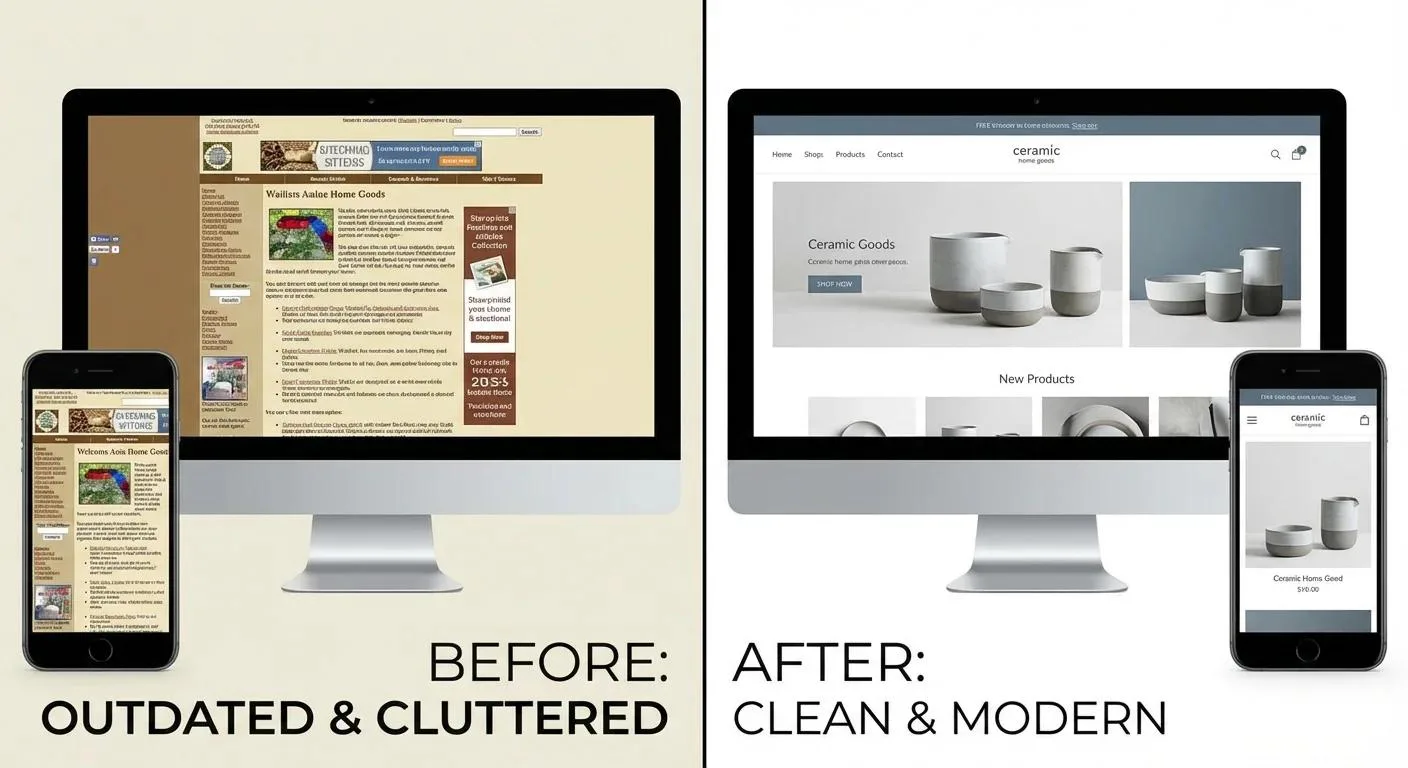
A redesign should improve business performance, not simply modernise the appearance.
Measure Website Success
Your strategy should define success before the website launches.
Useful performance indicators include:
- Organic traffic growth
- Lead generation
- Conversion rate
- Bounce rate
- Time on page
- Contact form submissions
- Revenue generated
- Customer acquisition cost
Tracking these metrics allows continuous improvement instead of relying on assumptions.
Common Website Strategy Mistakes
Many businesses make avoidable mistakes that reduce website performance.
Some of the most common include:
- Designing before defining goals
- Writing content without understanding users
- Prioritising visual trends over usability
- Ignoring SEO until after launch
- Creating too many calls to action
- Copying competitor websites
- Failing to measure results
Avoiding these mistakes saves time, money, and future redevelopment costs.
Final Thoughts
A successful website doesn't happen by accident.It starts with a clear website strategy that guides every decision from planning and content creation to design, SEO, and ongoing optimisation.
Whether you're building a brand-new website or planning a website redesign strategy, taking the time to define your goals, understand your audience, and create a thoughtful plan will lead to better long-term results.Instead of treating your website as a one-time project, think of it as a business asset that continuously supports marketing, sales, and customer growth.
When strategy comes first, every page has a purpose, every visitor has a clear journey, and every improvement contributes to measurable business success.