
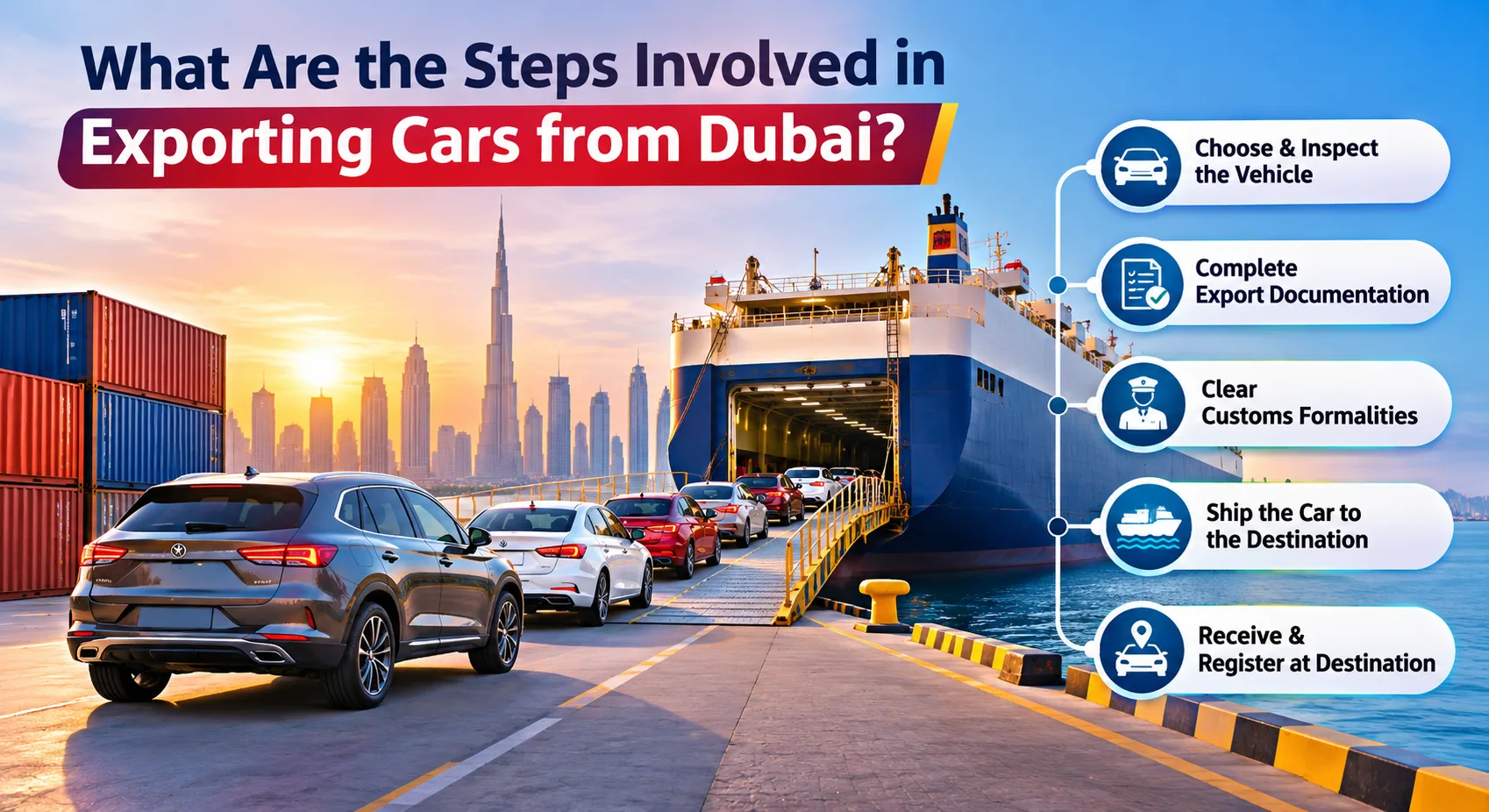
Exporting a vehicle to another country involves several important steps, from selecting the right car to completing documentation and arranging transportation. Buyers and sellers must understand the legal requirements, vehicle inspection procedures, customs regulations, and shipping options before starting the process. Proper planning helps avoid unnecessary delays, additional expenses, and documentation problems.
Dubai Car Export is an important part of the international automobile trade, connecting vehicle sellers with buyers across different countries. Many customers look for vehicles that offer good performance, reliable condition, competitive pricing, and suitable specifications. Understanding how the export process works makes it easier for individuals and businesses to complete international vehicle transactions with confidence.
1. Select the Right Vehicle for Export
The first step is choosing a vehicle that meets the requirements of the destination country. Buyers should consider the vehicle's brand, model, manufacturing year, mileage, engine capacity, fuel type, and overall condition. It is also important to understand whether the destination country allows the import of new, used, or specific categories of vehicles.
Before making a purchase, compare different vehicles and check their market prices. Selecting a vehicle that matches local demand can also help buyers get better value from their investment.
2. Check the Vehicle's Condition and History
Vehicle inspection is an essential part of the export process. Before completing the purchase, buyers should examine the engine, transmission, brakes, tyres, suspension, electrical systems, and exterior condition. A professional inspection can help identify mechanical problems that may not be visible during a basic examination.
It is also important to review the vehicle's service records, accident history, ownership documents, and mileage information. A properly maintained vehicle with a clear history can provide greater confidence to international buyers.
3. Complete the Required Documentation
Documentation plays an important role in international vehicle transportation. The exporter must prepare the necessary paperwork to prove vehicle ownership and meet the requirements of the relevant authorities.
Commonly required documents include:
- Original vehicle ownership certificate.
- Seller's and buyer's identification documents.
- Purchase invoice or sales agreement.
- Vehicle export certificate.
- Customs export declaration.
- Shipping and transportation documents.
The exact requirements may vary depending on the vehicle's registration status, export method, and destination country. For registered vehicles in Dubai, the Roads and Transport Authority (RTA) provides an export certificate service to complete the registration cancellation process.
4. Obtain the Vehicle Export Certificate
An export certificate confirms that the vehicle has been processed for export outside the UAE. For vehicles registered in Dubai, owners can apply through the RTA website, smart applications, or authorised service centres.
The applicant must select the export option, provide the necessary vehicle information, choose the transportation method, and complete the required formalities. Depending on the selected method, the vehicle's number plates must be returned, and export plates may be issued when applicable.
This certificate is an important document for completing the export procedure and moving the vehicle towards international shipment.
5. Understand Customs Requirements
Customs clearance is another important stage of international vehicle transportation. Exporters must follow the customs regulations applicable to their shipment and destination.
The customs process generally involves submitting the export declaration, providing vehicle details, presenting supporting documents, and completing any applicable inspections or payments. Authorities may also require additional paperwork depending on the destination and type of vehicle.
Before arranging transportation, exporters should confirm the customs requirements with the relevant authorities or an experienced customs clearance agent. This helps prevent documentation errors and unnecessary delays.
6. Choose a Suitable Shipping Method
Selecting the right shipping method is important because it affects transportation costs, delivery time, and vehicle safety. The two commonly used methods are:
Ro-Ro Shipping: Roll-on/Roll-off shipping involves driving the vehicle onto a specialised vessel. It is commonly used for transporting standard vehicles and can be a practical option for international shipments.
Container Shipping: In this method, vehicles are secured inside shipping containers. It can provide additional protection during transportation and may be suitable for luxury, classic, or high-value vehicles.
Buyers should compare shipping quotations, insurance coverage, estimated delivery schedules, and destination port charges before selecting a transportation method.
7. Complete Destination Customs and Registration
Once the vehicle reaches the destination country, the importer must complete the local customs clearance procedure. This may involve submitting the purchase invoice, export certificate, bill of lading, and other required documents.
Import duties, taxes, and additional charges depend on the destination country's regulations and vehicle specifications. Some countries also require vehicle inspections, emissions testing, or technical modifications before registration.
After completing customs formalities, the importer can proceed with local registration and obtain the necessary road-use permissions.
8. Maintain Proper Communication Throughout the Process
Clear communication between buyers, sellers, shipping companies, and customs agents helps ensure a smooth transaction. Every party should understand the responsibilities, payment terms, documentation requirements, and expected delivery schedule.
Keeping digital and physical copies of important documents is also useful. Buyers should regularly check shipment updates and confirm delivery arrangements before the vehicle reaches its destination.
Also Read :- How Does a New Car Exporter Simplify Global Vehicle Shipping?
Conclusion
International vehicle transportation requires careful planning, accurate documentation, proper vehicle inspection, and an understanding of customs and shipping procedures. Following each step in the correct order can help exporters avoid common problems and make the entire transaction more organised. Working with an experienced automotive export company can also simplify the process and provide better assistance throughout the journey. Nubia Cars can be considered by customers looking for professional automotive export assistance and a more organised vehicle purchasing experience.