My cousin sent me a video last year of someone dragging these weird wooden blocks across a client's thigh and asked, "is this even real?" Fair reaction. Thin people get it, fit people get it. It's about fat pushing against connective tissue that's stayed tight and rigid under the skin — a structural thing, not a fat thing. Wood therapy for cellulite goes after that structure directly: circulation, fluid movement, the tissue itself.
You typed "wood therapy near me" into your phone at some point, probably not in great lighting, probably not feeling amazing about it.
The Tools, and Why They're Shaped Like That
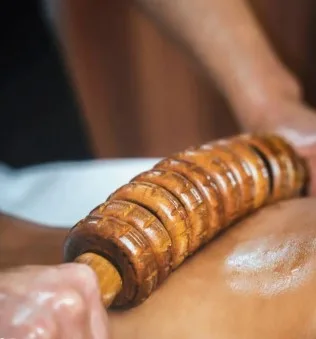
Each piece of wood does something different. The bigger curved ones move across thighs and glutes. The smaller, ridged pieces work into tighter spots — knees, the backs of arms, wherever the tissue is more stubborn.
What surprises people isn't the tools, it's the pressure. This isn't a relaxing massage. A wood therapy massage follows deliberate patterns designed to move lymphatic fluid and break up the fibrous bands that create that dimpled texture. My first session, I remember thinking it felt more like deep tissue work crossed with something almost mechanical.
It's firm. Not painful, but you'll notice it.
What It's Actually Doing to Cellulite
Fat cells push up, connective tissue stays stiff, skin looks uneven. That's the whole mechanism. Wood therapy for cellulite loosens that stiff tissue while pushing blood flow into the area, and the two things together are what smooth the surface out over time.
One session isn't nothing — skin often looks tighter right after, mostly from the circulation boost. But that's temporary. The actual texture change, less dimpling, comes from repetition. Four sessions in is a different story than one session in.
Nobody walks out of a single appointment with a completely different body. If a place is telling you that, they're selling something, not explaining something.
Walking Into Your First Appointment
Expect a short conversation first — where it bothers you, what you're hoping changes. Then you'll change into something comfortable, usually keeping underwear on while the practitioner works everywhere else.
Oil goes on to reduce friction. Then it's long, firm strokes with the wood tools across whatever you're targeting, thighs and stomach are common combos. Most sessions land somewhere between 30 and 60 minutes.
Mild redness afterward is normal, fades in a couple hours. Just circulation doing its thing.
If You're Actually Comparing Places
Skip the first Google result and ask real questions. Anyone promising results in one visit isn't giving you accurate information.
Some clinics pair this with lymphatic drainage techniques. Worth asking about, since that combo tends to get better results than wood therapy running solo.
Why It Beats Going Under the Knife, For Some People
No incisions. No recovery time built into your calendar. You show up, you leave, you go to work or pick up your kids or whatever's next on your day.
That's it, really. Nobody in this camp is looking for a complete transformation. They just want their skin closer to how it used to feel, and they'd rather not have surgery to get there.
Conclusion
There's no version of this where one appointment fixes everything, no matter what the marketing says. Wood therapy works because it's repetitive, because it keeps pushing circulation and loosening tissue session after session. If you've been searching for a wood therapy massage near me looking for something that actually makes physical sense instead of a quick fix, that consistency is the part worth paying attention to.
FAQs
Q: Will cellulite come back after wood therapy?
A: It can, since cellulite is tied to how your body stores fat and how your tissue behaves, both of which don't change permanently overnight. Most people maintain results with occasional follow-up sessions. Think of it less like a cure and more like upkeep.
Q: Cream, roller, or wood therapy — does it matter which?
A: Wood therapy tends to go deeper and hit tissue that at-home tools just can't reach with the same pressure or precision. Rollers and creams work fine as maintenance between sessions. They're not really substitutes for each other.
Q: I'm nervous about the pressure — will it hurt?
A: It's firm, not painful — there's a real difference. Speak up during the session if something feels like too much, practitioners adjust pressure regularly. Most people say it's intense but completely tolerable.