A single spark in a fuel cargo hold is all it takes. Maritime fire and explosion incidents remain among the most catastrophic in industrial safety — and the ignition sources identified in post-incident investigations are rarely dramatic. They are mundane: uncertified electrical equipment, handheld devices, poorly specified maintenance tools brought into spaces where explosive atmospheres are a routine operational reality. For UK maritime operators, the obligation to control ignition sources in engine rooms, pump rooms, and cargo holds is not a guideline. It sits within a layered framework of SOLAS requirements, ATEX Directive obligations, and DSEAR compliance — and imaging equipment is no exception.
Why Ship Engine Rooms and Cargo Holds Are Classified Hazardous Zones
The classification of maritime spaces as hazardous areas follows the same fundamental logic as any shore-based industrial facility, but the operational context is considerably more demanding. Engine rooms on fuel-powered vessels contain diesel, lubricating oils, hydraulic fluids, and bilge atmospheres — all of which can generate flammable vapour concentrations under normal operating conditions. Pump rooms on tankers are among the most consistently hazardous enclosed spaces in any industry, with hydrocarbon vapour present as an inherent function of cargo transfer operations.
Cargo holds on liquefied gas carriers, chemical tankers, and product tankers present even more acute classification requirements. Depending on the cargo, these spaces can generate Zone 0 conditions — where an explosive atmosphere is present continuously or for long periods. Adjacent spaces and interconnected ventilation pathways may themselves be classified Zone 1 or Zone 2 as a consequence.
Under the ATEX Directive, all equipment introduced into these zones must be certified to the appropriate equipment category for that zone. That obligation applies on UK-flagged vessels and, increasingly, on vessels operating in UAE territorial waters and Gulf ports, where Port State Control inspections are raising expectations around ATEX and IECEx compliance for shipboard equipment across all classified spaces.
The Camera Compliance Gap That Maritime Safety Officers Are Missing
Ask most maritime safety officers to list their hazardous area equipment concerns and they will name gas detection systems, electrical switchgear, and lighting. Cameras — fixed CCTV, portable inspection devices, documentation tools — rarely feature prominently. This is a significant oversight.
Photography and video documentation aboard vessels has expanded considerably. Condition monitoring of machinery spaces, cargo inspection records, incident investigation evidence, port state control preparation — all of these activities now involve cameras, and many of them take place inside classified zones. The devices being used for that documentation are, in the majority of cases, consumer-grade smartphones or standard digital cameras with no ATEX certification whatsoever.
Under PUWER and DSEAR, any work equipment used in a classified zone must be suitable for that environment. There is no maritime exemption to this requirement for UK-flagged vessels. And for operators trading through UAE ports, the Dubai Maritime City Authority and Abu Dhabi Ports Group are increasingly aligned with international certification expectations — meaning the compliance gap is not limited to UK waters.
Certification Requirements: What Maritime Deployments Actually Demand
Specifying ATEX cameras for maritime use requires more than selecting a product with a zone rating. The marine environment adds additional demands that a land-based specification does not capture. The key certification considerations for shipboard camera deployment include:
- Zone classification match: Engine rooms are typically Zone 1 or Zone 2 depending on location within the space; pump rooms on tankers are often Zone 1; cargo holds on gas carriers may be Zone 0 in certain configurations — each requires the appropriate equipment category (2G or 1G respectively)
- Gas group certification: Marine environments involve a range of flammable substances — IEC gas group IIC certification covers the widest range including hydrogen, which is relevant to battery spaces and some cargo types
- Ingress protection rating: Maritime classified spaces involve humidity, condensation, spray, and wash-down — IP66 or IP67 minimum is a practical requirement, not merely a preference
- Temperature class: Verified against the auto-ignition temperatures of the specific substances present in each space
- Marine-grade materials: Resistance to salt atmosphere corrosion, vibration, and mechanical shock relevant to vessel operations
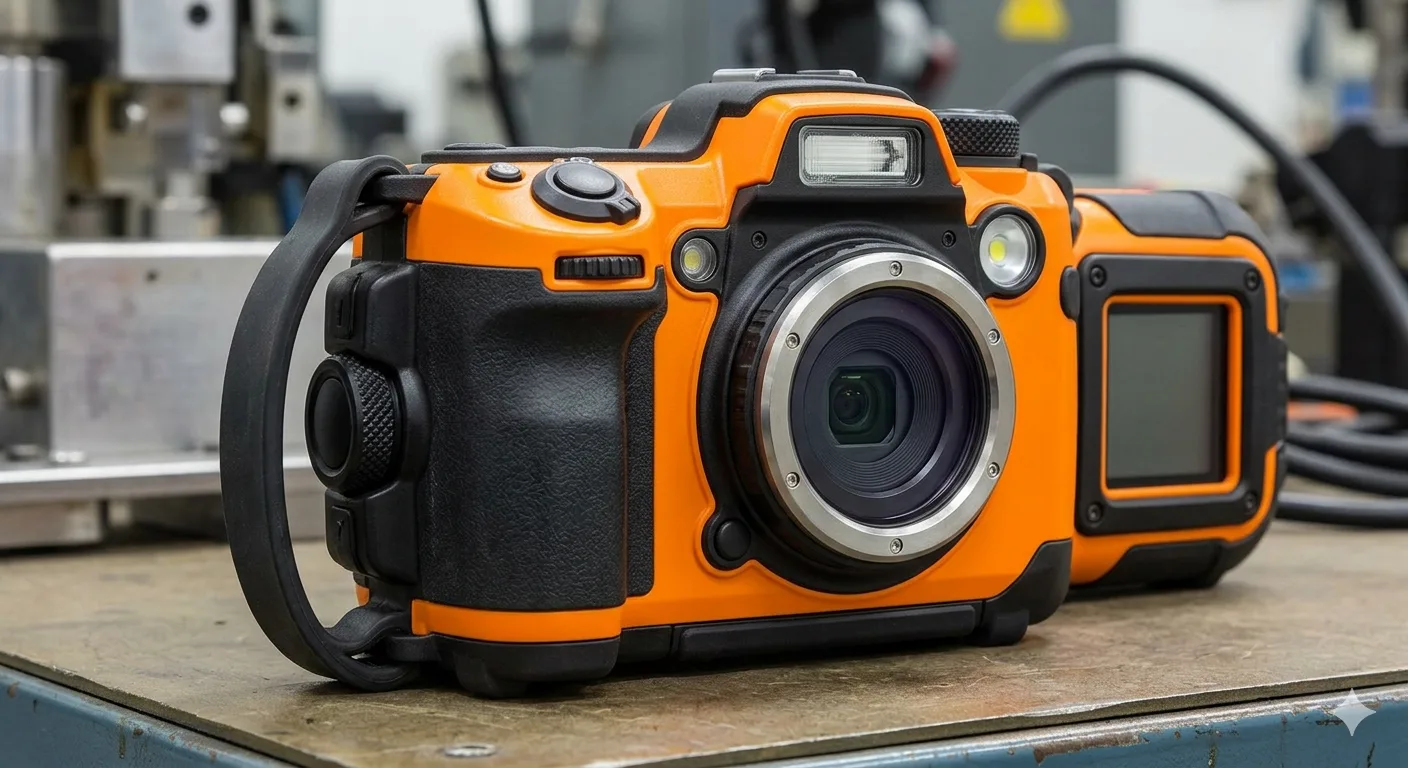
When sourcing equipment for shipboard classified zone deployment, working with a qualified explosion proof digital camera Supplier that understands both the ATEX certification framework and the specific demands of maritime environments will produce a compliant, durable specification that a Port State Control inspection will not challenge.
Deploying Certified Cameras Across Your Vessel's Classified Zones
The starting point for any shipboard camera deployment programme is your vessel's hazardous area drawing — the formal classification document that defines zone boundaries across every classified space. If your vessel does not have an up-to-date hazardous area drawing, that document needs to be produced or reviewed before any equipment specification proceeds.
Once your zone map is confirmed, camera deployment decisions follow a logical sequence: which spaces require fixed monitoring, which require portable documentation capability, and what certification category applies to each location.
For operators managing a fleet or planning a major vessel refit, the camera specification process is best integrated into the broader hazardous area equipment review rather than treated as a standalone procurement exercise.
If your vessel safety programme is at the evaluation stage and your team is ready to Get Quote for explosion proof digital camera options matched to your specific shipboard zone classifications, bring your hazardous area drawings and cargo type documentation to that conversation from the outset.
Conclusion
Maritime operators investing in ATEX-certified imaging now are making a decision that will compound in value across every inspection cycle, incident review, and port state control examination their vessels face. Regulatory expectations in this space are moving in one direction only. The operators who address certified zone documentation proactively — rather than reactively following an enforcement action — will hold a structural compliance advantage that is increasingly difficult for their competitors to replicate. For those ready to Buy SharpEagle explosion proof digital camera equipment for their vessel fleet, understanding the full specification picture from the start is essential. Recommended read: 10 things to consider when buying an explosion-proof digital camera