
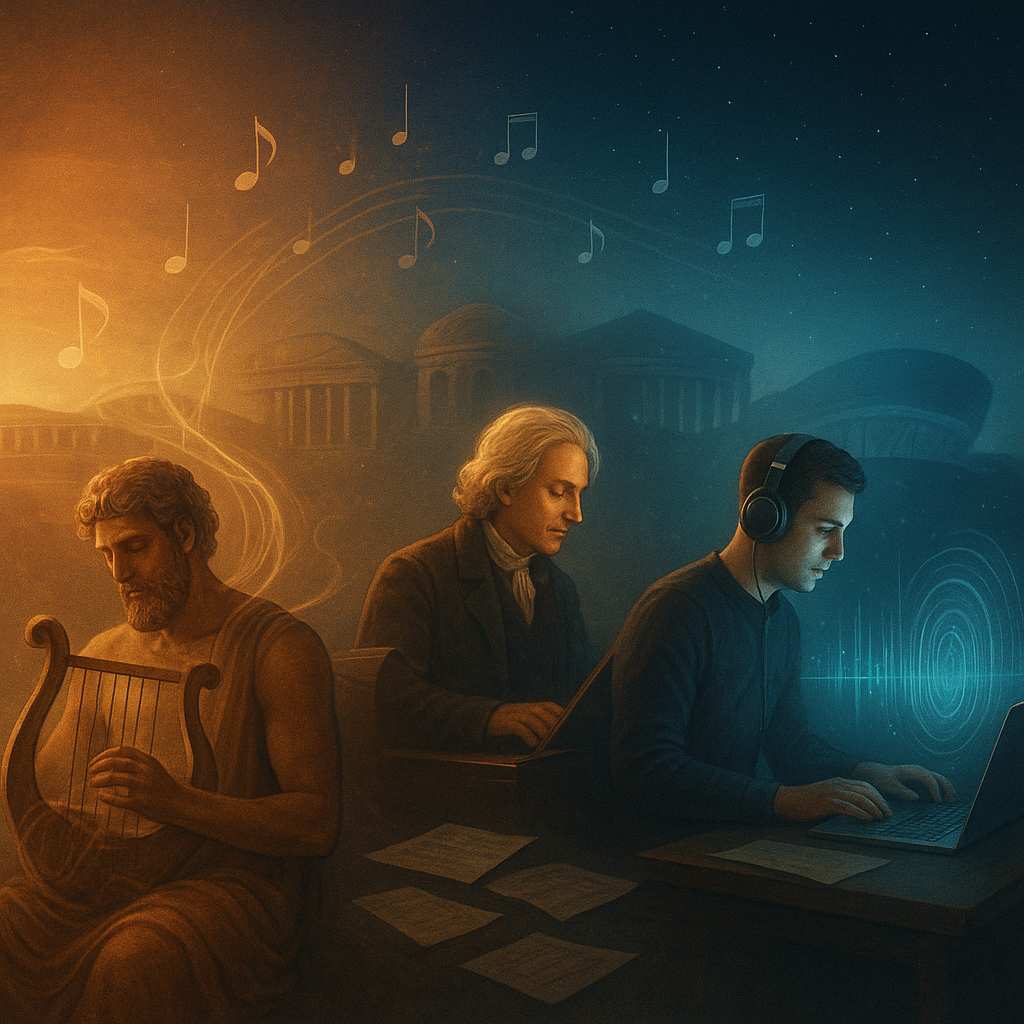
Setting the Stage: Music as a Universal Human Thread
Imagine a world without music. No melodies to accompany moments of joy or sorrow, no rhythms to move crowds or individuals, and no harmonies that connect generations across time and culture. The reality is that music is embedded deeply in human existence. Archaeologists have traced musical instruments back more than 40,000 years, revealing that music is not a mere entertainment artifact but a fundamental human expression. As of 2026, the role of music continues to expand beyond traditional boundaries, influenced by technological advancements, cultural shifts, and new modes of consumption.
This article explores critical facets of music today—from its ancient roots to the cutting-edge trends defining the present. Understanding what you need to know about music means appreciating its complex history, its evolving technology, and the industry dynamics shaping how we create and consume sound. TheOmniBuzz previously highlighted how music empowers human emotion and cognition, knowledge that remains essential as we explore its current landscape.
“Music is the shorthand of emotion.” — Leo Tolstoy, a timeless reminder of music’s universal language.
Tracing the Evolution: How Music Reached Today’s Global Stage
The journey of music is a story of innovation and cultural exchange. Early music, predominantly vocal and percussive, gave way to complex instrumentation with civilizations like Mesopotamia, Greece, and China developing scales, notation, and theories. The Middle Ages introduced polyphony, while the Renaissance and Baroque eras brought sophistication to harmony and orchestration. By the 20th century, technological inventions revolutionized music production and dissemination—phonographs, radio, multitrack recording, and eventually digital formats.
The 21st century witnessed a seismic shift with streaming platforms dismantling old distribution models. By 2026, data from the International Federation of the Phonographic Industry (IFPI) confirms that streaming accounts for over 85% of global recorded music revenues, illustrating a full transition to digital dominance. The rise of social media and short-form video platforms also transformed music marketing and discovery, enabling viral hits and independent artists to bypass traditional gatekeepers.
Understanding this trajectory is key to appreciating current trends. For example, the digital renaissance, detailed in TheOmniBuzz’s exploration of reshaped creativity, shows how artists now harness AI tools and immersive audio to redefine production and audience engagement.
The Sound of Data: Analyzing Music Industry Dynamics and Consumer Behavior
In 2026, the global music industry is valued at approximately $70 billion, growing steadily due to innovations in monetization and global audience expansion. Key players include major labels, independent distributors, streaming services, and live event promoters. The landscape is competitive but democratized, with technologies lowering barriers for creators worldwide.
Data-driven insights reveal several defining factors shaping music consumption and creation today:
- Streaming Dominance: Spotify, Apple Music, and emerging platforms like SoundWave AI lead with extensive catalogs and personalized recommendation algorithms.
- AI-Enhanced Production: Nearly 40% of new releases in 2026 incorporate AI-generated elements, from composition assistance to mastering.
- Genre Fluidity: Cross-genre collaborations are at an all-time high, reflecting audiences’ eclectic tastes and global cultural exchanges.
- Live Experience Evolution: Hybrid concerts mixing physical and virtual attendance, employing holograms and VR, attract millions globally.
Interestingly, younger demographics, particularly Gen Alpha and Gen Z, prioritize authenticity and diversity, influencing industry strategies. Analytics from Nielsen Music and IFPI show that playlists curated by users and influencers influence 60% of new music discoveries.
“The future of music lies at the intersection of human creativity and artificial intelligence.” — Industry analyst Dr. Maria Chen, speaking at the 2026 Global Music Tech Summit.
2026 Innovations: Technologies and Trends Revolutionizing Music
The year 2026 is marked by remarkable technological advancements transforming how music is produced, distributed, and experienced. The integration of AI, blockchain, and immersive audio technologies are no longer concepts but everyday realities for artists and listeners alike.
AI tools now assist in songwriting, arrangement, and even vocal synthesis, allowing creators to experiment beyond traditional limits. Platforms such as OpenSound AI and HarmoniX offer cloud-based AI studios accessible to amateurs and professionals. Additionally, blockchain technology is enabling transparent royalty tracking and direct fan-to-artist monetization through NFTs and smart contracts, mitigating longstanding issues with artist compensation.
Immersive audio formats, including spatial audio and 8D sound, have become mainstream, supported by headphones and home audio systems optimized for these experiences. Live performances benefit from holographic projections and mixed reality, enabling virtual attendance that mimics physical presence. These innovations enhance fan engagement and open new revenue streams.
- AI songwriting platforms with over 1 million monthly active users
- Blockchain-based royalty distribution reducing payment delays from months to days
- Spatial audio listeners increased by 50% year-over-year
- Hybrid concerts attracting audiences exceeding 10 million globally
These trends reflect broader shifts in entertainment consumption, where personalization, interactivity, and accessibility are paramount.
Industry Voices: Perspectives from Experts and Creators
Leading figures in music emphasize the transformative potential and challenges of the current era. Grammy-winning producer Janelle Monroe notes, “The tools we have now empower artists from anywhere to tell their stories in ways never possible before. But it also means the market is more crowded, making authentic connection with audiences critical.”
On the business side, executives from major labels like Universal Music Group highlight efforts to balance technological innovation with artistic integrity. They invest heavily in AI research and fan engagement platforms while maintaining traditional artist development pathways.
Music educators and psychologists also weigh in on music’s societal impact. Studies demonstrate that music facilitates emotional regulation, cognitive development, and social bonding, reinforcing its importance despite changing formats and channels.
“Music is both a mirror and a lamp for society — reflecting who we are and illuminating who we can become.” — Cultural sociologist Dr. Raj Patel.
These diverse perspectives underscore music’s multifaceted nature as art, industry, and social force.
Looking Ahead: What to Watch in Music’s Future
Predicting music’s future requires attention to emerging technologies, cultural shifts, and economic models. Several key developments are poised to shape the next decade:
- Expansion of AI Collaboration: Expect increasingly sophisticated human-AI partnerships in music creation, with AI as co-composers and performers.
- Decentralized Music Economies: Blockchain adoption will grow, enabling artists to monetize directly through decentralized platforms, reducing dependence on intermediaries.
- Immersive and Multisensory Experiences: Concerts and releases will incorporate virtual reality, haptics, and augmented reality, creating fully immersive environments.
- Global Cultural Hybridity: Cross-cultural fusion genres will proliferate, driven by global connectivity and diverse creator collaborations.
- Focus on Sustainability: The industry will increasingly prioritize eco-friendly practices in touring, production, and distribution.
For music enthusiasts and professionals, staying informed and adaptable will be crucial. Resources like TheOmniBuzz’s expert tips on mastering music offer practical guidance amid constant change.
Ultimately, music’s enduring power lies in its ability to evolve while nurturing human connection. As Dr. Patel reminds us, music remains a beacon for innovation and empathy, a pulse beating through every era.