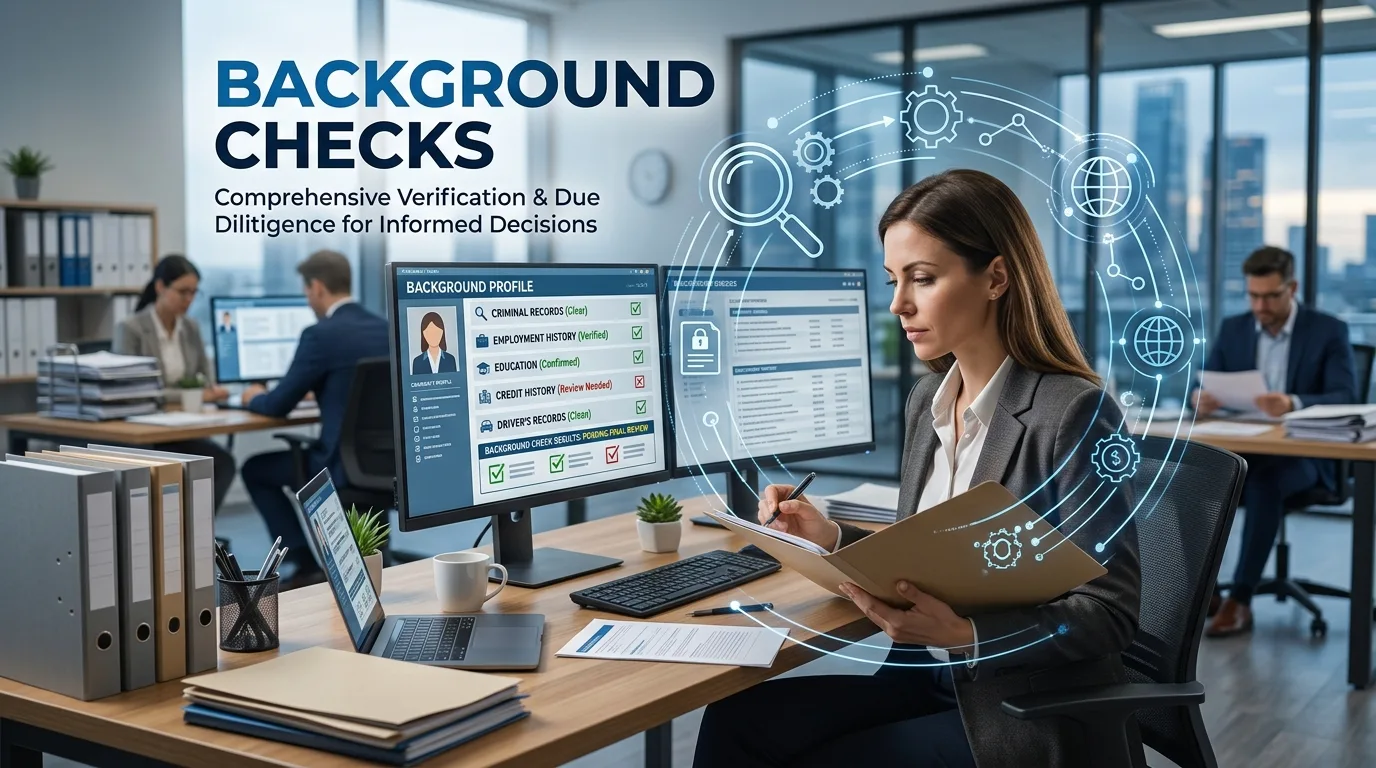
Businesses increasingly need to understand who they are dealing with before establishing long-term relationships. A customer background check can help organizations identify potential risks that may not be obvious during the initial onboarding process. While not every customer requires the same level of investigation, certain situations should encourage businesses to conduct more detailed Background Check.
What Is a Customer Background Check?
A customer background check involves reviewing relevant information about an individual or business to assess potential risks before or during a business relationship. Depending on the organization and industry, this may include identity information, professional history, legal records, business ownership details, sanctions exposure, and other publicly available information.
The purpose is not simply to collect information. Instead, businesses use these checks to make more informed risk-based decisions and identify warning signs that could indicate fraud, financial crime, or reputational concerns.
When Should Businesses Perform Background Checks?
The appropriate timing depends on the customer's risk profile and the nature of the relationship. However, several situations can justify conducting a check.
Before Onboarding a High-Risk Customer
Businesses should consider additional checks when a potential customer presents characteristics associated with higher risk. Complex ownership structures, unusual business activities, high-value transactions, or connections to higher-risk jurisdictions may require enhanced scrutiny.
A customer background check can provide additional information that supports customer due diligence and helps compliance teams determine whether further investigation is necessary.
When Customer Information Changes
Background checks should not always be treated as a one-time activity. Customers can change their business activities, ownership, employment, location, or financial behavior after onboarding.
Significant changes should therefore trigger a review. Periodic screening and updated checks can help businesses identify risks that were not present when the relationship originally began.
Before Providing High-Value Services
Companies offering expensive products, financial services, credit facilities, or other high-value arrangements may have greater exposure to fraud. Conducting appropriate checks before approving such relationships can reduce the possibility of dealing with fraudulent individuals or organizations.
For regulated businesses, an aml background check can be used as part of a broader compliance process alongside identity verification, KYC, sanctions screening, and other risk controls.
Employee Background Checks and Customer Checks Are Different
Employee background checks are generally designed to assess individuals before hiring or during employment. They may focus on employment history, qualifications, criminal records, and other information relevant to workplace risk.
A customer check has a different purpose. It focuses on understanding the risk associated with a commercial relationship. Businesses should therefore avoid treating customer and employee screening as interchangeable processes.
The information reviewed should be relevant to the relationship, collected lawfully, and handled according to applicable privacy and data-protection requirements.
How Background Checks Can Help Detect Fraud
Fraud risks can exist both inside and outside an organization. Understanding the Embezzlement meaning, for example, is useful when assessing how trusted individuals can misuse assets or funds for personal benefit.
Common Embezzlement examples include an employee redirecting company payments, manipulating financial records, or transferring business funds into a personal account. These situations demonstrate why organizations need controls that address both internal and external risks.
The fraud triangle theory provides another useful framework. It explains fraud through three commonly recognized factors: pressure, opportunity, and rationalization. Strong background checks cannot eliminate these factors, but they can contribute to a wider risk-management strategy.
When a Background Check Should Trigger Further Review
A background check does not automatically mean a customer should be rejected. Instead, potentially concerning findings should be assessed in context.
Businesses may need additional verification when information is inconsistent, ownership details are unclear, significant negative information appears, or the customer's activities do not match the information provided during onboarding.
For regulated organizations, these findings may also warrant additional AML screening or enhanced due diligence. A risk-based approach helps businesses distinguish between genuine concerns and information that simply requires clarification.
Background Checks Should Be Part of an Ongoing Process
Effective risk management does not end once a customer has passed onboarding. Customer profiles can change, and new information can emerge over time.
Businesses should establish appropriate review procedures based on customer risk, industry requirements, and regulatory expectations. Combining Background Checks with KYC procedures, AML screening, transaction monitoring, and ongoing customer reviews can create a more comprehensive approach to financial crime prevention.
Final Thoughts
Businesses should consider performing a customer background check before onboarding customers who present elevated risk, before entering high-value relationships, and whenever significant customer information changes. However, checks should be proportionate to the level of risk.
Used as part of a broader compliance framework, background checks can help businesses identify potential warning signs, strengthen due diligence, and make better-informed decisions without relying on a single screening method.