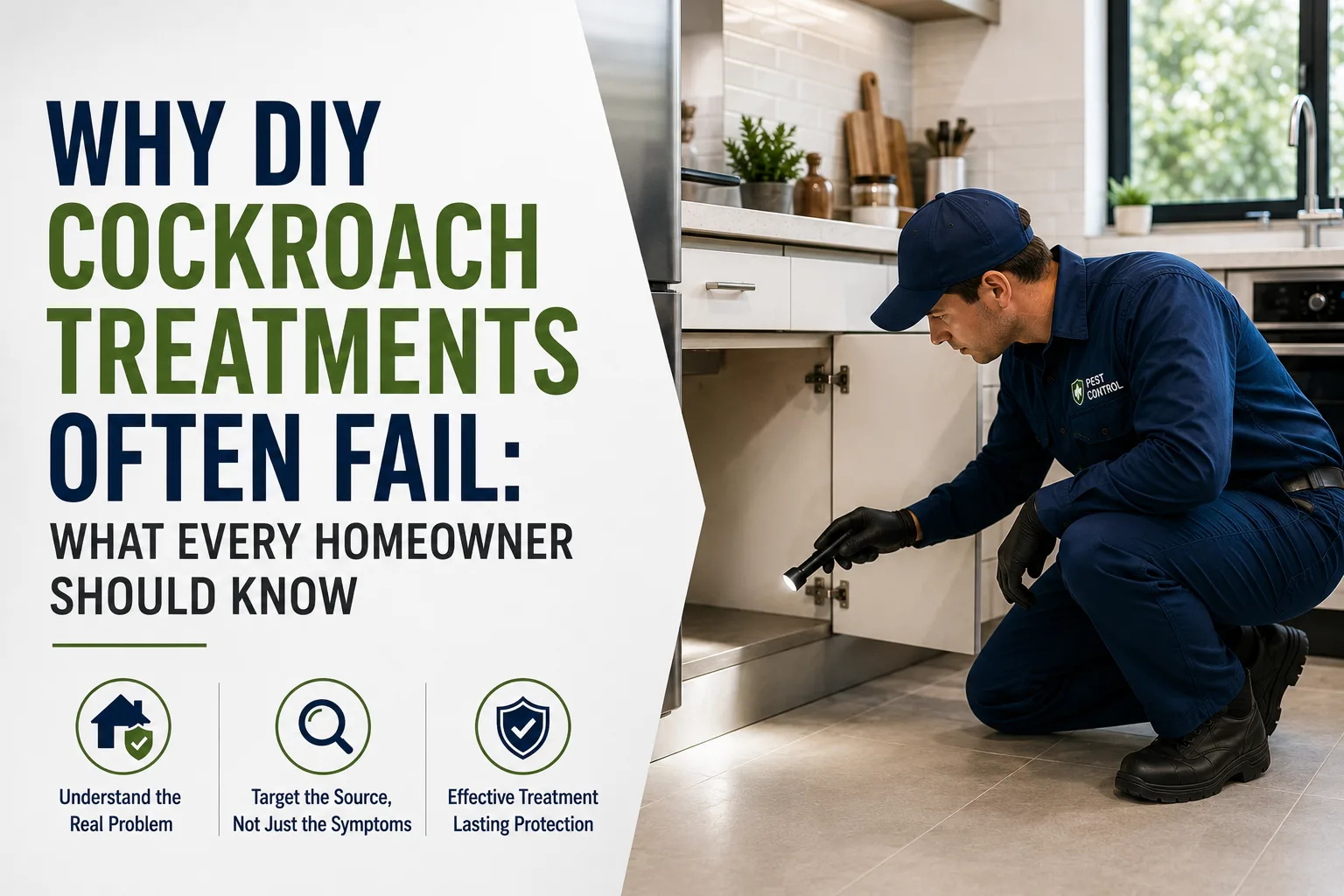
Every year, thousands of homeowners spend money on supermarket sprays, foggers, traps, and home remedies hoping to eliminate cockroaches. While these products may reduce visible activity for a short time, many infestations quickly return.
This raises an important question: DIY pest control vs professional pest control—which approach actually works?
The answer depends on the type of pest, the size of the infestation, and how long the problem has been present. Understanding why some treatments succeed while others fail can save both time and money.
Why Cockroaches Are Difficult to Eliminate
Cockroaches are among the most adaptable household pests. They reproduce quickly, hide in extremely small spaces, and are primarily active at night.
Many people only notice a handful of cockroaches, but the visible insects often represent only a small percentage of the total population.
German cockroaches are particularly challenging because they prefer living inside kitchens, appliances, cupboards, and wall cavities rather than open spaces. By the time they become visible during the day, the infestation is often well established.
The Biggest Limitation of DIY Products
Most DIY products focus on killing insects that are already visible.
Unfortunately, that rarely addresses the actual colony.
Common DIY methods include:
- Aerosol sprays
- Foggers
- Sticky traps
- Boric acid
- Store-bought gel baits
Each can reduce activity temporarily, but they often fail because they don't reach hidden nesting areas where cockroaches breed.
Surface Sprays Don't Reach Hidden Colonies
One of the biggest misconceptions is that spraying every visible surface solves the problem.
Cockroaches spend much of their time:
- Behind refrigerators
- Inside kitchen cabinets
- Around plumbing penetrations
- Behind splashbacks
- Inside electrical appliances
- Within wall voids
Spraying floors and skirting boards rarely reaches these locations.
Why Foggers Usually Disappoint
Foggers seem appealing because they fill an entire room with insecticide.
However, airborne chemicals cannot effectively penetrate tight cracks, cabinet hinges, appliance motors, or sealed wall cavities.
In many cases, cockroaches simply retreat deeper into hiding before returning once the treatment has settled.
Why German Cockroaches Are Different
Not every cockroach species behaves the same way.
Large outdoor species often wander indoors searching for food or moisture and can sometimes be managed with perimeter treatments.
German cockroaches behave differently.
They establish breeding colonies entirely indoors and reproduce rapidly. Because of this, German cockroach treatment usually requires a far more targeted approach than general cockroach control.
Professional Pest Control Focuses on the Source
Professional technicians generally begin with a detailed inspection before selecting an appropriate treatment strategy.
Instead of treating every room identically, they identify:
- Active harbourage areas
- Moisture sources
- Food availability
- Entry points
- Nesting locations
This targeted approach improves treatment effectiveness while reducing unnecessary pesticide use.
Why Inspection Matters
Successful pest control isn't simply about applying chemicals.
Understanding why pests are present is equally important.
A thorough inspection can identify:
- Plumbing leaks
- Food storage issues
- Structural gaps
- Poor ventilation
- Hidden nesting sites
Correcting these conditions reduces the likelihood of future infestations.
Preventing Future Infestations
Long-term pest management combines treatment with prevention.
Simple habits can make a significant difference:
- Store food in sealed containers.
- Clean kitchen surfaces regularly.
- Repair leaking taps.
- Empty rubbish bins frequently.
- Seal cracks around plumbing.
- Inspect second-hand appliances before bringing them inside.
These steps won't eliminate an established infestation, but they can significantly reduce future risk.
When DIY Is Usually Enough
DIY methods can still be useful for minor problems.
Examples include:
- A few ants entering after heavy rain
- One or two outdoor cockroaches
- Seasonal spider webs around windows
- Preventative treatments around garden areas
Small issues can often be managed successfully before they develop into larger infestations.
When Professional Help Makes Sense
Professional assistance may be worth considering when:
- Cockroaches are seen during the day.
- Activity returns repeatedly after DIY treatment.
- Multiple pest species are present.
- Rodents are entering roof spaces.
- Termite activity is suspected.
- The infestation has spread throughout the property.
Addressing these problems early is generally easier than waiting until populations become established.
Choosing the Right Pest Control Company
If professional treatment becomes necessary, look for companies that:
- Hold appropriate licences.
- Explain their treatment process clearly.
- Provide practical prevention advice.
- Use products according to local regulations.
- Offer written inspection findings where appropriate.
The cheapest quote isn't always the best value if important parts of the inspection or treatment are omitted.
Final Thoughts
When comparing DIY pest control vs professional pest control, there isn't a single answer that suits every situation.
DIY products remain useful for small, isolated pest issues and ongoing prevention. However, established infestations—particularly those involving German cockroaches, termites, or rodents—often require a more systematic approach that addresses the source of the problem rather than just the visible pests.
Understanding how pests behave, reducing conditions that attract them, and acting early can help homeowners avoid larger and more expensive infestations in the future.
For readers interested in learning more about why German cockroaches are particularly difficult to eliminate, this detailed guide on German Cockroach Treatment Wollongong explains their behaviour, common hiding places, and effective treatment strategies in greater depth.