Securing critical national infrastructure, military facilities, correctional centres, and utility stations across Australia demands physical boundaries engineered to deter both opportunistic trespass and determined forced entry. Procurement officers and civil engineers specifying 358 anti-climb mesh fencing for government tenders must verify exact aperture dimensions, wire tensile strength, structural post grades, and Australian Standards compliance prior to tender approval. Reviewing these technical benchmarks ensures public sector estates receive durable, surveillance compatible protection built to withstand demanding Australian environmental conditions for decades.
Mesh Aperture Geometry and Wire Tensile Standards
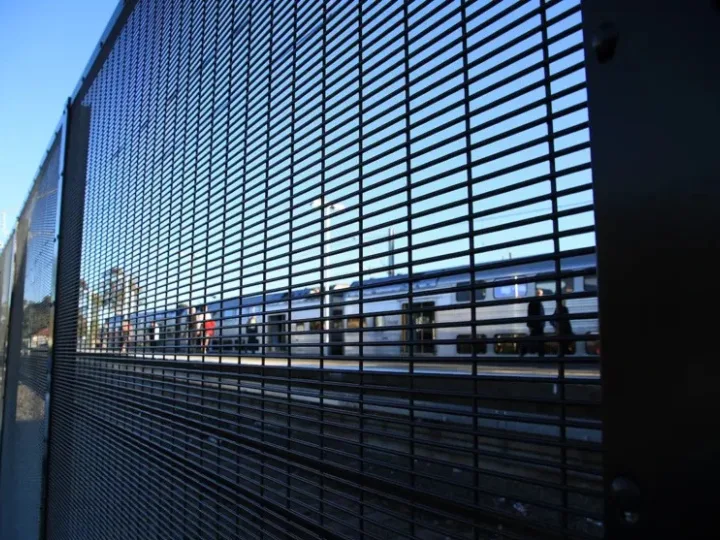
The specification takes its name from traditional imperial measurements translating to three inches by half an inch fabricated from eight gauge steel wire. In metric units, government and defence panels feature a 75 millimetre horizontal pitch by 13 millimetre vertical spacing constructed from 4 millimetre high tensile steel wire. This narrow gap eliminates finger holds and toe grips while preventing bolt cutters and hand tools from gaining leverage. Every wire intersection undergoes resistance welding under strict factory quality controls to satisfy Australian Standard AS 2423 and EN 10223 weld integrity benchmarks, ensuring panels cannot be pried apart. Standard panel heights measure 2400 millimetres, 2700 millimetres, or 3000 millimetres across 2400 millimetre widths, with taller custom elevations manufactured for sensitive defence precincts.
Structural Framing, Corrosion Protection, and Fixings
High security panels depend on rigid structural steel support to resist wind loads and physical impact. Posts, top and bottom rails, and continuous clamp bars are typically fabricated from structural steel meeting AS 3679.1 and hot dip galvanised to AS 4680, while mesh wire receives zinc aluminium alloy or galvanised coating under AS/NZS 4534. An optional architectural polyester powder coat finish adds extra chemical and coastal salt spray resistance in government approved colours. Panels fasten onto structural universal column posts using tamper resistant shear nuts and cup head bolts so fixings cannot be unbolted from the attack side.
Perimeter Toppings, Gates, and Surveillance Integration
Depending on site threat assessments, tender specifications frequently incorporate angled extension arms supporting razor tape, barbed wire, or spike toppings alongside reinforced concrete plinths to prevent burrowing. Matching automated sliding, cantilever, and pedestrian gates preserve identical mesh apertures across entry lanes while maintaining clear sightlines for closed circuit television cameras and perimeter intrusion detection sensors.
Summary
Specifying verified wire gauges, certified weld shear strength, tamper resistant fixings, and compliant Australian corrosion coatings guarantees dependable perimeter defence. Aligning tender documentation with these engineering standards protects vital government and defence assets while ensuring 358 mesh fencing delivers long term structural reliability and low maintenance value.
Frequently Asked Questions
1. What do the dimensions of 358 security mesh measure in metric units?
Standard panels feature a 75 millimetre by 13 millimetre aperture pattern manufactured from 4 millimetre diameter steel wire, preventing finger holds, toe grips, and cutting tool access.
2. Which Australian Standards govern 358 mesh fencing for government tenders?
Key benchmarks include AS/NZS 4534 for wire coatings, AS 2423 for welded mesh performance, AS 3679.1 for structural steel posts, and AS 4680 for hot dip galvanising.
3. What standard heights are specified for government and defence perimeters?
Standard panel heights are 2400 millimetres, 2700 millimetres, and 3000 millimetres, though custom heights exceeding 3000 millimetres are manufactured for high security defence and correctional sites.
4. How are high security mesh panels protected against tampering and rust?
Panels attach with tamper resistant shear bolts and continuous clamp bars, while hot dip galvanising, zinc aluminium wire coatings, and powder coating protect against coastal and industrial corrosion.
5. Does 358 mesh interfere with CCTV and perimeter detection sensors?
No, the slim wire profile maintains high optical transparency for daytime and infrared cameras while supporting fence mounted intrusion detection sensors.