Roof leaks can develop gradually or appear suddenly after heavy rain, strong winds or changing weather conditions. Both tile and metal roofs are designed to protect homes from water, but damaged materials, poor installation, ageing components and blocked drainage systems can allow water to enter. In Melbourne, where weather can change quickly throughout the year, identifying roofing problems early can help prevent costly repairs.
Understanding the common causes of roof leaks can help homeowners recognise warning signs and take appropriate action. Whether you have a tiled roof or a metal roofing system, regular inspections and timely repairs can make a significant difference in maintaining your property's protection.
Why Do Tile and Metal Roofs Develop Leaks?
Tile and metal roofs have different structures, materials and installation requirements. Tile roofs generally rely on overlapping tiles, underlay and flashing to prevent water penetration, while metal roofs use roofing sheets, fasteners, joints and sealing systems to create a protective barrier.
Over time, exposure to sunlight, rain, wind and temperature changes can weaken roofing components. Even a small damaged section may allow water to enter the roof space, potentially affecting insulation, ceilings, walls and timber structures.
Common Causes of Leaks in Tile Roofs
1. Cracked or Broken Roof Tiles
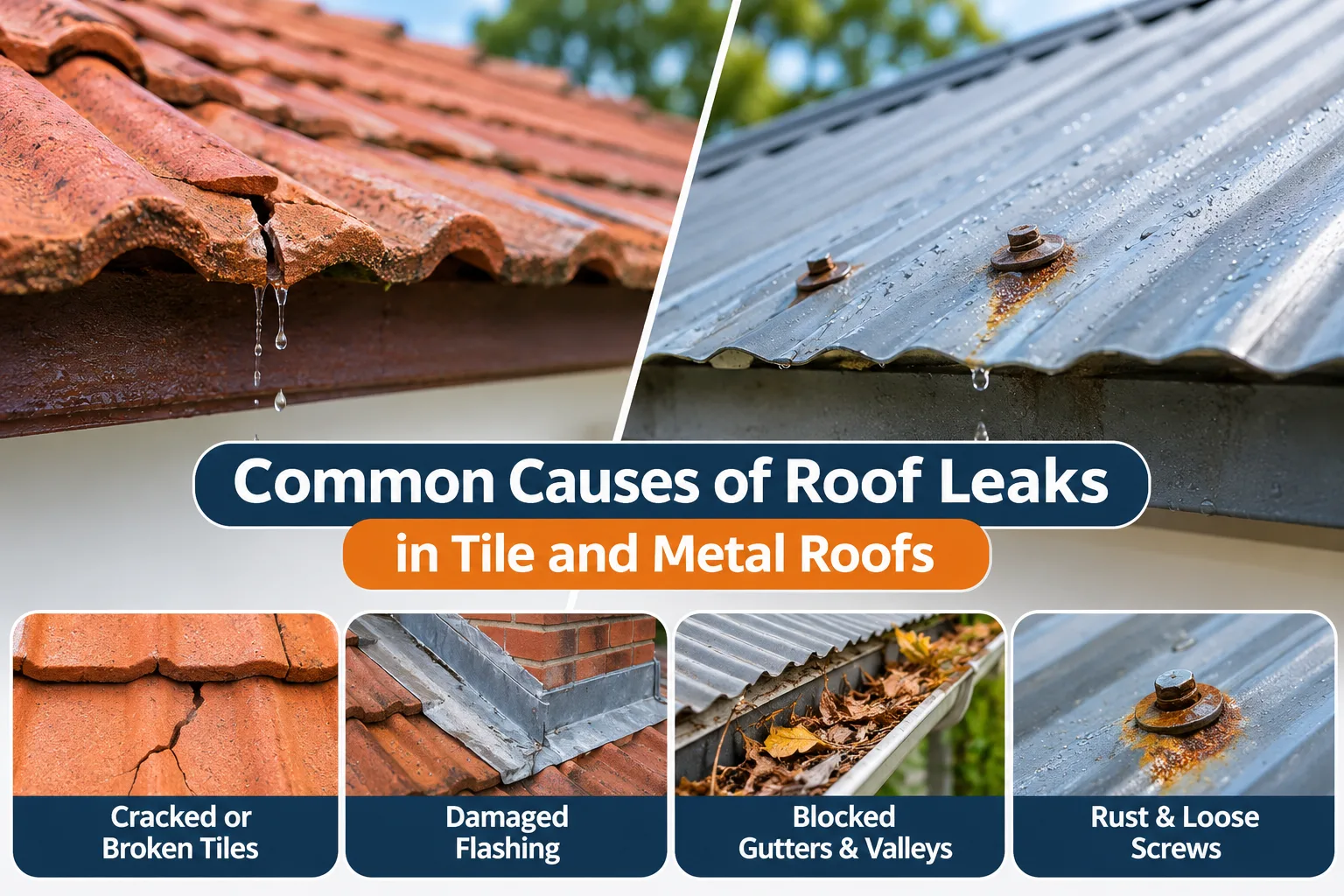
One of the most common reasons for leaks in tiled roofs is cracked, broken or displaced tiles. Roof tiles can become damaged due to falling branches, hail, foot traffic, strong winds or natural ageing. Even a small crack may allow water to pass through the roofing surface.
Broken tiles can also expose the underlying roofing materials to moisture. If damaged tiles are not replaced promptly, water may gradually reach the roof cavity and cause further problems.
2. Deteriorated Roof Bedding and Pointing
Roof bedding and pointing help secure ridge tiles and maintain the stability of the roof structure. As these materials age, they may crack, loosen or deteriorate because of weather exposure and temperature fluctuations.
When ridge tiles become loose or the pointing develops gaps, rainwater can enter through these openings. Repairing deteriorated bedding and pointing can help restore the roof's protective function and reduce the risk of further water damage.
3. Damaged Roof Flashing
Flashing is installed around roof intersections, chimneys, skylights, valleys and other areas where roofing surfaces meet. It helps direct water away from vulnerable sections of the roof.
If flashing becomes loose, rusted, cracked or improperly installed, water may seep underneath it. Flashing problems are particularly common around roof penetrations and joints, where different materials meet.
4. Blocked Roof Valleys
Roof valleys collect and direct rainwater towards drainage points. Leaves, dirt, branches and other debris can accumulate in these areas, preventing water from flowing freely.
When a roof valley becomes blocked, water may overflow or collect around the surrounding tiles. This increases the possibility of water entering through damaged tiles, gaps or deteriorated valley materials. Regular roof cleaning can help keep valleys clear and improve drainage.
Common Causes of Leaks in Metal Roofs
5. Loose or Damaged Roofing Screws
Metal roofing sheets are commonly secured using screws with sealing washers. These washers help prevent water from entering through the fastener holes.
Over time, screws may loosen because of roof movement, thermal expansion and contraction, or weather exposure. Sealing washers may also become brittle, cracked or worn. When this happens, rainwater can penetrate around the fasteners and create leaks.
Replacing damaged fasteners and checking vulnerable sections of the roof can help prevent water entry.
6. Rust and Corrosion
Although modern metal roofing materials are designed to resist corrosion, exposed surfaces can still deteriorate under certain conditions. Scratches, damaged coatings, trapped moisture, poor drainage and contact with incompatible materials may contribute to rust.
Corrosion can weaken roofing sheets and create small holes or damaged sections through which water may enter. Regular inspections can help identify early signs of corrosion before they affect larger areas of the roof.
7. Poorly Sealed Roof Joints and Overlaps
Metal roofing sheets are installed with overlapping sections, joints and connections designed to manage water flow. If these areas are not installed correctly or their sealants deteriorate, water may enter during heavy rain or wind-driven storms.
Improperly sealed roof penetrations, ridges and sheet connections can also contribute to leaks. Professional repairs may involve replacing deteriorated sealants, correcting connections or repairing affected roofing sections.
8. Roof Movement and Thermal Expansion
Metal roofs expand and contract as temperatures change throughout the day and across different seasons. If the roofing system does not accommodate this movement correctly, fasteners, joints and sealing materials may experience stress.
Repeated movement can gradually loosen connections or affect seals. This may create small openings that allow moisture to enter, particularly during heavy rainfall or storms.
Other Factors That Can Cause Roof Leaks
9. Damaged or Blocked Gutters
Gutters play an important role in directing rainwater away from the roof and property. When gutters become blocked with leaves, dirt or debris, water may overflow and collect around roof edges.
Overflowing gutters can contribute to water penetration around fascia boards, roof edges and other vulnerable areas. Gutter cleaning and maintenance can help improve drainage and reduce the risk of water-related roofing problems.
10. Ageing Roofing Materials
Every roofing system has a lifespan, and roofing materials can gradually deteriorate over time. Tiles may become brittle, metal coatings may wear down, sealants may lose their effectiveness and flashing may develop damage.
An ageing roof may require more frequent maintenance and repairs. In some situations, ongoing leaks and widespread deterioration may indicate that a roof replacement is more practical than repeated repairs.
How Can You Identify a Roof Leak Early?
Roof leaks do not always appear directly beneath the damaged roofing section. Water can travel along timber beams, insulation or other surfaces before becoming visible inside the property.
Look for these warning signs:
- Water stains or discolouration on ceilings and walls.
- Damp patches in the roof cavity.
- Peeling paint or bubbling plaster.
- Musty smells or signs of mould.
- Dripping water during rainfall.
- Rust marks around metal roofing fasteners.
- Loose, cracked or missing roof tiles.
If you notice these signs, arranging a roof inspection can help identify the source of the problem before the damage becomes more extensive.
How Can Professional Roof Repair Help?
Professional roof repair involves identifying the underlying cause of a leak rather than simply covering the visible damage. Depending on the roofing condition, repairs may include replacing broken tiles, repairing flashing, fixing roof valleys, resealing metal roofing joints, replacing damaged screws, addressing corrosion or restoring deteriorated ridge pointing.
Homeowners looking for leaking roof repair Melbourne services should consider having their roof inspected after severe weather or whenever signs of water damage appear. A professional assessment can help determine whether a localised repair, maintenance work or a more extensive roofing solution is required.
Singh Roofing provides roofing services designed to help homeowners maintain and protect their roofs. Addressing roofing problems promptly can help reduce the risk of interior damage, protect the property's structure and improve the long-term performance of the roofing system.
How Can You Prevent Future Roof Leaks?
Preventive maintenance is one of the most effective ways to reduce the likelihood of roof leaks. Although no roof can be completely protected from every weather event, regular maintenance can help identify potential problems early.
Consider the following maintenance practices:
- Schedule periodic roof inspections.
- Replace cracked, broken or missing tiles promptly.
- Check metal roofing screws and sealing washers.
- Keep gutters and roof valleys free from debris.
- Inspect flashing around chimneys and roof penetrations.
- Address rust and damaged metal roofing surfaces early.
- Check your roof after strong winds, storms or hail.
Taking these steps can help maintain the condition of your roof and reduce the chances of unexpected repairs.
Conclusion
Leaks in tile and metal roofs can result from damaged tiles, deteriorated pointing, loose screws, rust, faulty flashing, blocked valleys, ageing materials and poor installation. While some roofing problems may appear minor, they can lead to significant damage if water continues to enter the property.
Regular maintenance, early leak detection and professional repairs can help keep your roof in good condition. If your roof shows signs of damage or water penetration, contacting Singh Roofing for professional leaking roof repair Melbourne services can help you identify the problem and protect your home from further damage.