
A warehouse can have modern equipment, organised storage areas, and an efficient workforce, yet still lose valuable time because of one overlooked decision: how materials are packaged before they move.
For businesses handling large quantities of dry goods, packaging is not simply about keeping products together. It affects loading speed, storage capacity, transport costs, workplace safety, and even the condition in which materials reach their final destination.
This is particularly important in industries dealing with agricultural products, construction materials, minerals, chemicals, and manufacturing ingredients. When thousands of kilograms of material move through a supply chain, small packaging inefficiencies can become expensive operational problems.
Understanding how industrial packaging works — and how to select the right format — can help businesses build more reliable supply chains.
Why Packaging Decisions Matter More Than Businesses Realise
Packaging is often treated as the final stage of production. In reality, it influences almost every stage that follows.
Consider a company supplying sand to several construction sites. If the material is packed in containers that are difficult to lift, awkward to store, or unsuitable for the available unloading equipment, the problem does not remain limited to the packaging department.
Drivers may spend additional time waiting for unloading. Warehouse employees may need extra handling equipment. Construction teams might experience delays because materials are not available when required.
These issues can increase labour costs and reduce the number of deliveries completed during a working day.
A well-designed packaging system should therefore be selected according to the complete journey of a product, from filling and storage to transportation and final discharge.
Understanding Flexible Intermediate Bulk Containers
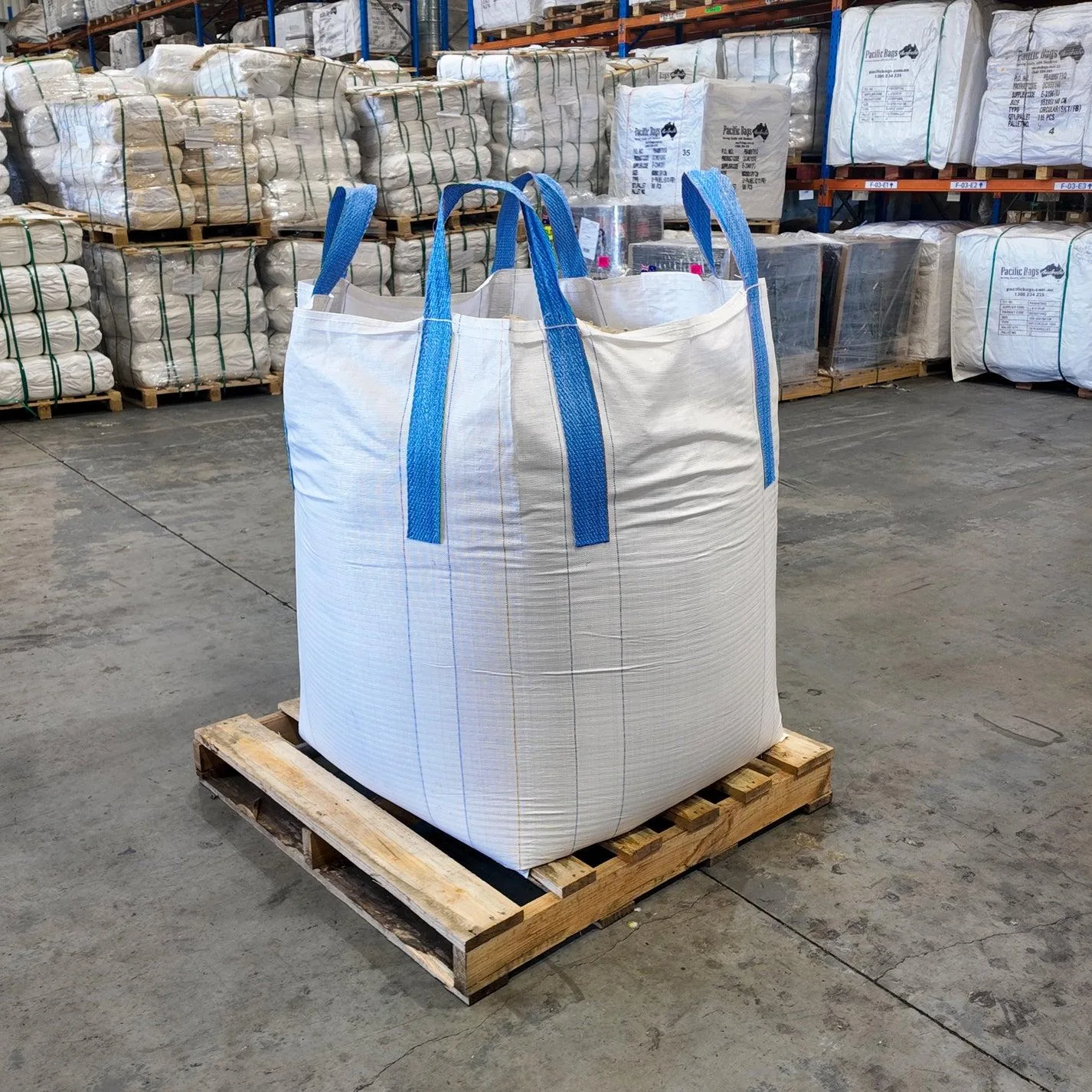
Flexible Intermediate Bulk Containers, commonly called FIBCs, are designed to hold and transport large quantities of dry, flowable materials.
They are generally manufactured using woven polypropylene fabric and include lifting arrangements that allow compatible forklifts, cranes, or other handling equipment to move filled containers.
Depending on their construction and intended application, these containers can accommodate materials such as:
- Sand, gravel, and construction aggregates
- Grain, seeds, and agricultural products
- Fertilisers and animal feed
- Plastic granules and industrial resins
- Certain powders and manufacturing ingredients
Their usefulness comes from combining relatively lightweight packaging with a practical way to handle large quantities of material.
However, not every container is suitable for every product. Capacity, fabric construction, filling arrangements, discharge systems, and handling conditions all need to be considered before selecting a particular design.
The International Council of Packaging Professionals' technical material on FIBCs provides further background on their construction and industrial applications.
Five Factors to Consider Before Selecting Industrial Packaging
1. Understand the Material Being Stored
The first question should always be about the product itself.
A free-flowing plastic pellet behaves differently from fine cement powder. Agricultural produce may require ventilation, while certain powders need additional protection against moisture and contamination.
Businesses should consider:
- Particle size and bulk density
- Moisture sensitivity
- Dust generation
- Chemical compatibility
- Temperature and storage conditions
These characteristics influence the type of fabric, liner, closure, and discharge arrangement required.
2. Calculate the Actual Load Requirements
A container's dimensions do not automatically determine how much material it can safely carry.
Businesses must distinguish between volume capacity and weight capacity. A large container filled with a dense material can become significantly heavier than the same container filled with lightweight agricultural products.
The Safe Working Load (SWL) identifies the maximum permitted working load for a particular container. It should never be confused with the breaking strength or treated as a suggested operating target to exceed.
The packaging specification should match the actual product weight, filling process, and handling equipment.
3. Check Filling and Discharge Arrangements
A packaging format may perform well during transportation but create problems when the material needs to be removed.
For example, a wide opening may make filling straightforward, while a discharge spout may offer greater control when emptying the contents into production equipment.
Before choosing a design, businesses should examine the entire process:
- How will the material enter the container?
- Does the filling equipment require a particular opening?
- How will the container be lifted?
- Where will the contents be discharged?
- Is controlled or complete emptying necessary?
Answering these questions early can prevent expensive modifications to warehouse or production equipment.
4. Consider Storage and Transportation Conditions
Storage conditions can have a considerable effect on packaging performance.
Containers kept outdoors may face sunlight, changing temperatures, rain, and prolonged exposure to environmental conditions. Products stored in humid environments may also require additional moisture protection.
For warehouse operations, shape and stability are equally important.
Some designs include internal baffles that help maintain a more regular shape when filled. This can make pallet arrangement and storage planning easier, provided the design is suitable for the product and stacking conditions.
Businesses should also assess whether their packaging will travel by road, rail, sea, or a combination of transport methods.
5. Verify Safety and Reuse Requirements
One of the most important mistakes in industrial packaging is assuming that a container can be reused simply because it looks undamaged.
Single-trip and multi-trip containers are designed and tested for different operating conditions. Their classifications, safety factors, inspection requirements, and permitted uses must be checked before reuse.
Staff should receive appropriate training on lifting procedures, load limits, inspection routines, and equipment compatibility.
A container with damaged lifting loops, torn fabric, weakened stitching, or other structural problems should be removed from service until its suitability has been properly assessed.
For hazardous materials, businesses must also verify the relevant regulatory and certification requirements rather than relying on a general-purpose packaging specification.
How Better Packaging Can Reduce Supply Chain Costs
Packaging costs should not be evaluated by looking at the purchase price alone.
A cheaper option may create additional labour requirements, increase storage space consumption, or make unloading slower. These indirect expenses can outweigh the initial savings.
A more useful approach is to calculate the total cost of packaging throughout its working life.
This assessment can include:
Handling expenses: How much employee time and equipment use are required for filling, moving, and emptying each container?
Transport efficiency: Can the packaging arrangement improve vehicle or container utilisation without compromising safety?
Storage requirements: Does the packaging occupy unnecessary warehouse space or create stacking difficulties?
Product protection: Could moisture, contamination, or material loss lead to rejected deliveries?
Waste management: Can suitable packaging be reused, repaired, or recycled through an appropriate process?
For businesses handling regular high-volume shipments, these factors can have a meaningful effect on operating expenses.
The Role of Sustainable Industrial Packaging
Sustainability has become an important consideration for manufacturers, distributors, and logistics companies.
Packaging decisions can influence material consumption, transport efficiency, and the volume of waste generated by business operations.
Reusable packaging may reduce the need for repeated purchases when containers are specifically designed, certified, and maintained for multiple trips. However, reuse should never come at the expense of safety or product hygiene.
Material recovery is another consideration. Polypropylene packaging may be recyclable through suitable collection and processing systems, although actual recyclability depends on material condition, contamination, local infrastructure, and available recycling facilities.
Businesses can make more informed decisions by asking packaging providers about recycled content, material specifications, expected service life, and end-of-life options.
Making Packaging Part of Operational Planning
The most effective packaging decisions happen before a product reaches the warehouse.
Procurement teams should communicate with production managers, logistics coordinators, and warehouse staff before approving a new packaging format. Each department understands a different part of the process, and combining those perspectives can reveal problems that might otherwise remain unnoticed.
For example, a purchasing team may prefer a standard container because it is readily available. However, warehouse employees might identify that a different shape would improve pallet stability, while production staff may need a particular discharge arrangement.
Testing a packaging format under realistic working conditions is often more useful than relying entirely on catalogue specifications.
A practical trial should examine filling, lifting, transportation, storage, and discharge. Any problems should be documented before the format is adopted across the operation.
Final Thoughts
Industrial packaging is much more than an outer layer around a product. It is part of the infrastructure that connects manufacturing, storage, transportation, and distribution.
Choosing the right bulk bag requires an understanding of material characteristics, load requirements, handling equipment, storage conditions, and safety standards.
Businesses that evaluate these factors together are better positioned to reduce unnecessary handling, protect valuable materials, and improve the reliability of their supply chains.
Ultimately, the best packaging solution is not necessarily the cheapest or largest option. It is the one that performs reliably throughout the entire journey of the material.