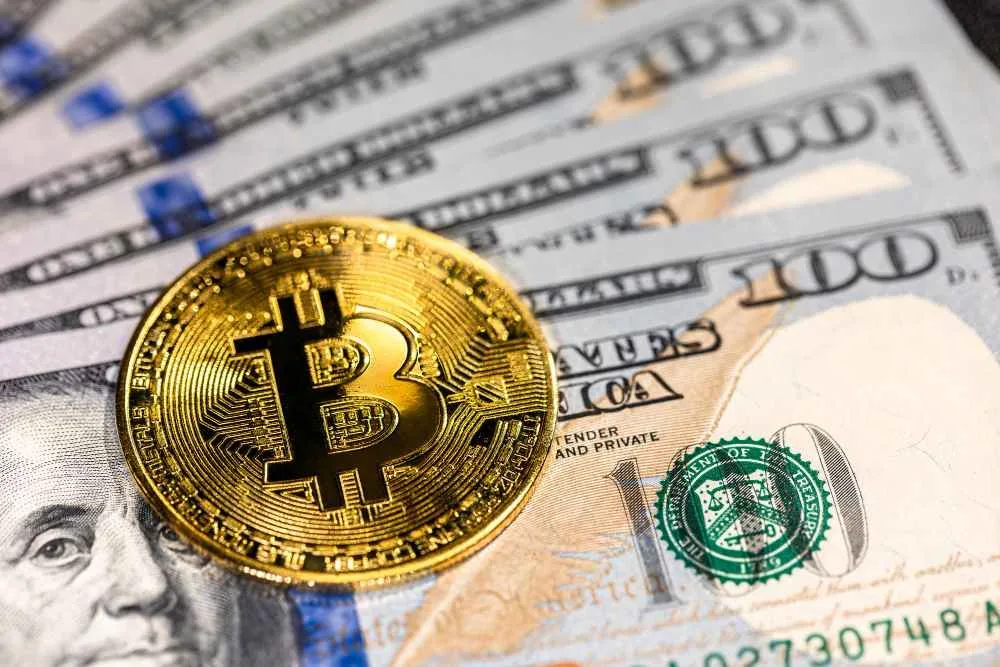

A Defining Moment: Bitcoin’s Endurance in a Shifting Financial Terrain
On a brisk morning in July 2026, Bitcoin’s price quietly surpassed $110,000 for the first time since late 2024, reigniting fervor among investors and analysts alike. This resurgence comes amid a backdrop of global economic uncertainty, inflationary pressures, and renewed geopolitical tensions that have shaken traditional markets. Yet, Bitcoin, the pioneering cryptocurrency, has exhibited a remarkable ability to absorb shocks and maintain investor confidence. This milestone is not just a number; it is a testament to Bitcoin’s evolved infrastructure, growing institutional adoption, and its increasingly recognized role as a digital store of value.
As the crypto space matures, Bitcoin’s narrative has shifted from speculative mania to a more nuanced story of resilience and integration. Its journey, spanning over 17 years since its inception, continues to challenge entrenched financial norms. The 2026 landscape presents a Bitcoin that is neither a fringe experiment nor an uncontested hegemon but a complex entity reshaping how value, trust, and money itself are conceptualized. This article explores Bitcoin’s trajectory, the forces shaping its current state, and what lies ahead for the asset that sparked the Web3 revolution.
“Bitcoin is no longer just a digital asset; it has become a critical fixture in diversified portfolios and a barometer for digital economic health.” – Dr. Lena Morozov, Crypto Economist
Tracing Bitcoin’s Evolution: From Digital Gold to Institutional Fixture
Bitcoin’s origins are well documented: a 2008 whitepaper by the pseudonymous Satoshi Nakamoto proposed a decentralized, peer-to-peer digital cash system immune to centralized control. Early years saw Bitcoin primarily as an experimental digital currency, facing skepticism over volatility, regulatory hurdles, and adoption challenges. However, the 2017 and 2020 bull runs proved pivotal, attracting institutional attention and catalyzing infrastructure development such as custodial services, regulatory frameworks, and scalable layer-two solutions.
By 2023, Bitcoin’s market capitalization had consistently hovered above $1 trillion, cementing its status alongside major global assets. The implementation of the Taproot upgrade in late 2021 enhanced Bitcoin’s smart contract capabilities and privacy features, boosting its functionality beyond simple transactions. These technical advances, combined with rising inflation and currency devaluations worldwide, bolstered Bitcoin’s narrative as “digital gold.”
Significant milestones in regulatory clarity around the globe, from the U.S. SEC’s acceptance of Bitcoin ETFs to the EU’s Markets in Crypto Assets (MiCA) framework, have further legitimized Bitcoin’s role in mainstream finance. These developments set the stage for the more recent institutional embrace, where hedge funds, sovereign wealth funds, and Fortune 500 companies have allocated capital to Bitcoin as part of their treasury management and inflation hedging strategies.
“Bitcoin’s journey from niche asset to institutional mainstay is a story of technological innovation meeting evolving market demand.” – Alex Chen, Blockchain Strategist
Analyzing Bitcoin’s Market Dynamics and On-Chain Data in 2026
The analytics landscape for Bitcoin has blossomed, providing granular insights into its market behavior and network health. According to Glassnode’s 2026 report, active Bitcoin addresses have climbed steadily, reaching an all-time high of 55 million monthly active users worldwide. This growth reflects broader adoption not only in wealthier economies but also in emerging markets where Bitcoin is increasingly used as a hedge against local currency instability.
Bitcoin’s supply dynamics remain a cornerstone of its appeal. The 2024 halving event reduced miner rewards from 6.25 to 3.125 BTC per block, intensifying the asset’s scarcity. As of mid-2026, over 19 million BTC are in circulation, with roughly 2 million believed to be lost permanently, tightening effective supply.
Market capitalization stands at approximately $2.2 trillion, propelled by rising prices and renewed buying interest. Volatility measures, while still elevated compared to traditional assets, have declined since the early 2020s, reflecting maturation and broader market participation.
Key Market Indicators (2026)
- Price Range: $80,000–$110,000
- Active Addresses: 55 million monthly
- Hash Rate: Record highs at 350 EH/s, indicating robust network security
- Institutional Holdings: Over 15% of circulating supply held by entities with >1,000 BTC
Additionally, Bitcoin’s integration with decentralized finance (DeFi) protocols through wrapped tokens and sidechains has expanded its utility, allowing users to leverage BTC in lending, derivatives, and yield farming. This bridging of Bitcoin with Web3 ecosystems showcases its adaptability amid an evolving crypto landscape.
Bitcoin’s 2026 Landscape: Regulatory, Technological, and Market Developments
The year 2026 has been pivotal, marked by regulatory milestones and technological advancements that have shaped Bitcoin’s trajectory. Globally, regulators have pursued a balanced approach, attempting to protect investors and prevent illicit activities while fostering innovation. The Financial Action Task Force’s updated guidelines on digital assets have been widely adopted, standardizing AML/KYC frameworks and improving cross-border cooperation.
Technologically, Bitcoin’s Lightning Network has matured, with over 5 million active nodes and an aggregate capacity exceeding 20,000 BTC. This layer-two protocol enables near-instant, low-cost transactions, effectively addressing Bitcoin’s historical scalability challenges. Several merchant adoption programs, particularly in Latin America and Southeast Asia, have leveraged Lightning to facilitate everyday payments, signaling Bitcoin’s growing utility beyond store-of-value narratives.
Moreover, Bitcoin mining has undergone a green transformation. Energy-efficient mining hardware and a shift towards renewable power sources have reduced Bitcoin’s carbon footprint by an estimated 40% since 2023, addressing longstanding environmental critiques. This evolution has improved Bitcoin’s public perception and aligned it more closely with global sustainability goals.
Market-wise, the rise of Bitcoin-backed financial products, including futures, options, and ETFs, has increased liquidity and attracted a broader investor base. Retail participation remains robust, supported by improved educational resources and user-friendly wallets, as highlighted in our internal analysis of how first-time Bitcoin users can build confidence and avoid pitfalls.
Industry Insights: Expert Perspectives on Bitcoin’s Role and Challenges
Leading voices in finance and technology emphasize Bitcoin’s dual identity as both an asset and a social-economic experiment. Dr. Helena Ford, Chief Innovation Officer at a major fintech firm, notes that Bitcoin’s decentralized nature challenges traditional monetary sovereignty but also offers resilience against systemic risks inherent in fiat systems.
However, experts caution about volatility risks and regulatory uncertainties that could periodically unsettle markets. The still-evolving legal frameworks around Bitcoin derivatives and taxation remain areas of active debate. Furthermore, cybersecurity concerns, including sophisticated phishing and wallet hacks, necessitate ongoing vigilance and innovation in security protocols.
Industry leaders also highlight Bitcoin’s geopolitical implications. Its borderless nature complicates capital controls and sanctions enforcement but simultaneously empowers populations under authoritarian regimes to preserve wealth and transact freely.
“Bitcoin embodies a new financial paradigm, but its success depends on navigating regulatory, technological, and social complexities with prudence.” – Marcus Lin, Head of Crypto Strategy at Global Asset Management
Looking Ahead: What to Watch for Bitcoin’s Future Trajectory
As Bitcoin approaches its third decade, several key trends and challenges will shape its path forward:
- Regulatory Evolution: Continued harmonization of global crypto regulations will either facilitate or constrain Bitcoin’s integration into mainstream systems.
- Technological Innovation: Advances in scalability, privacy, and interoperability will determine Bitcoin’s competitiveness against emerging digital assets.
- Institutional Adoption: Growth in corporate treasury allocations and sovereign wealth fund involvement will enhance market stability but may also introduce new dynamics.
- Environmental Sustainability: Further reduction in carbon footprint through green mining initiatives is critical for public acceptance.
- Socioeconomic Impact: Bitcoin’s role in financial inclusion, especially in underserved regions, will be a litmus test for its broader societal value.
Investors and observers are advised to monitor Bitcoin’s regulatory landscape closely, particularly regarding tax policies and cross-border asset flows. Technological upgrades slated for late 2026, including enhancements to privacy protocols and sidechain interoperability, could unlock new use cases and increase adoption.
For further insights on Bitcoin’s evolving role and investor strategies, our in-depth coverage such as How Bitcoin's Evolution Is Reshaping Finance and Trust in 2026 and How Smart Investors Are Navigating Bitcoin’s Complex 2026 Landscape provide valuable guidance.
Case Studies: Bitcoin in Action Across the Globe
Bitcoin’s practical applications in 2026 extend beyond investment and speculation. In El Salvador, where Bitcoin was adopted as legal tender in 2021, government reports indicate a 15% increase in remittance inflows facilitated through Bitcoin channels, reducing transfer costs by nearly 60%. This tangible economic benefit has spurred similar initiatives in neighboring Central American countries exploring Bitcoin adoption to boost financial inclusion.
Meanwhile, in Switzerland’s Crypto Valley, Bitcoin is integral to a thriving ecosystem of startups and financial institutions leveraging blockchain for decentralized identity and cross-border payments. Companies like Avalara and Bitwise have launched innovative products that integrate Bitcoin payments with traditional banking infrastructure, demonstrating hybrid financial models.
In Africa, Bitcoin’s peer-to-peer networks have become crucial in regions with unstable currencies. Nigeria and Kenya report that a significant portion of their youth population uses Bitcoin as a hedge against inflation and for international commerce, supported by mobile wallet penetration and local exchanges.
- El Salvador: Increased remittances via Bitcoin, cost savings, financial inclusion
- Switzerland: Institutional integration, blockchain innovation hubs
- Africa: Inflation hedge, cross-border commerce, youth adoption
These diverse use cases underscore Bitcoin’s multifaceted impact and its capacity to adapt to varying economic contexts.