Commercial fire sprinkler systems play an important role in protecting employees, customers, visitors, buildings, and business assets. However, installing a sprinkler system is only the first step. Regular inspections, testing, and maintenance are necessary to help ensure that the system remains operational and can respond when a fire occurs.
For commercial property owners and facility managers in Hawaii, understanding fire sprinkler inspection requirements is particularly important. A system may appear to be in good condition while hidden problems affect its ability to operate properly. Closed control valves, corrosion, damaged sprinkler heads, or changes to the building can all affect system performance.
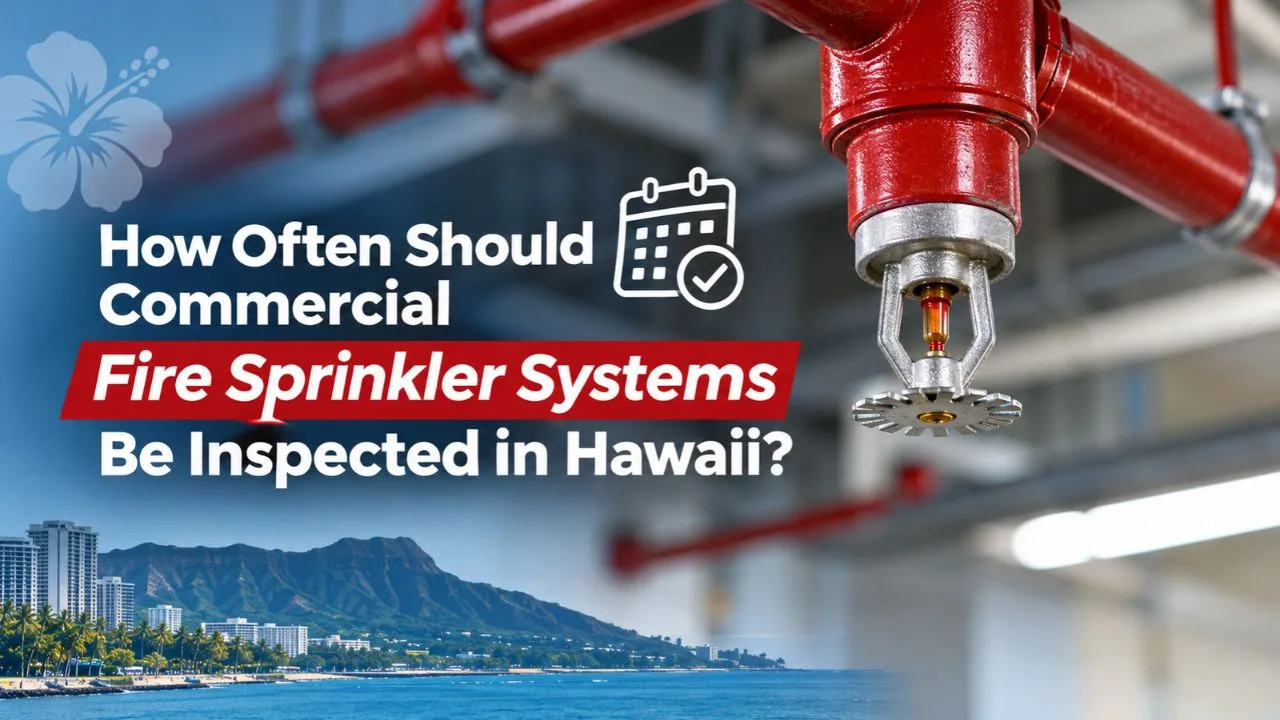
So, how often should commercial fire sprinkler systems be inspected in Hawaii?
The answer depends on the type of sprinkler system, its individual components, applicable fire codes, and the inspection and testing requirements established under NFPA 25. This guide explains the importance of routine inspections, what they generally involve, and what Hawaii property managers should consider when planning a fire protection maintenance schedule.
Why Are Regular Commercial Fire Sprinkler Inspections Important?
Automatic fire sprinkler systems are designed to control or suppress fires by releasing water when individual sprinkler heads reach their operating temperature. For a system to perform as intended, its components must remain in suitable working condition.
Over time, sprinkler systems can develop problems that are not immediately visible. Valves may be accidentally closed, pipes can deteriorate, and sprinkler heads may become obstructed by stored materials or damaged during building maintenance.
Regular inspections help identify these issues before they affect system performance.
Some important benefits include:
- Improved fire protection: Routine inspections help identify conditions that could prevent sprinklers from operating properly.
- Early problem detection: Qualified professionals can identify leaks, corrosion, damaged components, and other deficiencies.
- Code compliance: Documented inspection and testing help property owners meet applicable fire protection requirements.
- Reduced repair complications: Identifying smaller issues early may help prevent more extensive maintenance work.
- Better building management: Inspection records help facility managers monitor system condition and plan future maintenance.
A sprinkler system should not be considered reliable simply because it has not been activated. Its readiness needs to be verified through the appropriate inspection and testing procedures.
How Often Should Commercial Fire Sprinkler Systems Be Inspected?
Commercial fire sprinkler systems require different inspection and testing activities at different intervals. NFPA 25, the Standard for the Inspection, Testing, and Maintenance of Water-Based Fire Protection Systems, establishes requirements for these activities.
The standard does not mean that every sprinkler component must be inspected at the same frequency. Some checks are performed more frequently, while certain tests and maintenance procedures take place annually or at longer intervals.
A general overview of inspection and testing schedules includes:
1. Weekly and Monthly Checks
Certain sprinkler system components may require weekly or monthly visual inspections, depending on the system configuration and applicable requirements.
These checks can include:
- Verifying that control valves are in their correct position
- Checking gauges for abnormal pressure readings
- Confirming that accessible components show no obvious signs of damage
- Checking applicable conditions in dry-pipe and pre-action systems
The exact frequency depends on the component and system type. Building maintenance personnel may be responsible for some routine visual checks, provided they understand the required procedures.
2. Quarterly Inspections and Tests
Some components require quarterly inspection or testing under the applicable NFPA 25 provisions.
Depending on the system, these activities may include checking waterflow alarm devices, gauges, fire department connections, and other related components.
Quarterly activities help confirm that important parts of the sprinkler system remain accessible and in suitable operating condition.
3. Semiannual Inspections and Tests
Certain sprinkler system components and associated devices require inspection or testing at six-month intervals.
The required activities depend on the equipment installed and the applicable standard. Property managers should maintain a schedule based on the actual system rather than applying one general interval to every component.
4. Annual Inspection and Testing
Annual inspection and testing are important parts of a commercial fire sprinkler maintenance program.
A qualified fire protection professional may evaluate system components and perform the required tests, which can include:
- Inspecting accessible sprinkler heads for corrosion, damage, paint, or obstructions
- Checking control valves and indicating devices
- Reviewing pressure gauge readings
- Performing applicable waterflow and alarm tests
- Checking fire department connections
- Reviewing system condition and identifying deficiencies
- Documenting inspection and testing results
The specific annual procedures depend on the system design, applicable NFPA requirements, and local fire code provisions.
5. Periodic Testing at Longer Intervals
Some components require testing, internal examination, or maintenance at intervals longer than one year.
Depending on the equipment and applicable requirements, these activities may include five-year testing or other periodic evaluations.
For example, certain gauges, piping arrangements, and system components have specific testing or examination schedules. Sprinkler head testing or replacement requirements can also vary by sprinkler type, age, and environmental conditions.
A qualified contractor should review the installed equipment and prepare a schedule that accounts for these requirements.
What Are the Fire Sprinkler Inspection Requirements in Hawaii?
Commercial property owners in Hawaii must consider applicable state and county fire codes, along with the relevant NFPA standards.
The City and County of Honolulu adopted the 2021 edition of NFPA 1, with state and county amendments, as its fire code effective January 3, 2025. Requirements and enforcement procedures may differ across Hawaii counties, so property owners should confirm the rules applicable to their building's jurisdiction.
The Honolulu Fire Department's business fire safety guidance states that automatic fire sprinkler systems must display a satisfactory annual service tag showing the month and year of inspection.
Its inspection guidance also identifies an annual flow test and related service-tag requirements for automatic fire sprinkler systems.
This local requirement is an important consideration for businesses operating in Honolulu. However, the annual service tag should not be treated as a replacement for all the inspection, testing, and maintenance activities required by NFPA 25.
Property owners should maintain the complete inspection and testing schedule applicable to their systems and confirm requirements with the local Authority Having Jurisdiction (AHJ).
What Does a Professional Fire Sprinkler Inspection Include?
A professional commercial fire sprinkler inspection involves more than checking visible sprinkler heads. The inspection and testing process should consider the system's relevant components and their ability to operate as intended.
Depending on the installed system, a professional assessment may include the following:
Sprinkler Heads
Sprinkler heads are checked for physical damage, corrosion, paint, leakage, and obstructions. They should also remain clear of stored materials and other objects that could interfere with water distribution.
Pipes and Fittings
Accessible piping and fittings are examined for signs of corrosion, leakage, physical damage, or other conditions that may affect system performance.
Control Valves
Control valves must remain in their required operating positions. An accidentally closed valve can prevent water from reaching parts of the sprinkler system during an emergency.
Water Supply and Pressure
Water supply conditions and pressure readings are reviewed as required. Abnormal readings may indicate a problem that needs further investigation.
Alarm and Monitoring Devices
Applicable waterflow switches, supervisory devices, and alarm connections may be inspected and tested to verify that the system can communicate relevant conditions to the building's fire alarm or monitoring arrangements.
Inspection Records and Labels
Inspection documentation should identify the work performed, test results, deficiencies, corrective actions, and relevant service dates. Required inspection labels should also be maintained in accordance with local requirements.
Common Problems Found During Commercial Fire Sprinkler Inspections
Several issues can affect the reliability of commercial fire sprinkler systems. Some develop gradually, while others result from building operations, renovations, or accidental damage.
Common problems include:
Corroded sprinkler heads or piping: Moisture, environmental exposure, and system conditions can contribute to corrosion. Damaged components may need professional evaluation and replacement.
Blocked sprinkler heads: Storage, decorations, suspended equipment, and other objects can obstruct sprinkler discharge. In Honolulu, the Fire Department's business guidance specifies a minimum clearance of 18 inches between stored items and sprinkler heads.
Closed or improperly positioned valves: A control valve that is not in its required position can interrupt water supply to the system.
Leaks and pressure problems: Water leakage or unusual pressure readings may indicate deterioration, damage, or another system deficiency.
Unreported system modifications: Renovations, changes in building use, and alterations to sprinkler piping can affect the original system design and protection coverage.
These issues should be addressed promptly through the appropriate corrective procedures. Building personnel should not attempt to modify or repair sprinkler system components unless they are qualified and authorized to perform the work.
How Can Hawaii Businesses Maintain Their Fire Sprinkler Systems?
A consistent maintenance approach helps property managers keep track of inspection schedules and address problems before they become more serious.
Consider these practical steps:
- Maintain an inspection calendar: Record the required inspection, testing, and maintenance dates for each relevant system component.
- Keep inspection reports: Store service records, test results, deficiency reports, and corrective action documentation in an accessible location.
- Keep sprinkler heads unobstructed: Avoid placing storage, equipment, or decorations where they could interfere with sprinkler operation.
- Report visible problems: Arrange professional attention for leaks, damaged sprinkler heads, corrosion, or unusual pressure readings.
- Coordinate building modifications: Have proposed renovations and changes in occupancy or building use reviewed for their potential effect on fire protection systems.
- Use qualified professionals: Work with appropriately qualified fire protection contractors who understand the applicable standards and local requirements.
These steps support a more organized maintenance process and help facility managers avoid relying solely on last-minute inspections.
Why Professional Fire Sprinkler Maintenance Matters
Commercial fire sprinkler systems are important life-safety installations. Their performance depends on more than the condition of the visible sprinkler heads. Water supply, valves, piping, alarms, and other components must also be maintained according to the requirements applicable to the system.
Professional inspection and testing help identify deficiencies, document system condition, and determine whether corrective work is needed.
For businesses managing commercial properties, working with an experienced fire protection provider can also make it easier to coordinate inspection schedules and maintain appropriate service records.
Leis Inc.'s Fire Protection Division provides information about its fire protection inspection services in Hawaii, including services relevant to commercial fire protection systems.
Businesses planning new installations, system upgrades, or other fire protection work can also review the company's information about commercial fire sprinkler systems.
Frequently Asked Questions
How often should commercial fire sprinkler systems be inspected in Hawaii?
Inspection and testing frequency depends on the sprinkler system, its components, NFPA 25 requirements, and applicable local fire codes. Honolulu's business fire safety guidance identifies an annual satisfactory service tag requirement for automatic fire sprinkler systems. Additional component-level inspections and tests may be required more frequently.
Does NFPA 25 apply to commercial fire sprinkler systems?
NFPA 25 establishes inspection, testing, and maintenance requirements for water-based fire protection systems. Its provisions cover sprinkler systems and other related equipment. The applicable edition and local code requirements should be confirmed for the building's jurisdiction.
Is an annual fire sprinkler inspection enough?
Not necessarily. An annual inspection or service tag does not replace the other periodic inspection, testing, and maintenance activities required for individual system components. A complete schedule should be based on the installed equipment and applicable requirements.
Who should perform commercial fire sprinkler inspections?
Inspection and testing should be performed by appropriately qualified fire protection professionals in accordance with applicable codes, standards, and local requirements. Property owners should confirm any licensing, certification, or authorization requirements with the relevant local authority.
What should a business do if its sprinkler system fails an inspection?
The business should review the inspection report, arrange the required corrective work, and follow applicable impairment procedures if the system is not fully operational. The property manager should also coordinate with the qualified contractor and local fire authority when required.
Are fire sprinkler inspection requirements the same across all Hawaiian counties?
Not necessarily. Hawaii's counties may have different adopted code provisions, amendments, inspection procedures, and enforcement requirements. Property owners should verify the applicable requirements with the fire department or Authority Having Jurisdiction responsible for their location.
Conclusion
Regular commercial fire sprinkler inspections are essential for maintaining building safety and supporting fire code compliance in Hawaii. Although annual service documentation is an important local consideration in Honolulu, sprinkler systems also require component-specific inspection, testing, and maintenance at other intervals under the applicable standards.
Commercial property owners and facility managers should maintain an inspection schedule based on their system configuration, NFPA 25 requirements, and local fire code provisions. Working with qualified fire protection professionals helps identify deficiencies, maintain accurate records, and keep important fire safety equipment in suitable operating condition.