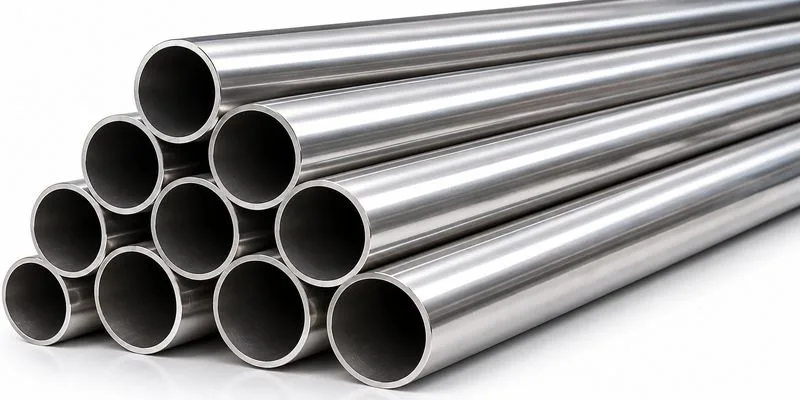
In modern industrial infrastructure, selecting the right piping material is essential for safety, durability and operational efficiency. Bright Steel Centre offers a comprehensive range of Stainless Steel Pipes designed to meet different industrial requirements. Known for its focus on product quality, material specifications, inspection and customer requirements, the company serves industries requiring corrosion-resistant and reliable piping solutions. Choosing the right grade, manufacturing process and pipe specification helps businesses achieve better performance and long-term value.
What Are Stainless Steel Pipes and Why Are They Important?
Stainless steel pipes are manufactured using iron-based alloys containing chromium, which develops a protective oxide layer against corrosion. Depending on their chemical composition, manufacturing process and grade, these pipes offer different levels of strength, heat resistance, weldability and durability.
A professional Stainless Steel Pipes Manufacturer considers factors such as operating temperature, pressure, fluid composition, wall thickness and applicable standards before recommending a suitable product. These properties make stainless steel piping an important component in chemical processing, pharmaceuticals, oil and gas, food processing, power generation and marine engineering.
Different Types of Stainless Steel Pipes Available
Understanding the types of Stainless Steel Pipes helps industrial buyers select products according to their project requirements.
| Pipe Type | Manufacturing Process | Major Characteristics | Common Applications |
| Seamless Pipes | Manufactured without a welded seam | Uniform construction and suitability for demanding pressure applications | Oil and gas, chemical plants |
| ERW Pipes | Electric resistance welding | Consistent dimensions and economical production | General industrial piping |
| EFW Pipes | Electric fusion welding | Suitable for larger diameters and specified applications | Industrial plants and infrastructure |
| IBR Approved Pipes | Supplied with applicable boiler-regulation compliance documentation | Suitable for qualifying boiler and steam applications | Power plants and boiler systems |
Each type serves a different purpose. Selection should depend on design codes, operating conditions, inspection requirements and project specifications rather than manufacturing terminology alone.
Product Comparison: Stainless Steel Grades and Their Properties
Different stainless steel grades provide different mechanical and chemical properties. The following comparison explains the major differences between commonly selected grades.
| Stainless Steel Grade | Main Characteristic | Temperature Suitability | Recommended Applications |
| 304 | General-purpose corrosion resistance | Moderate service temperatures | Food processing, water systems |
| 304L | Lower carbon content and improved resistance to sensitisation after welding | Moderate service temperatures | Chemical equipment and welded piping |
| 304H | Higher carbon content for improved high-temperature strength | Elevated-temperature applications | Boilers and heat exchangers |
| 310 | High chromium and nickel content | High-temperature environments | Industrial furnaces |
| 310S | Lower carbon content than 310 | High-temperature oxidation-resistant applications | Heat treatment equipment |
| 310H | Higher carbon content for elevated-temperature strength | High-temperature pressure applications | Furnace and thermal processing systems |
The correct grade depends on temperature, corrosion exposure, pressure and applicable engineering standards. These grades should not be treated as interchangeable.
Major Product Categories and Their Industrial Uses
1. Stainless Steel Seamless Pipes
Stainless Steel Seamless Pipes are produced without a longitudinal welded joint. Their construction makes them suitable for demanding applications where pressure resistance, dimensional consistency and material integrity are important. They are widely used in petrochemical facilities, hydraulic systems, refineries, pharmaceutical manufacturing and high-pressure fluid transportation.
2. Stainless Steel IBR Approved Pipes Manufacturer
A Stainless Steel IBR Approved Pipes Manufacturer supplies piping intended for applications covered by the Indian Boiler Regulations, subject to the applicable approval, certification and inspection requirements. These products are relevant to steam generation, boiler installations, power stations and thermal engineering projects. Buyers should verify the required material certification and regulatory documentation before procurement.
3. Stainless Steel 304/304L/304H Pipes Manufacturer
A Stainless Steel 304/304L/304H Pipes Manufacturer caters to applications requiring different combinations of corrosion resistance, weldability and high-temperature strength. Grade 304 is commonly selected for general industrial use, 304L is preferred for many welded structures, while 304H is designed for elevated-temperature strength requirements.
4. Stainless Steel 310/310S/310H Pipes Manufacturer
A Stainless Steel 310/310S/310H Pipes Manufacturer serves industries operating in demanding thermal environments. These grades are commonly considered for furnaces, kilns, heat treatment systems, thermal processing equipment and industrial heating installations.
Major Industries, Uses and Applications
Stainless steel piping supports several industries because of its corrosion resistance, strength and versatility.
| Industry | Uses and Applications | Important Requirements |
| Oil and Gas | Fluid transportation, refineries and processing lines | Pressure resistance and corrosion control |
| Chemical and Petrochemical | Chemical transfer and processing equipment | Chemical compatibility |
| Pharmaceuticals | Process lines and fluid handling | Cleanability and suitable surface finish |
| Food and Beverage | Liquid processing and production systems | Hygiene and corrosion resistance |
| Power Generation | Boilers, steam systems and heat exchangers | Temperature and pressure suitability |
| Marine Industry | Seawater-related piping and equipment | Resistance to chloride exposure |
How to Select the Right Stainless Steel Pipe?
Before purchasing, industrial buyers should evaluate the following factors:
- Material Grade: Select 304, 304L, 304H, 310, 310S or 310H according to service conditions.
- Manufacturing Method: Decide between seamless, ERW, EFW or other specified constructions.
- Dimensions: Verify outside diameter, wall thickness, schedule and required length.
- Standards: Check relevant ASTM, ASME and project-specific requirements.
- Documentation: Review material test certificates, inspection reports and traceability.
- Operating Conditions: Consider pressure, temperature, corrosion exposure and fluid compatibility.
Businesses searching for a dependable Stainless Steel Pipes Supplier should prioritise product specifications, transparent documentation, inspection support and timely delivery.
Why Choose an Indian Supplier for Industrial Requirements?
India has an established steel distribution and manufacturing ecosystem serving domestic and international industrial markets. Buyers looking for a Stainless Steel Pipes Supplier in India can benefit from product availability, grade options, competitive sourcing and export-oriented supply capabilities.
For regional procurement, a Stainless Steel pipes Supplier in Mumbai can also support industrial buyers through convenient access to Mumbai's commercial and logistics network. Similarly, an experienced Stainless Steel Pipes exporter can assist international customers with packaging, documentation and shipment coordination.
Frequently Asked Questions (FAQs)
Q1. Which stainless steel grade is best for industrial piping?
Grade 304 is a common general-purpose option, while 304L, 304H, 310, 310S and 310H are selected according to welding and temperature requirements.
Q2. What is the difference between seamless and welded pipes?
Seamless pipes have no longitudinal weld seam, whereas welded pipes are manufactured by joining formed steel sections. Both can be suitable when selected according to applicable standards and service conditions.
Q3. Where are IBR-approved pipes used?
They are used in qualifying boiler and steam applications where compliance with applicable Indian Boiler Regulations is required.