
Commercial and industrial facilities bring together heavy vehicles, valuable equipment, complex structures, and people working closely alongside one another, often under time pressure. Without a coherent protection strategy, accidents and accumulated damage become almost inevitable rather than merely possible. Steel safety barriers form the backbone of physical protection in these environments, addressing risks that procedures and training alone cannot eliminate. Developing a strategy means understanding which products address which risks, where each should be positioned, and how they work together to create comprehensive coverage across an entire site.
Starting with a Site Assessment
Begin any protection project with a thorough site assessment rather than ordering products speculatively. Map vehicle routes, pedestrian walkways, loading areas, racking runs, machinery positions, and utility installations. Review records of past damage, accidents, insurance claims, and near misses, which reveal genuine problem areas rather than assumed ones. Speak with forklift drivers, warehouse staff, maintenance teams, and delivery contractors about difficult manoeuvres and recurring issues. This assessment identifies where protection delivers the greatest benefit and helps prioritise spending when budgets cannot address everything immediately.
Selecting the Right Product for Each Risk
Different risks call for different products, and matching them correctly determines whether protection actually works. The range of odbojnice stalowe available includes corner guards for building edges, column guards for structural supports, U-shaped guards for utilities and equipment, linear barriers for walls and walkways, and trolley guards for interior protection against wheeled equipment. Selecting the appropriate product for each identified risk, rather than applying a single solution everywhere, produces better coverage at lower overall cost and avoids both over-protection and dangerous gaps.
Corner and Column Protection
Corners and columns consistently rank among the most frequently damaged features in industrial facilities, making them natural starting points for any protection programme. Corner guards shield building edges, internal wall corners, and doorway openings from vehicles turning nearby. Column guards protect structural supports, pillars, and posts that carry roofs, mezzanines, and racking. Protecting columns deserves particular priority because damage can affect structural integrity and may require engineering assessment, specialist repair, and temporary closure of affected areas, all of which prove expensive and disruptive.
Linear and Pedestrian Protection
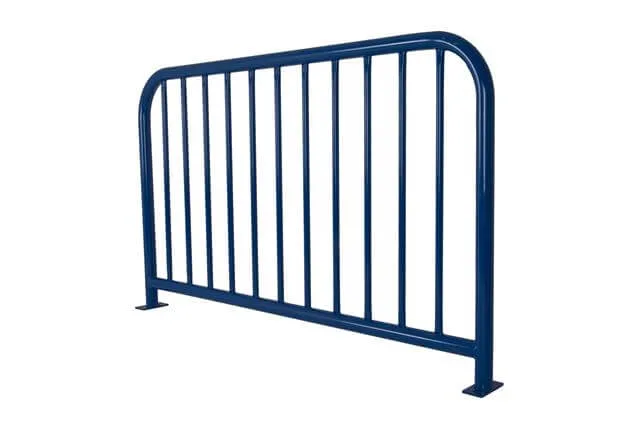
Linear barriers create continuous protection along walls, machinery runs, and production lines where individual guards would leave vulnerable gaps. They also establish protected pedestrian walkways through areas where vehicles operate, providing genuine physical separation rather than relying on floor markings alone. Clearly defined pedestrian routes improve safety substantially, help visitors and contractors navigate unfamiliar sites, and reduce the risk of the most serious workplace accidents. Combining linear barriers with corner and column guards produces coverage without weak points where damage could still occur.
Temporary and Flexible Solutions
Permanent protection cannot address every situation. Maintenance work, equipment installation, cleaning operations, and refurbishment projects create temporary hazards requiring flexible solutions. Freestanding technical barriers deploy quickly without fixing, cordon off work areas effectively, and relocate as tasks progress through the building. Keeping a stock of these barriers available means safety standards remain consistent even during disruptive works. They complement permanent protection rather than replacing it, filling the gaps that fixed installations inevitably leave in dynamic working environments.
Installation, Finishes, and Visibility
Installation method should suit each location. Bolt-down products install quickly on existing concrete with minimal disruption and allow repositioning if layouts change. Concrete-in products provide maximum strength for outdoor areas and high-impact locations. Finishes matter equally: galvanising resists corrosion outdoors and in damp areas, while powder coating in bright colours maximises visibility indoors. High-visibility finishes do genuine safety work by helping drivers recognise hazards before contact occurs, reducing incidents rather than simply limiting their consequences when they happen.
Inspection, Maintenance, and Review
Protection systems need periodic review rather than installation and neglect. Inspect guards for impact damage, bending, loose fixings, and coating deterioration. Replace guards that have absorbed significant impacts, as their protective capacity may be reduced even where damage looks superficial. Record where impacts occur, as patterns often highlight opportunities to improve layouts, add mirrors, adjust routes, or provide additional driver training. Treating inspection as part of routine safety management keeps protection effective and turns incident data into continuous improvement across the facility.
Build Your Protection with Kamar Projekt
A complete steel barrier strategy combines corner guards, column guards, U-shaped protectors, linear barriers, technical barriers, and specialist products matched carefully to each site's layout, vehicles, and genuine risks. With thorough assessment, appropriate product selection, correct installation, and regular review, facilities protect their buildings, equipment, and people effectively while reducing costly downtime. Kamar Projekt supplies a comprehensive range of steel safety barriers for commercial and industrial spaces. Explore the range and build a protection system that keeps your facility safe, organised, and operating smoothly for years ahead.