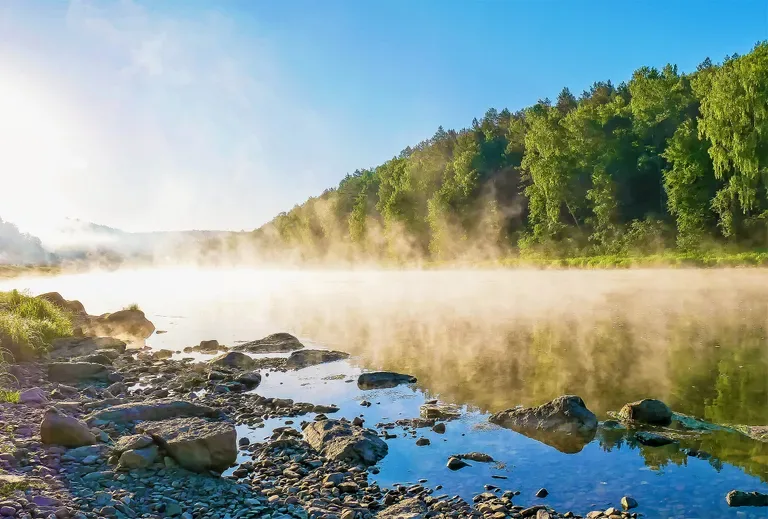
Water conservation is no longer just an environmental goal; it is an economic necessity. In sectors ranging from agriculture to power generation, the inability to control water loss leads to higher costs and reduced operational efficiency. Utilizing a pond evaporation calculator allows site managers to move beyond guesswork and start making precise calculations that account for local weather conditions and surface area, ensuring data-driven resource management.
The Science Behind Surface Water Loss
To combat water loss, we must first understand the environmental drivers behind it. The process is governed by the vapor-pressure deficit—the difference between the moisture in the air and how much moisture the air can hold. When this deficit is high, such as on hot, windy days, water molecules escape from the reservoir surface at an accelerated rate. By analyzing these factors, we can better predict when peak losses will occur.
Identifying Environmental Variables
Six primary factors drive the rate of evaporation: solar radiation, air temperature, wind speed, relative humidity, atmospheric pressure, and surface water temperature. A robust estimation tool incorporates these variables to provide a realistic outlook on how much water is vanishing daily. Monitoring these elements is crucial for anyone looking to optimize their water budget in an increasingly unpredictable climate where water scarcity is becoming more frequent.
The Impact of Local Climates
Different regions experience evaporation at drastically different scales. For instance, arid regions may see massive losses even during the night because the air remains dry enough to continue pulling moisture from the surface. A sophisticated calculation model accounts for these regional differences, helping managers in arid zones understand that their nighttime losses are not negligible, but are instead a significant portion of their total annual water deficit.
Practical Solutions for Water Conservation
After calculating your losses, the next logical step is to deploy a strategy that prevents this water from escaping. Knowing how to reduce water evaporation is essential for maintaining water levels during peak summer months. Whether you choose modular floating covers, shade balls, or chemical alternatives, each method offers distinct benefits that should be carefully balanced against your site's specific operational and budgetary requirements.
Exploring Modern Floating Covers
Modular floating covers are among the most effective physical barriers on the market. They are designed to interlock across the surface of a pond, effectively creating a lid that minimizes both evaporation and solar penetration. This dual benefit not only keeps water in the pond but also inhibits the growth of algae, which is a common problem in stagnant water bodies. This makes them a preferred solution for long-term management.
Assessing Suitability and Limitations
Not every method works for every site. For example, a reservoir used for recreation or wildlife might require different considerations compared to an industrial treatment pond. It is important to compare the durability, wind resistance, and maintenance needs of each solution. By carefully weighing these factors, you ensure that the chosen method provides a sustainable, long-term impact on your site's overall water conservation goals.
Conclusion
The ability to accurately quantify water loss is the hallmark of professional water management. By integrating a pond evaporation calculator into your routine operations, you gain the clarity needed to assess your risk and justify the implementation of new infrastructure. This analytical approach removes the ambiguity from conservation, allowing you to prioritize your spending on methods that provide the highest return on investment and the best results for your facility.
The journey toward a more efficient water system involves learning how to reduce water evaporation through verified technologies and practices. As you compare various techniques—from floating covers to windbreaks—focus on how each solution aligns with your local climate and operational needs. With a proactive strategy, you can turn a significant resource challenge into a success story of sustainability, reliability, and long-term cost reduction.