From Promise to Pause: The Scene at Volkswagen’s Chattanooga Plant
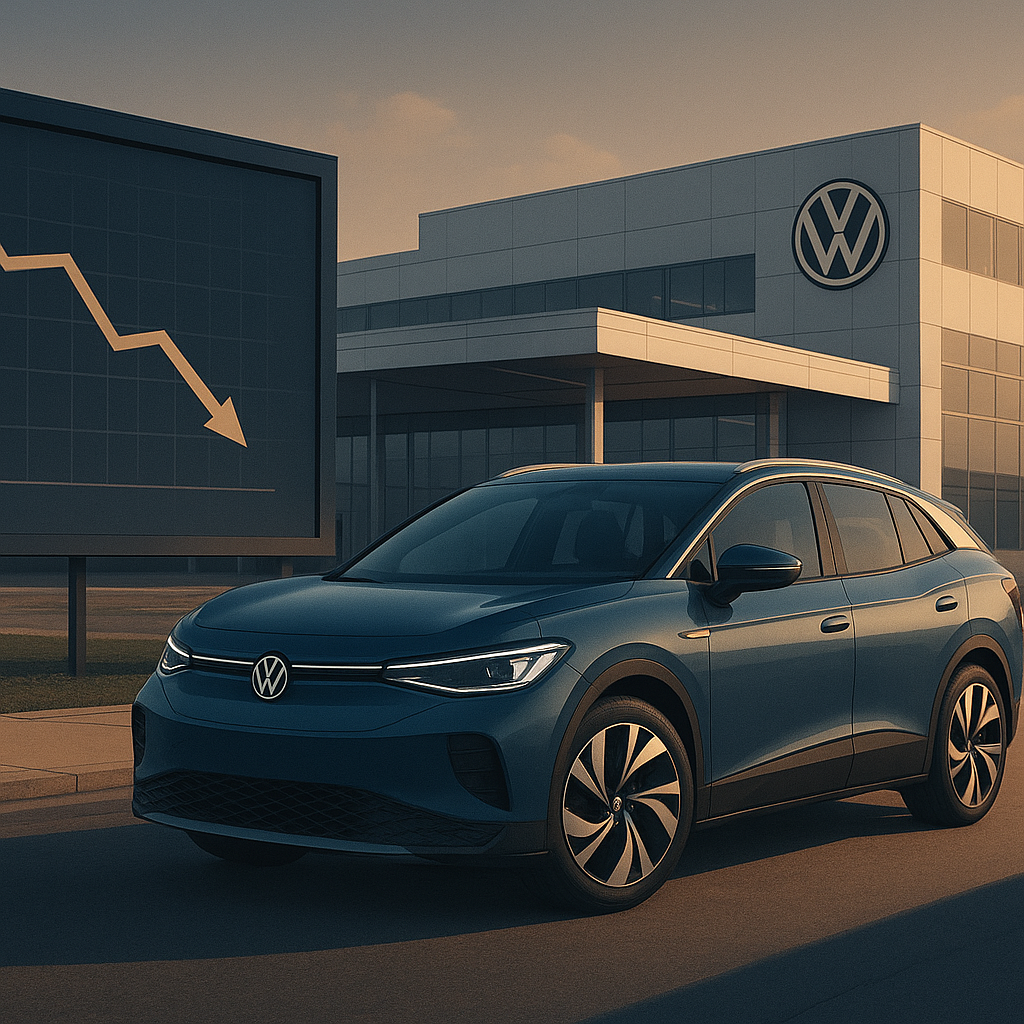
On a crisp morning in late June 2026, the hum of assembly lines at Volkswagen’s Chattanooga manufacturing facility fell eerily silent. Workers gathered anxiously outside the plant, their conversations tinged with uncertainty. The union had just announced that Volkswagen would halt production of the ID.4 electric SUV at this key American site due to declining sales. The ID.4, once heralded as a cornerstone of Volkswagen’s ambitious electric vehicle (EV) push in the U.S., now faces a stark reality. This unexpected production stop echoes far beyond Chattanooga, signaling deeper tremors in the EV market and raising questions about the future of Volkswagen’s stateside electric ambitions.
According to the United Auto Workers (UAW) union representatives, the decision was precipitated by a continued slump in demand for the ID.4, combined with mounting inventory backlogs. Industry insiders report that this move reflects Volkswagen’s recalibration amid shifting consumer preferences and intensifying competition within the increasingly crowded EV segment.
"The halt in production is not just about numbers on a spreadsheet; it reflects a fundamental challenge Volkswagen faces in aligning its product lineup with evolving market realities," said a senior UAW official familiar with the matter.
This article explores the multifaceted factors behind the production pause in Chattanooga, placing it within the broader context of Volkswagen’s EV strategy, market dynamics, and the evolving U.S. automotive landscape in 2026.
Tracing the Journey: Volkswagen’s EV Ambitions and Chattanooga’s Role
Volkswagen’s Chattanooga plant was strategically chosen in 2020 as the primary U.S. manufacturing hub for the ID.4, aligning with the automaker’s global electrification blueprint. The ID.4, launched in 2021, was intended to capture the growing American appetite for electric SUVs, blending Volkswagen’s German engineering with local production efficiencies.
The Chattanooga facility underwent significant upgrades, including a $900 million investment to support EV assembly lines and battery pack integration. Volkswagen’s leadership envisioned the plant as a linchpin in competing with dominant EV manufacturers such as Tesla, Ford, and General Motors.
Initially, the ID.4’s reception was promising. Early sales figures in 2022 and 2023 revealed steady growth, buoyed by attractive pricing, a solid range of approximately 300 miles, and federal tax incentives. However, cracks began to form as the market matured rapidly. Consumer expectations evolved, particularly regarding vehicle performance, technology integration, and charging infrastructure.
Moreover, Volkswagen’s ID.4 faced increasing competition not only from legacy automakers expanding their EV portfolios but also from new entrants offering innovative features and lower prices. This competitive pressure, coupled with supply chain disruptions and rising raw material costs, started to weigh heavily on Volkswagen’s U.S. electric vehicle strategy.
Industry analysts note, "Volkswagen's initial lead in the mid-sized electric SUV segment was quickly eroded as rivals accelerated product launches and improved vehicle specs, leaving the ID.4 struggling to maintain momentum."
These dynamics set the stage for the recent production halt in Chattanooga, a decision that underscores the challenges of sustaining EV growth amid shifting market currents.
Digging Into the Data: Sales Trends and Market Forces
At the core of Volkswagen’s production stoppage lies a stark decline in ID.4 sales figures in the U.S. market. Internal estimates and industry reports indicate a year-over-year sales drop exceeding 25% in the first half of 2026, compared to 2025. This downward trajectory contrasts sharply with Volkswagen’s earlier projections and its global EV sales growth.
Several factors underpin this decline:
- Consumer Preferences Shifting Towards Crossovers with Enhanced Features: Buyers increasingly prioritize advanced driver-assistance systems, longer battery ranges exceeding 350 miles, and fast-charging capabilities. Competitors, notably Tesla’s Model Y and Ford’s Mustang Mach-E, have set new benchmarks that the ID.4 has struggled to match consistently.
- Intensified Competition and Pricing Pressures: The U.S. EV market in 2026 is crowded, with more than 30 models vying for consumer attention. Volkswagen’s pricing strategy has faced criticism for being less aggressive, leading to inventory buildup and delayed turnover.
- Supply Chain and Production Challenges: Despite improvements since the early pandemic years, lingering semiconductor shortages and rising battery material costs have constrained Volkswagen’s ability to optimize production and profitability.
- Macroeconomic Factors: Rising interest rates and inflationary pressures have dampened consumers’ willingness to invest in new vehicles, particularly pricier EVs.
Volkswagen’s internal data reportedly shows that inventory at Chattanooga has surged, with ID.4 stockpiles exceeding a three-month supply threshold—well above the industry norm of six weeks. This excess inventory has forced Volkswagen to reassess production volumes urgently.
Comparatively, Tesla’s Model Y continues to dominate U.S. EV sales, supported by a robust charging network and frequent software updates. Ford’s EV efforts, particularly with the F-150 Lightning, have also gained traction, appealing to a different segment of the market. These competitive forces have squeezed Volkswagen’s market share, complicating its Chattanooga operations.
For further context on Volkswagen’s production challenges and sales dynamics, see our in-depth analysis, Why Volkswagen Halted ID.4 Production in Chattanooga Amid Slumping Sales and Volkswagen’s Chattanooga ID.4 Shutdown Signals Deeper EV Market Challenges.
What’s Changed in 2026? Volkswagen’s Strategic Pivot and Industry Responses
Since the start of 2026, Volkswagen has taken several steps to address the slump in ID.4 sales and the broader issues facing its U.S. EV business. The production halt in Chattanooga is part of a wider strategic pivot aimed at rebalancing resources and prioritizing models with stronger market appeal.
Key developments include:
- Refocusing on Higher-Margin EV Models: Volkswagen is accelerating the rollout of its ID.7 sedan and the upcoming ID.Buzz electric van, which the company believes can capture niche segments underserved by competitors.
- Investment in Battery Technology: Volkswagen has doubled down on its partnership with Northvolt to enhance battery energy density and reduce costs, aiming to improve range and affordability in future models.
- Recalibrated Pricing and Incentives: To clear excess ID.4 inventory, Volkswagen has introduced aggressive discounts and financing options, although these efforts have yet to reverse the sales downturn significantly.
- Collaboration with Charging Networks: Volkswagen is expanding its alliance with Electrify America to improve charging accessibility for ID.4 owners, addressing a common barrier to EV adoption.
Despite these initiatives, Volkswagen faces an uphill battle. Industry sources suggest that the Chattanooga halt may extend beyond a temporary pause, potentially evolving into a longer-term production realignment depending on market feedback.
Volkswagen spokesperson remarked, "Our Chattanooga plant remains a vital part of our U.S. strategy, but we must remain agile to market conditions and consumer needs as we continue our electrification journey."
Meanwhile, competitors are not standing still. Tesla continues to innovate with its Cybertruck and next-generation battery tech; Ford is expanding its EV lineup with new variants; and startups backed by major technology firms are entering the fray. Volkswagen’s challenge is to differentiate and regain momentum amid these rapid shifts.
Implications for Workers, Supply Chain, and the Broader EV Ecosystem
The production halt at Chattanooga reverberates beyond Volkswagen’s boardrooms, impacting workers, suppliers, and regional economies. The UAW has expressed concern about potential layoffs or reduced hours for plant employees, who number approximately 3,500. While Volkswagen has pledged to minimize workforce disruptions through temporary furloughs and redeployment, uncertainty remains.
Local suppliers supporting Chattanooga’s assembly lines are also bracing for ripple effects. Reduced production volumes may lead to contract renegotiations and strain smaller component manufacturers dependent on Volkswagen’s orders.
From a macro perspective, this development highlights structural challenges in the U.S. EV market, including:
- Market Saturation: The rapid influx of EV models has fragmented consumer demand, making it harder for any one vehicle to dominate.
- Infrastructure Gaps: Despite investment, charging infrastructure remains uneven, influencing purchase decisions.
- Policy Uncertainty: Changes in federal and state incentives create shifting sands for automakers’ long-term planning.
These factors collectively complicate Volkswagen’s ability to sustain high-volume EV production in the U.S., underscoring the need for adaptive strategies.
Labor analyst Dr. Karen Simmons notes, "The Chattanooga situation exemplifies how EV market volatility can directly affect workers and communities, reinforcing the need for transition policies that balance innovation with social stability."
Looking Ahead: What’s Next for Volkswagen and the U.S. EV Market?
As Volkswagen navigates this production pause, several critical questions emerge about its future trajectory and the broader EV market in America.
Firstly, will Volkswagen reinstate ID.4 production in Chattanooga once inventory normalizes, or pivot entirely to new models? Given the investment in the facility and the strategic importance of a U.S. manufacturing footprint, a full exit seems unlikely. However, the timeline for resumption remains unclear.
Secondly, how will Volkswagen’s experience influence other automakers’ approaches to EV portfolio management and production flexibility? The Chattanooga halt may serve as a cautionary tale about overestimating demand and underestimating competitive dynamics.
Thirdly, what role will policy and infrastructure development play in shaping the EV market’s evolution? Continued government support for charging networks, battery innovation, and consumer incentives will be crucial to stabilizing growth.
For consumers and industry watchers, the key takeaways include:
- EV buyers are becoming more discerning, prioritizing range, technology, and price.
- Automakers must remain nimble, adjusting production and product strategies swiftly.
- Labor and supply chain stakeholders need proactive engagement to manage transitions.
Volkswagen’s Chattanooga ID.4 production pause encapsulates the complexities of an automotive industry in flux. As the company recalibrates, its decisions will reverberate across the U.S. EV ecosystem, offering vital lessons about scaling electric mobility sustainably.
For readers seeking ongoing coverage of this evolving story, TheOmniBuzz will continue to provide expert insights and analysis in our dedicated automotive section.