
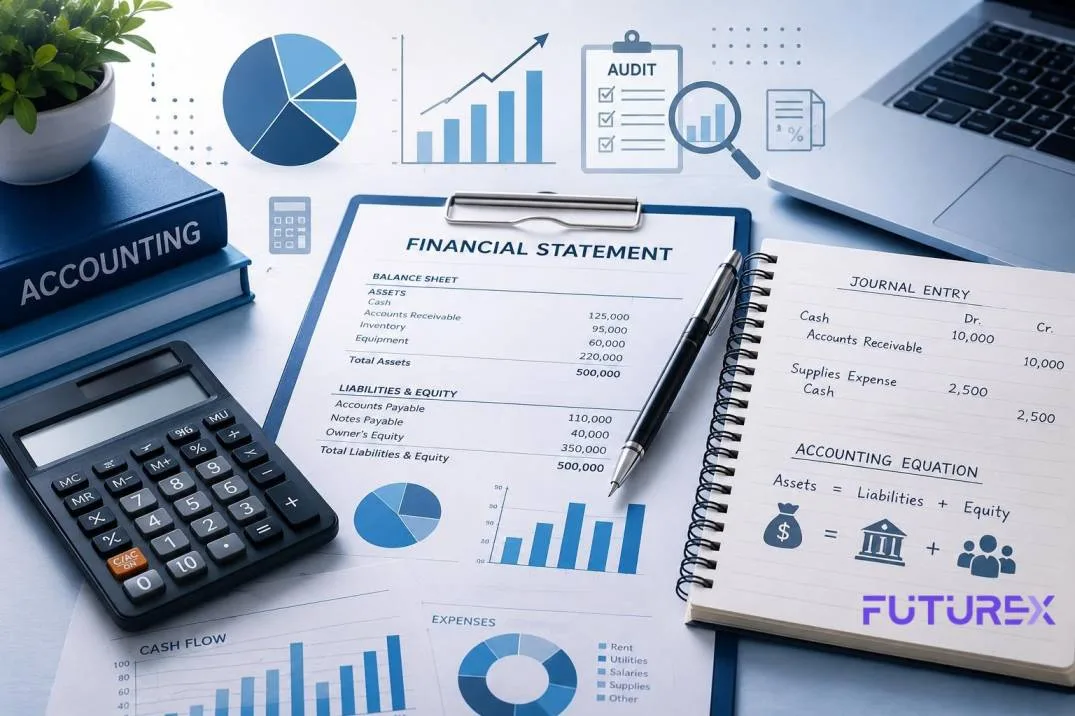
Financial management is one of the most important aspects of running a successful organisation. Whether it is a growing business, an educational institution, a charitable trust or a non-profit organisation, maintaining accurate financial records is essential for understanding income, controlling expenses and making informed decisions.
Without a systematic accounting process, organisations may struggle to monitor transactions, prepare financial statements and identify areas where financial resources are being used inefficiently.
One important part of financial management is understanding the relationship between income and expenditure. Financial statements help organisations evaluate their performance, maintain transparency and plan future activities.
Let's explore why accounting matters, how an Income and Expenditure Account works and how professional accounting support can improve financial management.
Why Is Accounting Important for Every Organisation?
Accounting is more than recording money received and payments made. It provides a structured way to organise financial information and understand an organisation's overall financial activities.
Some important benefits include:
1. Better Financial Control
Accurate accounting records help organisations monitor their revenue, expenses, outstanding payments and financial commitments. This makes it easier to identify unnecessary expenditure and maintain better control over operating costs.
2. Improved Decision-Making
Management teams need reliable financial information before making important decisions. Accounting reports provide useful insights into spending patterns, revenue sources and financial performance.
3. Transparent Financial Reporting
Financial transparency is particularly important for organisations that manage contributions, donations or membership funds. Proper accounting records help stakeholders understand how financial resources are being utilised.
4. Easier Budget Planning
Historical financial information allows organisations to estimate future income and expenses. This supports more realistic budgeting and helps management prepare for upcoming financial requirements.
5. Organised Financial Documentation
Maintaining proper books of accounts creates a reliable record of financial transactions. It also makes account reconciliation, financial reviews and reporting more systematic.
What Is an Income and Expenditure Account?
An Income and Expenditure Account is a financial statement generally prepared by non-profit organisations to determine their financial surplus or deficit during a particular accounting period.
It records revenue income earned and revenue expenses incurred on an accrual basis.
For example, an educational society may receive membership subscriptions, general donations and interest income while spending money on salaries, rent, electricity and administrative activities.
The Income and Expenditure Account brings these items together to show whether the organisation's revenue income was sufficient to cover its expenses.
- Surplus: When total revenue income exceeds total revenue expenditure.
- Deficit: When total revenue expenditure exceeds total revenue income.
For a detailed explanation, including its features, format, components and practical examples, read this guide to the Income and Expenditure Account.
Main Components of an Income and Expenditure Account
Understanding the items included in this account is essential for preparing accurate financial statements.
Revenue Income
Revenue income represents earnings associated with an organisation's regular activities.
Common examples include:
- Membership subscriptions
- General donations
- Interest income
- Admission fees
- Revenue grants
- Other recurring income
The treatment of donations and grants depends on their purpose and any restrictions attached to them.
Revenue Expenditure
Revenue expenditure includes regular costs incurred while operating an organisation.
Examples include:
- Salaries and wages
- Office rent
- Electricity and water charges
- Printing and stationery
- Repairs and maintenance
- Administrative expenses
- Depreciation
Capital purchases, such as land, buildings and major equipment, are generally accounted for as assets rather than being charged entirely as current-period revenue expenditure.
How to Prepare an Income and Expenditure Account
Preparing this financial statement requires accurate accounting records and appropriate adjustments.
The general process involves the following steps:
Step 1: Review financial records
Examine the Receipts and Payments Account, ledger accounts, invoices and supporting documents.
Step 2: Identify revenue income
Determine the income earned during the accounting period, including subscriptions, interest and other applicable revenue sources.
Step 3: Identify revenue expenses
Collect the details of operating expenses such as salaries, rent, utilities and maintenance.
Step 4: Make accounting adjustments
Consider outstanding expenses, prepaid expenses, outstanding income, income received in advance and depreciation.
Step 5: Calculate the totals
Add the adjusted revenue income and expenditure separately.
Step 6: Determine the surplus or deficit
Compare the two totals to calculate the financial result for the accounting period.
Understanding Important Accounting Adjustments
Accounting adjustments help ensure that income and expenses are recognised in the correct financial period.
Some common adjustments include:
- Outstanding expenses: Expenses incurred but not yet paid.
- Prepaid expenses: Payments made for services relating to a future accounting period.
- Outstanding income: Income earned but not yet received.
- Income received in advance: Money received during the current period for a future period.
- Depreciation: Allocation of an asset's depreciable amount over its useful life.
Ignoring these adjustments can result in inaccurate financial statements and misleading financial information.
Difference Between Income and Expenditure Account and Receipts and Payments Account
Although these statements are commonly used by non-profit organisations, their purposes are different.
| Basis | Income and Expenditure Account | Receipts and Payments Account |
|---|---|---|
| Accounting method | Accrual basis | Cash basis |
| Purpose | Determines surplus or deficit | Records cash and bank transactions |
| Transactions | Revenue income and expenses | Cash receipts and payments |
| Capital transactions | Generally excluded | Included |
| Outstanding expenses | Considered | Not recorded until paid |
| Depreciation | Included where applicable | Not included as a cash payment |
The Receipts and Payments Account summarises actual cash movements, whereas the Income and Expenditure Account evaluates financial performance over an accounting period.
Why Businesses Need Systematic Accounting and Bookkeeping
While the Income and Expenditure Account is primarily associated with non-profit organisations, businesses also need structured accounting systems to monitor their financial performance.
Businesses generally prepare financial statements such as the Income Statement, Balance Sheet and Cash Flow Statement according to applicable accounting requirements.
Proper bookkeeping supports these activities by ensuring that transactions are recorded accurately and financial information remains organised.
An effective accounting process can help businesses:
- Monitor sales and operating expenses.
- Track outstanding customer payments.
- Maintain supplier payment records.
- Reconcile bank transactions.
- Prepare financial statements.
- Review financial performance.
- Support tax and regulatory reporting.
As business operations expand, these responsibilities can become increasingly demanding. Maintaining an internal accounting team may also require investment in employee salaries, accounting software, training and administration.
This is one reason many organisations consider outsourcing their accounting activities.
How Outsourcing Accounting Services Can Improve Financial Management
Outsourcing accounting allows businesses to delegate selected accounting and bookkeeping responsibilities to an external service provider.
Depending on the agreed scope, these services may include bookkeeping, accounts payable, accounts receivable, bank reconciliation, financial reporting and other accounting support activities.
Some key advantages include:
Reduced Administrative Workload
Delegating routine accounting tasks allows internal teams to focus more on business operations, customer relationships and strategic activities.
Access to Accounting Expertise
Professional service providers can offer structured accounting processes and experienced support for maintaining financial records.
Improved Record Management
Systematic transaction recording, reconciliation and reporting help businesses maintain organised financial information.
Flexible Support
Businesses can select accounting services based on their operational requirements and the volume of financial activities.
Better Management Visibility
Regular accounting reports can help management review expenses, monitor receivables and understand financial performance.
Businesses exploring external accounting support can learn more about outsourced accounting services in India offered by Futurex Management Solutions.
Choosing the Right Accounting Support for Your Organisation
Selecting an accounting service provider requires evaluating more than just service pricing.
Organisations should consider the following factors:
- Service scope: Check whether the provider offers the accounting services required by your organisation.
- Industry understanding: Look for experience relevant to your business operations.
- Data confidentiality: Understand the provider's policies for protecting financial information.
- Reporting process: Confirm how frequently financial reports and reconciliations will be shared.
- Communication: Evaluate the availability of support and the process for resolving accounting queries.
- Scalability: Consider whether the service can accommodate changing transaction volumes and business requirements.
The right service arrangement should support accurate financial records, reliable reporting and efficient accounting operations.
Conclusion
Effective financial management starts with accurate accounting and systematic record-keeping. Understanding income, expenses and financial statements helps organisations monitor performance, improve transparency and make informed decisions.
An Income and Expenditure Account is particularly useful for non-profit organisations because it explains whether revenue income is sufficient to cover operating expenses. Businesses, meanwhile, need appropriate financial statements and organised bookkeeping systems to monitor their commercial activities.
As accounting responsibilities grow, outsourcing selected financial tasks can help organisations improve their record-management processes and reduce the administrative burden on internal teams.
With proper accounting practices and suitable professional support, organisations can build a stronger foundation for financial planning and sustainable operations.