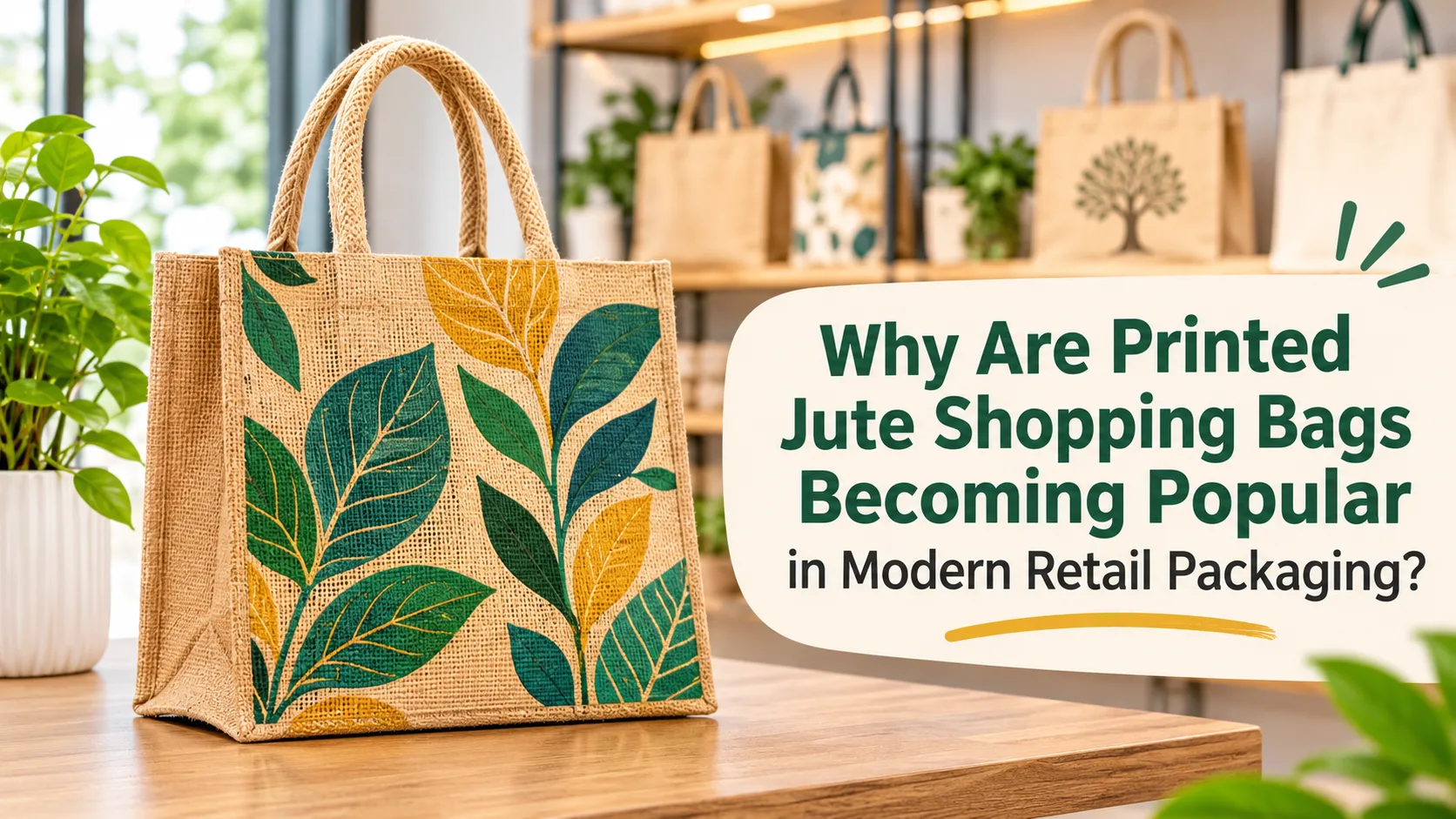
Walk into a boutique, a hotel gift shop or a concept store today and you will notice a pattern. More purchases are handed over in textured, natural-looking bags with a clean logo on the front. Custom-printed jute shopping bags have moved from a niche choice to a regular feature of retail packaging. The reasons are a mix of brand image, practical strength, changing shopper attitudes and the way jute feels in the hand. This article looks at what is driving the trend and what brands should know before ordering.
A Bag That Looks and Feels Premium
Jute is a coarse plant fibre with a visible weave. It is stiff enough that a bag stands up by itself when set down on a counter. That structure makes a shopping bag look neat and intentional, and it keeps its shape when carried.
The texture also signals craft and substance. For lifestyle labels, gifting companies, home décor stores, wine merchants and hospitality brands, that understated, natural look matches how they want to be seen. Custom-printed jute shopping bags let a brand carry that feeling from the shelf to the street. The packaging becomes part of the product experience instead of something customers discard at the door.
Packaging Customers Actually Reuse
A thin carrier bag is used once, if that. A well-stitched jute shopping bag with strong handles is different. Customers take it to the market, the beach, the office or the next shop.
Every reuse puts your logo in front of new people, well outside your own store. A custom-printed jute shopping bag works like a walking advertisement. A single bag can earn many impressions after the sale, without any extra spend from the brand. This reuse value is a big reason retailers now treat bags as a branding investment rather than a disposable cost.
Changing Shopper Attitudes
Shoppers are paying closer attention to packaging waste, and many retailers are moving away from single-use plastic bags. Jute, being a plant fibre, fits that shift naturally, and customers often read a jute bag as a more considered choice.
Brands should be careful with how they describe the bag, though. A jute bag that carries a plastic lamination layer is not purely plant fibre. Any environmental claim you repeat to customers needs evidence behind it, and rules against vague, unprovable green claims are tightening. In the EU, generic environmental claim rules under Directive (EU) 2024/825 apply from 27 September 2026. The safest approach is to describe the bag plainly: what it is made of, how it is finished and how it can be reused.
Plenty of Room for Customisation
Another reason for the popularity of custom-printed jute shopping bags is how adaptable they are. Almost every part of the bag can be made to your brief:
- Shape and size: flat or gusseted totes, boutique shoppers, bottle carriers, drawstring pouches
- Handles: flat cotton webbing, cotton rope, or leather and vegan leather for a more upscale look
- Extras: zipped tops, inner slip pockets, magnetic snaps, brass studs, reinforced bases and cotton linings
- Branding details: woven labels and hangtags to match the print
- Fabric colour: natural, bleached off-white, or dyed to a chosen shade
This range lets a small boutique and a large retail group both get a bag that suits their own identity.
Printing Methods That Work on Jute
Logos can be applied by screen printing (up to eight colours), digital heat transfer, foil or embroidery. Each gives a different finish, so the choice depends on your design and budget.
Because the weave is coarse, design matters. Here are a few tips:
- Go bold. Strong one-colour marks and wide lettering read best against the texture.
- Keep it simple. Thin lines, tiny text and photographic gradients can break up on the weave.
- Consider embroidery for a raised, upmarket look.
- Treat Pantone references as a target. Colour on natural fibre varies with the fibre, so expect a close match rather than an identical one.
If your logo has fine detail, a smoother fabric such as cotton canvas or a jute-cotton blend may reproduce it better. The right fabric is the one that suits your artwork.
To Laminate or Not to Laminate
Some jute bags carry a thin LDPE film, a type of polyethylene plastic, applied by heat pressing or adhesive bonding. The film makes the inside wipe-clean and stiffens the bag, which helps for wet or messy items.
The trade-off is that the finished bag contains a plastic layer. If you prefer to avoid it, you can choose an unlaminated bag or one lined with cotton fabric. Be clear with your supplier about which you want, and describe it accurately to customers.
Care and Everyday Use
Jute is not treated like cotton. Spot-clean it or wash it gently by hand, and avoid soaking, which can affect the fibre. If the bags will be machine washed often, cotton canvas is the more practical material. Telling customers how to care for their bag keeps it looking good for longer, which means more reuse and more visibility for your brand.
Sourcing Close to the Fibre
India produces roughly 75% of the world's jute goods, according to a Press Information Bureau document, and most of the country's composite jute mills are in West Bengal. Manufacturers based around Kolkata are therefore close to both the raw fibre and an established skilled workforce, which helps with consistent fabric quality and stitching. For international buyers, this is a good reason to look at Indian makers for custom-printed jute shopping bags.
What to Prepare Before You Order
A clear brief speeds up quoting and avoids surprises later. Have these ready:
- Your logo as a vector file, or a reference bag
- The size you need
- Handle type
- Lined or unlined, and whether you want lamination
- A colour reference
- Where the print should sit on the bag
Most custom orders follow a simple path: enquiry, quotation, sampling, sample approval, bulk production, inspection, packing and shipment. Do not skip the sample. On jute it shows how your logo reads on the weave, how close the colour is, how the handles are attached and how firmly the bag stands. A good manufacturer will also inspect for defects in material, colour, print and stitching, and test handle strength before shipping.
Final Thoughts
Printed jute bags are growing in popularity because they do several jobs at once. They look premium, last through repeated use, carry a brand's message far beyond the store and match what many shoppers now expect from packaging. Custom-printed jute shopping bags also give brands real control over size, handles, finish and print.