
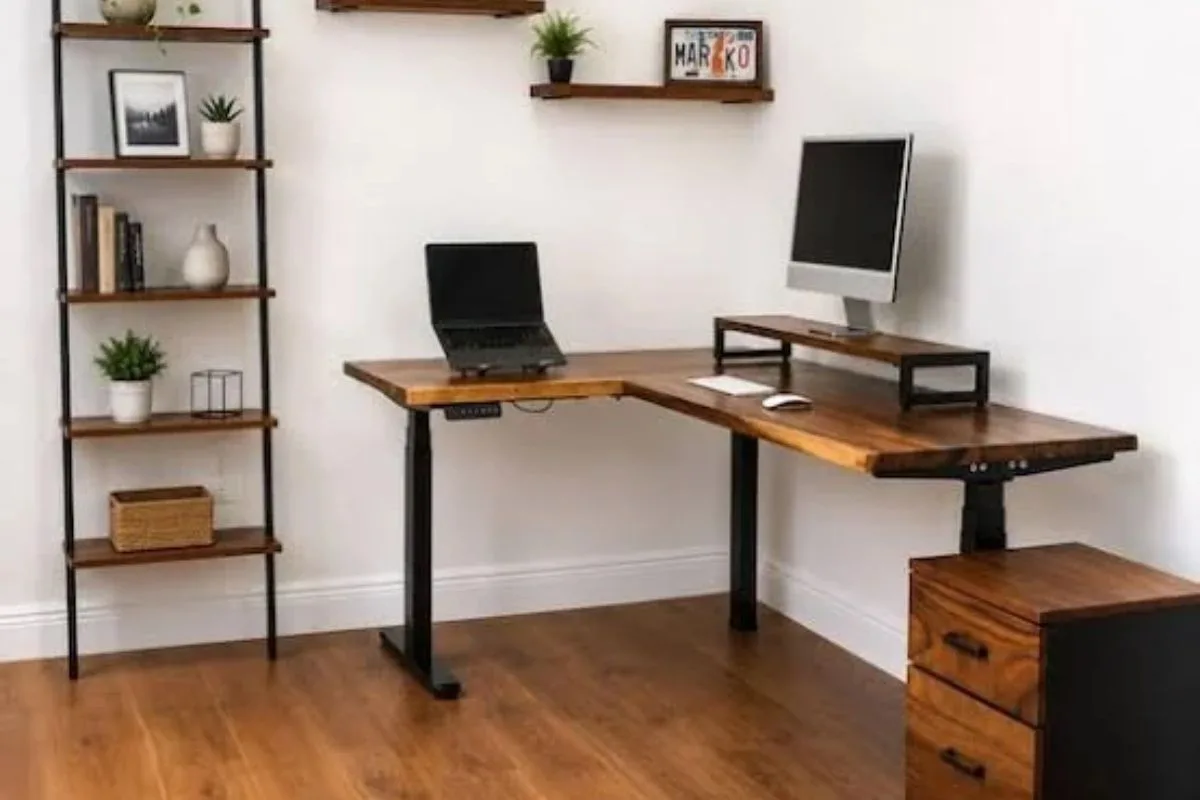
Creating a comfortable and organised workspace is important for staying focused and managing daily tasks. Whether you work from home or in an office, having a suitable desk can make a difference to your working experience. A well-planned workspace provides enough room for your computer, documents, office supplies and other essential items without making the area feel crowded.
An L-shaped desk is a practical option for people who need more working space. Its design fits neatly into a corner while providing two connected desk surfaces for different activities. It can also help keep work equipment organised and make better use of available floor space.
An L shaped standing desk offers additional flexibility by allowing users to change between sitting and standing positions during the working day. However, choosing the right model requires some planning. Factors such as desk size, height adjustment, materials, stability and additional features should be considered before making a purchase. Understanding these details can help you find a desk that suits your workspace and daily requirements.
1. Measure Your Available Workspace
Before choosing an L-shaped standing desk, measure the area where you plan to place it. Although these desks are designed to fit into corners, their two connected surfaces can take up more space than a standard rectangular desk.
Measure the available width, depth and height of your chosen area. Also consider nearby furniture, windows, doors and storage units. Make sure there is enough room to move around the desk comfortably.
If you have a smaller home office, look for a compact design that makes good use of the corner without blocking walkways. Larger office spaces may have enough room for wider models with additional working surfaces.
It is also worth checking the desk dimensions at both its lowest and highest settings to ensure it fits comfortably in your room.
2. Check the Height Adjustment Mechanism
The height adjustment system is one of the main features to consider when buying a standing desk. It allows users to raise or lower the desk according to their preferred working position.
Most adjustable standing desks use either an electric or manual mechanism.
Electric models usually have a motor that moves the desk with the help of a control panel. Some include preset height settings, making it easier to switch between preferred positions.
Manual models require users to adjust the height using a handle or another mechanical system. These can be suitable for people who prefer a simpler adjustment method.
Before purchasing, check the adjustment range and make sure it suits your height. A suitable range allows you to work comfortably while sitting and standing.
3. Consider the Desk Size and Layout
An L-shaped desk provides two connected surfaces, which can be useful when you need separate areas for different activities. However, the layout should match the way you work.
For example, one side can hold your computer and monitor, while the other can provide space for writing, reading documents or using additional equipment.
Consider the following points:
- Desk length: Check whether both sides provide enough working space.
- Desk depth: Make sure there is sufficient room for monitors, keyboards and other equipment.
- Corner placement: Check whether the desk fits the available corner properly.
- Legroom: Ensure the supporting frame does not restrict movement.
- Workspace arrangement: Consider how you will organise your daily tasks across both surfaces.
Choosing a suitable layout can help you maintain an organised workspace and avoid unnecessary clutter.
4. Look at the Weight Capacity
Weight capacity is another important factor when selecting an adjustable L-shaped desk. The desk should be able to support all the equipment you plan to place on it.
Think about the total weight of your computer, monitors, keyboard, speakers, printers and other office accessories. If you use multiple monitors or heavier equipment, choose a model with a suitable weight limit.
Also check whether the stated weight capacity applies to the complete desk or individual sections. This information can help you understand how much weight each surface can safely support.
Avoid placing more weight on the desk than the manufacturer recommends. Following the stated limits can help maintain stability and support the proper operation of the adjustment mechanism.
5. Check the Frame and Overall Stability
A standing desk should remain stable when raised or lowered. A weak frame can cause unwanted movement, especially when you are typing or using multiple monitors.
Look for a strong supporting frame made from suitable materials. Steel frames are commonly used in adjustable desks because they provide structural support.
The design of the legs and crossbars can also affect stability. Check the product description for information about the frame construction and supporting structure.
If possible, review customer feedback to see whether users have mentioned shaking, uneven movement or other stability concerns.
A properly constructed desk can provide a more comfortable working surface and support regular daily use.
6. Choose Suitable Desk Materials
The desktop material affects the appearance, durability and maintenance requirements of an L-shaped standing desk.
Different materials offer different advantages, so consider your budget and preferred interior style before making a decision.
Some common options include:
- Solid wood: Provides a natural appearance and can create a warm look in a home office.
- MDF: Offers a smooth surface and can be finished in different colours and styles.
- Particleboard: Often used in affordable furniture and available in various finishes.
- Laminate surfaces: Provide a practical finish that is generally easy to clean and maintain.
You should also check the thickness and surface finish of the desktop. A suitable material should support your everyday equipment and be easy to maintain.
7. Review the Control Panel and Memory Settings
Modern electric standing desks often include control panels that make height adjustment easier. Some models also offer memory settings that allow users to save their preferred desk heights.
These features can be useful if several people use the same desk or if you regularly switch between sitting and standing positions.
Before purchasing, check the following features:
- Easy-to-use adjustment buttons.
- Clear height display.
- Programmable height settings.
- Smooth movement controls.
- Convenient control panel placement.
Some desks may also include safety features such as collision detection. This can help reduce the risk of damage if the desk meets an obstacle while moving.
Choose controls that are simple to understand and suitable for your daily working routine.
8. Consider Cable Management Options
An L-shaped desk can hold several electronic devices, which may result in multiple cables across the working area. Poor cable organisation can make your workspace look untidy and create difficulties when cleaning or moving equipment.
Look for desks that include cable management trays, clips or openings. These features help keep wires organised and reduce the number of cables visible on the desktop.
You should also consider where your power sockets are located. Make sure the cables can reach the required connections without becoming stretched when the desk moves up or down.
Good cable management can make your office look cleaner and help you maintain a more organised working environment.
9. Think About Ergonomics and Comfort
Comfort should be an important part of your desk selection process. A suitable desk height can help you maintain a natural working position and avoid unnecessary strain during daily tasks.
When sitting, your feet should rest comfortably on the floor, with your elbows positioned at a suitable angle while typing.
When standing, adjust the desk so your elbows remain close to your body and your wrists stay in a comfortable position. Your monitor should also be positioned at a suitable viewing height to reduce the need to bend your neck.
An adjustable desk makes it easier to change working positions during the day. However, it is still important to maintain good posture and take regular movement breaks.
10. Compare Prices, Warranty and Customer Reviews
Before placing an order, compare different models based on their features and overall value. A lower price may seem attractive, but it is important to check what the product includes.
Compare the frame material, adjustment mechanism, weight capacity, desktop size and additional features. Also check whether the price includes delivery and assembly.
Customer reviews can provide useful information about the actual product experience. Pay attention to feedback about:
- Assembly instructions and installation.
- Motor performance and noise.
- Desk stability at different heights.
- Surface quality and finish.
- Customer service and delivery experience.
Finally, review the warranty details. Check whether it covers the motor, frame and other important components. Understanding the warranty conditions can help you make a more informed purchasing decision.
Common Mistakes to Avoid When Buying an L-Shaped Standing Desk
Even after comparing different models, buyers can overlook certain details. Avoiding common mistakes can help you choose a desk that suits your requirements.
Some mistakes to watch out for include:
- Not measuring the available corner space before ordering.
- Ignoring the desk's maximum weight capacity.
- Choosing a desk without checking its height adjustment range.
- Overlooking frame stability and desktop materials.
- Forgetting to check cable management features.
- Focusing only on price instead of overall product quality.
- Not reviewing assembly and warranty information.
Taking time to check these details can help you avoid unnecessary problems and select a desk that supports your daily work activities.
Conclusion
Choosing the right L-shaped standing desk involves more than finding a design that fits your office. You should consider its dimensions, adjustment mechanism, weight capacity, frame stability, desktop materials and additional features. These factors can help you find a desk that provides enough working space while supporting a comfortable and organised environment.
It is also important to think about your daily work habits and the equipment you use regularly. Comparing different models and checking their product specifications can make the buying process easier.
If you are exploring options for a flexible home or office workspace, Corner Desk UK is a website worth considering when looking for corner desks and related workspace furniture. By focusing on your space, comfort and practical requirements, you can choose an L-shaped standing desk that suits your needs and supports your everyday activities.