
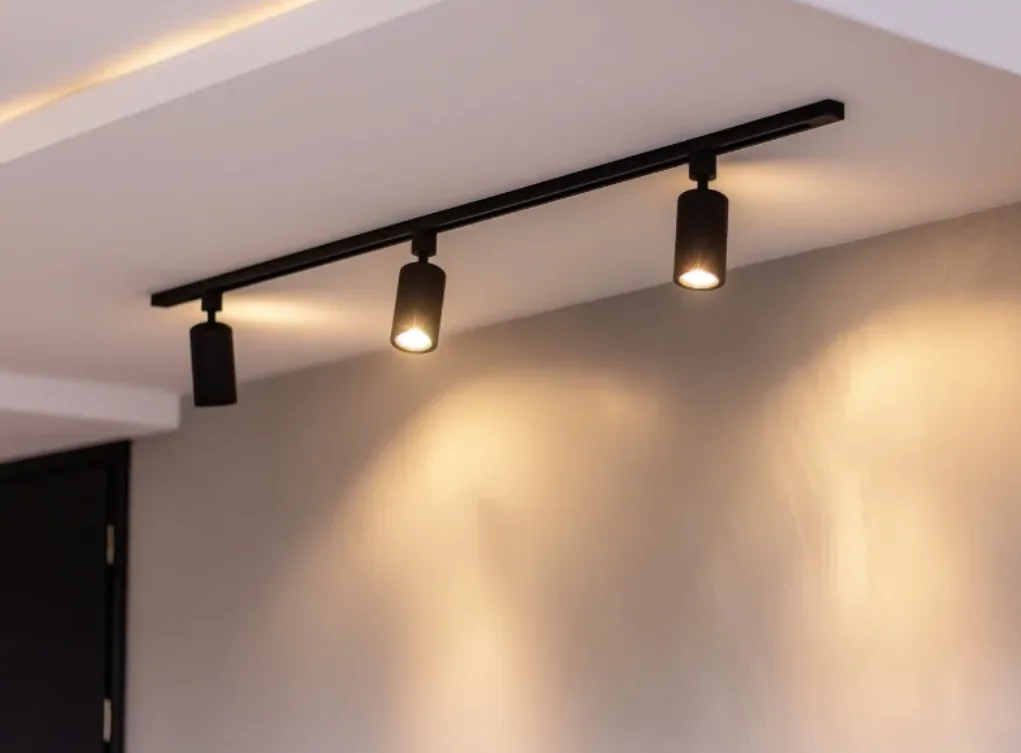
Best Magnetic Track Lights: What They Are, Benefits and How to Choose and Install Them
Have you ever wished you could move a light without calling an electrician? That is exactly what modern lighting now allows. Instead of fixed ceiling points, you get a slim track that lets you place, shift and swap lights whenever your layout changes.
Magnetic track lights are fast becoming a favourite for homes, cafes, offices and showrooms. This guide explains what they are, how to choose the right system and how installation works, step by step.
What Makes the Best Magnetic Track Lights?
The best magnetic track lights use a slim track that carries low-voltage power, and light heads that snap onto it with a magnet. You do not need to rewire anything to add, remove or move a light along the track.
Most systems run on low-voltage DC power (commonly 48V) through a driver, which converts mains power for the track. The track itself is thin, so it blends neatly into a false ceiling or sits cleanly on the surface.
But not every system is good. Quality depends on the track build, the driver, the magnetic contact and the light heads. A weak system can flicker, heat up or lose contact over time.
When you compare options, check these basics:
- Clear voltage, wattage and lumen details on the datasheet
- A sturdy track with a firm magnetic hold
- A good quality driver with enough capacity
- Light heads with proper heat control
- A written warranty from the seller
Why Choosing Your Magnetic Track Lighting Carefully Helps
A track is fixed once and used for years. If the track or driver is poor, replacing it later means opening the ceiling and redoing work. A careful choice at the start saves you from that cost.
It also keeps your layout flexible. A good system lets you add lights, change beam angles and refresh your look without any new wiring, which is a big advantage for shops and cafes that change displays often.
Step 1: Decide the Layout and Type
Start with the space. A living room, a cafe counter and a showroom all need different layouts. Then pick the right type of track.
Recessed magnetic track: The track sits inside the false ceiling, so only a thin slot is visible. This gives the cleanest, most modern look.
Surface-mounted magnetic track: This fixes directly on the ceiling, so it suits spaces without a false ceiling and renovation projects.
Suspended magnetic track: The track hangs from the ceiling on rods or cables. It works well in high-ceiling spaces such as showrooms and studios.
Curved or custom layouts: Some systems offer corners and joints for L-shaped and rectangular layouts. Plan these before you order.
Think about whether you need general light, accent light or both. Most spaces look best with a mix.
Step 2: Check the Track and Driver
The driver is the heart of the system. It decides how many lights the track can run, so check it carefully.
Add up the total wattage of all light heads you plan to use. Then pick a driver with some spare capacity, so it never runs at its limit. A driver that is too small causes flicker and shortens life.
Keep these points in mind:
- Match the track voltage to the driver
- Leave spare capacity above your total wattage
- Check track length and joints before ordering
- Prefer a driver with proper safety protection
Step 3: Look at the Light Heads
The light heads are what you actually see and feel, so quality matters here.
Spotlights: Focused beams for artwork, displays and product highlights.
Floodlights and wall washers: Wider light that spreads across walls and shelves.
Linear and grille lights: Soft, glare-free light for general lighting and corridors.
Pendant and decorative heads: Hanging fixtures that add style over tables and counters.
Check lumens, colour temperature and CRI for each head. A CRI of 80 or higher shows colours more naturally, which matters in showrooms and food spaces.
Step 4: Pick the Right Size, Beam Angle and Finish
Beam angle decides where the light falls. A narrow beam creates a sharp spot, while a wide beam spreads light over a larger area.
Narrow beam (about 15 to 24 degrees): Use it for artwork, display shelves and product highlights.
Medium beam (about 30 to 40 degrees): A good all-round choice for counters, tables and seating areas.
Wide beam (about 60 degrees): This suits living rooms, corridors and offices.
Also pick the colour temperature. Warm white (2700K to 3000K) suits homes and cafes, and neutral white (4000K) suits offices and work areas. Choose a black, white or gold finish that matches your interior.
Step 5: Choose Useful Extras
Extras can make a good system even better. You do not need all of them, but a few add comfort and flexibility.
Buying from trusted LED lights manufacturers in Delhi also helps here, because you can see samples, ask for custom track lengths or finishes and get proper support if something goes wrong. Local manufacturers can also advise on systems that handle long summers and heavy daily use.
Useful extras to consider:
- Dimmable drivers for mood control
- Adjustable heads for spotlights
- Anti-glare reflectors and snoots
- Different colour temperature options
- Black, white or gold finishes
- Custom track lengths for large projects
- Lighting layout help from the manufacturer
How to Install Magnetic Track Lights
Installation is simple, but the power connection should always be done by a licensed electrician.
- Plan the track layout and mark the position on the ceiling.
- Switch off the main power before starting any work.
- For recessed tracks, cut the slot in the false ceiling and fix the track channel. For surface tracks, fix the track with the supplied clips or screws.
- Connect the track to the driver and the mains supply through a qualified electrician.
- Snap the light heads onto the track and move them to the positions you want.
- Switch on the power and test every light before final finishing.
Which Magnetic Track Lights Suit You?
Every space has different needs. Here is a quick guide.
For homeowners: Choose warm white recessed tracks for living rooms and hallways, with a few spotlights for feature walls and artwork.
For cafe and restaurant owners: Use warm lights over tables for a relaxed mood. Add spotlights to highlight counters and menu boards.
For offices: Neutral white linear and grille lights give clear, comfortable light with less glare.
For showrooms and shops: Focused spotlights make products stand out, and you can move them as displays change.
For interior designers and builders: Look for a supplier with a full range, custom options and steady quality for bulk projects.
Tips to Get the Most From Your Magnetic Track Lights
A few simple habits help your lighting look better and last longer.
- Plan the layout before you buy, not after.
- Layer general light with focused accent light.
- Keep light spacing even to avoid dark patches.
- Use anti-glare accessories near seating and workstations.
- Add dimmers where you want flexible moods.
- Keep the warranty details and the invoice safe.
Where to Buy Magnetic Track Lights
You can buy from local shops, online stores or directly from a manufacturer. For project orders and custom needs, buying direct is often the best option, since you get product advice, samples and clear after-sales support. Claro Lights, based in Pitampura, Delhi, offers a full range of magnetic track lights and LED fittings for homes, offices and commercial spaces.
Pros and Cons of Magnetic Track Lights
Pros:
- Easy to add, remove and move lights without rewiring
- Slim, modern look that suits false ceilings
- Flexible layouts for shops, cafes and homes
- Wide range of heads for general and accent lighting
Cons:
- Higher initial cost than basic ceiling lights
- Needs proper planning of the layout and driver
- Power connection must be done by a qualified electrician
Overall, magnetic track lights work best when you want flexibility and a clean modern look.
Common Mistakes to Avoid
- Buying by wattage alone and ignoring lumens
- Choosing a driver with no spare capacity
- Skipping the layout plan before ordering the track
- Picking the cheapest system with no warranty
- Doing the electrical connection without a qualified electrician
Conclusion
The best magnetic track lights give flexible, glare-free light, easy changes without rewiring and a modern finish. Decide your layout, check the track and driver, choose quality light heads and match the beam angle to the job. These steps help you avoid common mistakes and get a system that looks good for years.
Claro Lights has been making LED light fittings in Delhi since 2012, covering residential, commercial and outdoor lighting along with lighting design and energy audit services. Compare your options, ask the right questions and share this guide with someone planning a lighting upgrade.
Looking for dependable magnetic track lights? Visit Claro Lights at 86-90, 1st & 2nd Floor, Shiva Market, Pitampura, New Delhi 110034, or message us on WhatsApp: +91 7838559997.
Frequently Asked Questions (FAQs)
1. What are magnetic track lights?
They are lighting systems with a slim low-voltage track and light heads that attach with a magnet, so you can add or move lights without rewiring.
2. Are magnetic track lights safe?
Yes, when installed properly. They run on low-voltage power through a driver, and the connection should be done by a qualified electrician.
3. Can I use magnetic track lights in a false ceiling?
Yes. Recessed tracks are made for false ceilings. Plan the slot size and position before installation.
4. How many lights can one track run?
It depends on the driver capacity. Add up the wattage of all heads and choose a driver with some spare capacity.
5. Do magnetic track lights save electricity?
Yes. LED heads give strong brightness at much lower power than traditional lights. Actual savings depend on your old lights and daily usage hours.
6. Which colour temperature is best?
Warm white (2700K to 3000K) suits homes and cafes. Neutral white (4000K) suits offices and work areas.
7. Can I get custom track lengths or finishes?
Many manufacturers offer custom lengths, finishes and beam angles for larger projects. Share your floor plan and requirements to get the right option